
Best Of
Re: Attempting to follow a wholesome feeling
In my view most everything is a balance. Take something good to its extreme and it becomes problematic, remove counterbalancing and tempering forces and that good thing becomes fragile.
Measuring the quality of an action by its wholesome feeling I believe is known as moral sentimentalism. When we do something good for someone it gives us a positive, warm feeling. A lot of what we're able to decide about the morality of our choices can stem from that.
If we let that become the sole driver for our ethics though it can lead us astray. Its important to have a clear understanding of our actions. There's the example of the person who out of kindness helped free butterflies as they were leaving their cocoons. Butterflies need the effort of wriggling out for their wings to work properly though, so his moral sentiment might have given him good feelings about helping, but in his misunderstanding he actually was causing harm.
I think I'm trying to say that while the overall feeling ones conceptual framework of the world gives can guide us in effective ways, it is still important to put effort into knowing the pixels so we're guiding in a true direction. If I'm understanding your analogy correctly.
 person
Re: Attempting to follow a wholesome feeling
Reminds me of feeling with the whole being rather than single point focus of attention. It's interesting to play with the boundaries of attention, and the somewhat interesting fabrication that play into binding attention. Like with vision for example there is definitely a play in how we tense specific muscles around the face and that in itself can be relaxed so that one see's in a more panoramic visual field, less focused but taking in a lot more of a visual data set. and this kind of opening of the aperture can be done via the body as well. its fascinating.
 taiyaki
Re: Clinging to reason and science
The first thing I thought was to cling to reason and science could be considered to be unreasonable and unscientific. Only because of the clinging though. It's the clinging to the science that could blind us to an element unaccountable through our current scientific method. Reason also needs to be able to account for new information and roll with the punches.
The "maybe" approach works best for me these days as well. As to not cling to my views I like to have what I think is the truth of the matter (whatever that matter may be) and then a bunch of competing theories.
In other words, I have my beliefs, I just don't have faith in them.
Re: What is the "Middle-wayed Way" and is that different than the Right Way?
I can't remember where I first heard it but "Harmonious" seems to work best for me.
Re: What is the "Middle-wayed Way" and is that different than the Right Way?
No need to get too word bound trying to perfectly describe the 8FP.
The 8FP can be approached as simply being a lemma of the 4NT.
In Buddhist parlance, the eight factors of the 4NT describe what needs to be in balance in order to steadily proceed along the Buddha's path toward suffering's cessation.
So....
The 8FP is
The understanding that supports the 4NT
The thought that supports the 4NT
The speech that supports the 4NT
The action that supports the 4NT
The livelihood that supports the 4NT
The effort that supports the 4NT
The mindfulness that supports the 4NT
The concentration that supports the 4NT
Hence, the 8FP often gets described as the eight spokes of the wheel that supports the 4NT and more importantly, that wheel only functions as well as its weakest spoke. Here is the warning that fortifying the spokes that you have strongly crafted is somewhat pointless if there are other weaker spokes that are not also being equally developed.
For those who find the word "right" to be too limiting, substituting it for "appropriate" works for many.
 how
how
Re: Is the middle way comfortable?
@FleaMarket said:
How is discernment practiced?
Trial and error, learning from others experiences and stories. Personal judgement.
I think eventually it goes from there to second nature. Then from there to first nature. When we know what to do without having to think about it.
It's not enough to be unperturbed by the second arrow.
It really isn't.
The subtitle to Thich Nhat Hanhs The Heart of the Buddha's Teaching is "Transforming Suffering into Peace, Joy and Liberation".
Discerning action is to be actively engaged, not complacent.
Words are so tricky. If we aren't careful, they eventually contradict their own meaning.
Re: What is the "Middle-wayed Way" and is that different than the Right Way?
stray and return …
 lobster
Re: Is the middle way comfortable?
procrastinating is waiting in ignorance/dukkha.
Oatience … Eh … patience with a virtual keyboard  is a type of gentleness with:
- our mind, body, speech, emotions etc
- Others too
- Our harsher inclinations
It is why humour is so effective in laughing at:
- our frail, fail, fall
- Our bananas buddha nurture
- Monks in saris, in the hell realms … best place for some of them …
Oh I is so wikid  I will be barbecuing myself in the naughty corner until comfortable … 🤣😈❤️🔥
time to meditate on my un buddha nature! …
lobster
Re: Is the middle way comfortable?
How is discernment practiced?
By putting into practice the contents of the Eight Fold Path, that is, understanding the working of this psycho-physical phenomenon called sense of self, warts and all... its likes dislikes, desires, aversions ...triggers and so forth...And if you think about it... by meditation and Dharma practice...you're already doing this "Ehipassiko" seeing for yourself ...where things are gradually unfolding/opening up...
I guess patience will show us all in its own good time...
Dhammapada verses 153 & 154
Through many births
I have wandered on and on,
Searching for, but never finding,
The builder of [this] house.
To be born again and again is suffering. (verse 153)
House-builder [craving], you are seen!
You will not build a house again!
All the rafters [defilements] are broken,
The ridgepole [ignorance] destroyed;
The mind, gone to the Unconstructed [Nibbana],
Has reached the end of craving!
Taṇhā AKA "Craving"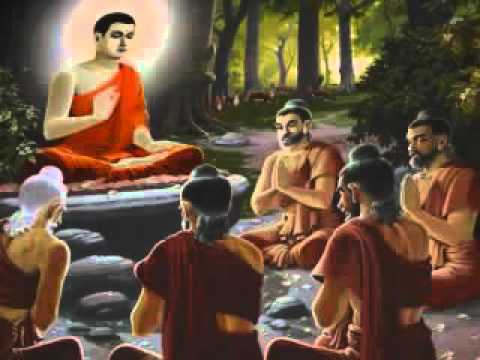
 Shoshin1
Re: Sitting comfortably
Everything counts.  Even the rippling universe.
In this sense (above my pay grade) it is not us who ripples outward and effects BUT the universe that counts/ripples with us.
You might call this synchronicity gone wild or Yab-Yum or a hired form of emptiness as in Mahayana.
Tee Hee! … but who counts if not everyone …
Even the Stoics (Whatever they are …)
lobster