
Best Of
Re: Change is Inevitable ...(Levels of) Suffering Optional
It’s curious how despite frequent reminders we still get caught out by the desire for permanency, for cozy habits in a place where nothing changes. We had several very mild winters here, and were a little caught out by a foot of snow and ten freezing days during which we had to go and collect food shopping on foot.
 Jeroen
Re: Does reading about spirituality make any sense?
Reading about spirituality does not produce sprituality.
Spirituality is NOT an intellectual, cognitive, nor verbal activity. It is an activity that arises from mindful awareness of THIS moment, Here and Now ... only. The purpose of meditation is to train our mind TO be mindful, but the insights come when we can recapture that mindfulness when NOT meditating.
But meditation is WORK and if reading about spirituality helps motivate you TO do your meditation, then reading about spirituality is helpful .. even though it doesn't do anything itself.
“Nirvana is beyond concepts.” Dzongsar Jamyang Khyentse, “What Makes You (Not) a Buddhist”
“There is nowhere to arrive except the present moment.” Thich Nhat Hanh
“To be enlightened is to be completely here and now, completely alert and available for the Present, because that is the only place you are ever going to BE in”. Alan Watts

Re: An online approach
ALL insight, ALL growth, ALL movement towards enlightenment comes from training your mind, through meditation, TO become and reside in open awareness. That is just the start.
“You have to do your own work; Enlightened Ones will only show the way. Those who practise meditation will free themselves from the chains of death.” Dhammapada 20.276
The actual change starts when you begin to recapture that level of observational awareness when NOT meditating. It can take as long as 5 to 15 years to start to have the first wisps of insight which generate minor inner change. From there .. it just builds over time as you continue your daily meditation practice and work at developing non-meditative awareness. It IS worth it, but it's not a quick fix.
For a partial and quick fix, try cognitive behavioral therapy. You can change a negative reaction pattern in just weeks, depending on the nature and cause of the problem and on your own efforts.
For slow but thorough inner change .. Buddhism is the path. If you no sangha or teaching, do Vipassana meditation. It is the only form of Buddhism designed to work witout a teacher to coach your practice. I recommend "Mindfulness in Plain Engnlish" by Bhante Gunarata. Often available on amazon (although the back of the book asks you to GIVE it way when you are done with it .. and NOT sell it for profit!). But it is the best written guide I have run across in my 25 years of doing Buddhism.
However, a local teaching monk is ALWAYS the best coach. It doesn't matter which Buddhist discipline the monk has been trained in .. they all work, when done properly.
Re: Change is Inevitable ...(Levels of) Suffering Optional
It is our desire for happiness and permanency that IS the major cause or our discontent.
Buddhism is not about becoming "happy" but about learning to relax and accept life AS it IS. And the more you drop your agendas, the more you start to become aware of the richness and vibrancy of each moment of Life. You begin to smile more, and start to become curious and observant.
You also begin to be aware that just like you, all beings wish to be happy and not have any unhappiness. And this awareness gives rise to a sense of kinship with all, generating both ease and compassion .. and eradicating our sense of isolation from others and from Life.
And when bad things happen, you relax anyway, since tensing up only makes pain feel stronger. You remind yourself of the First Noble Truth and the humor of thinking we are the ONLY person alive who is exempt from any suffering. And then we relax, knowing that even THIS ... too ... will pass. Nothing is permanent, and what is bothering us will not last.
In one of the beginning classes the local Lama gave (back in the year 2000) told us he was going to give us a Very Important Mantra ... one that would work for ALL situations. The entire class held their breath and learned forward in rapt anticipation. The Lama then shrugged his shoulders, raised his palms up, smiled and said, "What's the Big Deal?) and laughed.
Since 95% of how we feel arises automatically from whatever kinds of subconscious emotional patterns we have previously fed INTO our brain, happiness really IS a state of mind, and as such it will come only from within.
When we make a "big deal" out of something we will feel a "big deal".
“It isn't the things that happen to us in our lives that cause us to suffer, it's how we relate to the things that happen to us that causes us to suffer.” Pema Chödrön
Buddhism ends up being a way to change all reaction patterns, gaining freedom from both desires and aversions, even as they continue to stream out of our alive living brain in endless flows. There may yet be MORE to this slow progression, but even after 25 years I am not yet enlightened enough to know if there IS more.
That's the wonderful thing about Buddhism .. it is a lasting journey into discovery and increasing improvement .. and who KNOWS where it will end up .. until you end up there?

Re: An online approach
You could try this Cundi practice/sadhana. The only known mantra the Shakyamuni used and advocated before buddhism became a religious fracture and factionalism... 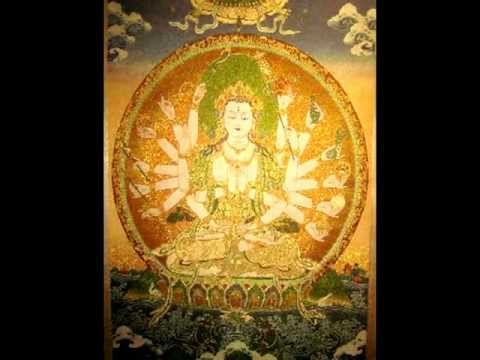
If you want some homework...
https://newbuddhist.com/discussion/22760/zen-enlightenment-in-this-lifetime/p1
And/Or you you could be 'a leaf on the wind'
https://www.treeleaf.org/
 lobster
Re: An online approach
Thank you for the replies so far. I feel like the general idea is that one should indeed seek out offline connection with a Sangha and a primarily online experience would not be very sufficient. That might be the case. Well, the one I'm talking about is unfortunately 3,5 hours by train so it wouldn't be faster by car and I often barely have the time and energy to just go to the other side of the city. Car sharing would still cost me dearly this way, especially if I'd eventually want to support the Sangha as well. So I think the best way to go about it will be to attend online meditations, try to reach out to a member or two in between sessions and ask about their own offline communities, hopefully the'll be one nearby I can visit that the main group organizing these events wouldn't disapprove of. I certainly would want to avoid Sanghas where they are strict about what reading material and practices you're allowed to follow (from their own founder, no one else, etc) or where some current politics or xenophobia interfere with teachings and the general mood, but I could not decide for myself until I'm exposed to it, so all I have is what a few individuals write online about their own experiences and mostly not even that.
 RobinH