
Best Of
Re: Knowledge of the absolute
I know that my current take it at odds with Buddhism in many ways, and it may not be the case that nibbana/awakening isn't just the cessation of greed, hatred, and delusion and experience, but the experience of something underlying it or beyond it. There are certainly many good objections to this based on teachings in the Pali Canon, and there are numerous ways to answer them. However, I personally think that this POV makes the most sense when viewed from a Spinozan POV if his Substance = consciousness, not unlike in some Mind-only traditions or Brahman in Vedanta.
In his Ethics, Spinoza reasons the underlying unity of existence in a radical way, which isn't something that's easily experienceable or obvious, but which is a perception that can be reasoned and which has effects on how we perceive, experience, and relate to any of the conditioned phenomena we come into contact with, including other beings and our own emotions. I see in his God Nature, or Substance (and much of the Buddha's Dhamma+nibbana) the same concept as Thich Nhat Hanh's interbeing or Paul Tillich's ground of existence due to his arguments about the singularity of the Substance.
Spinoza argues that there's ultimately one Substance, that this Substance is infinite, and that it has infinite attributes. The infinite attributes, as far as I currently understand it, ties into the existence of conditioned phenomena itself and how we can have a causally deterministic world that itself is part of a singular, infinite whole. It's very much like the metaphysics of quantum mechanics and uncertainty and probabilities vs. our level of experiences and observations. And eventually, his reasoning seems to lead to a Buddhist or even Stoic-like psychology and sense of equanimity.
So in my panentheistic reading, if my understanding of Spinoza is accurate:
Substance = self-existing, being/ground of being.
Attributes = the ways intellect perceive Substance, which, while infinite, are limited to 2 knowables in human experience: thought and extension, mind and body. That said, God, Nature, Substance isn't limited to those and can be said to be both immanent and transcendent as well as outside of space and time, the latter of which falling into the realm of attributes and modes/modification (i.e., samsara).
Mode/modification = conditioned phenomena, affected by causes and conditions, modes of Substance that make up the variety of finite things in the universe and what's experienced of it via thought and extension.
Furthermore, if we allow that the fundamental nature of Spinoza's God, Nature, Substance, or whatever else we want to call it doesn't necessarily have to be material but immaterial or neither material nor nonmaterial (a la neutral monism), then his God, Nature, Substance can certainly lead into panentheistic territory (our conditioned world+something beyond it, which we can label the absolute, the transcendent, ultimate reality, etc). And if Substance = consciousness, then it's ultimately just Substance realizing its own nature via its modes/modifications, with various sentient beings having various levels of conscious experience. And whereas Spinoza argues you can reason this ultimate reality/unity, perhaps what the Buddha is suggesting is that you can actually experience it.
Then again, my views may change yet again, but I'm very much swayed by the experience of others and the possibility of touching or experiencing something profound and beyond the range of logical thinking and human language. It may just be wishful thinking on my part and an unconscious aversion to death and nonexistence. But you never know and I think it's worth being open-minded about.
 Jason
Jason
Re: What movies are you watching?
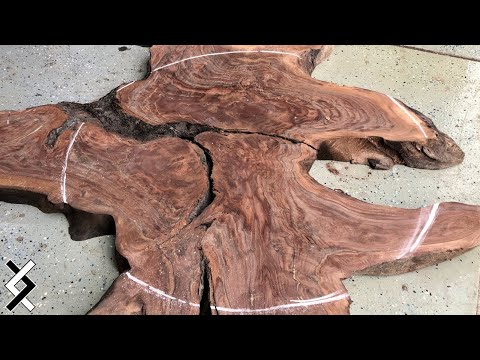
I enjoy watching wood working and wood turning videos on YouTube. That machining video was similar but with a different material, the precision was pretty incredible. I may watch more like that.

 person
Re: There is no purpose, only love
Thanks @shoshin1 you are not wrong…
Once Osho was asked “do we live on beyond death?” He replied, “Perhaps you should try living this life first.” It makes good sense to focus on living deeply first, if you haven’t really been alive why worry about death?
Another one of my uncles is currently dying of cancer, the doctors have told him they can’t do anything further for him. His wife is very upset, he may just have weeks or at most a few months to live. She had hoped that he might recover. Once he dies I’m all out of uncles, I will be the oldest surviving male member of the clan…
 Jeroen
Re: There is no purpose, only love
Sorry to hear about your uncle @Jeroen....
When love ones are dying, at death's door, this can bring to life/awaken the impermanent nature of all things...A reminder of how precious life is and to live and appreciate life....
Stay mindful @Jeroen
 Shoshin1
Re: Getting better "blog"
@marcitko you may find this short story about black and white pebbles of interest
"Long ago, there was a brahmin called Ravi who examined his mind at all times. Whenever a bad thought arose, he would put aside a black pebble, and whenever a good thought arose he would put aside a white pebble. At first, all the pebbles he put aside were black. Then, as he persevered in developing antidotes and in adopting positive actions and rejecting negative ones, a time came when his piles of black and white pebbles were equal. In the end he had only white ones. This is how you should develop positive actions as an antidote with mindfulness and vigilance, and not contaminate yourself with even the smallest harmful actions." -Patrul Rinpoche
Shoshin1
Re: Knowledge of the absolute
So I was checking out Sujato's forum at Sutta Central and listening to Thanissaro Bhikkhu's latest not-self series at the Sati Center, and ultimately, I agree somewhat with the claim that my views fall somewhere in the 'pure awareness mysticism' camp. I think I came to this from the collected teachings of various religions and the experience of many spiritual teachers, being swayed by the perennialist POV.
I would never say that the respective conceptions of each religious tradition are the same, but I would be so bold as to say their conceptions are reaching towards the same truth or ultimate reality. And I do think that each tradition has their own unique ideas that add to our understanding and hone our experience of this reality. And I think that's ok. And we can find whichever expression fits best for us. It's like the analogy of the finger and moon. Our religious traditions are like the finger, and the moon is truth. We shouldn't cling to the finger itself as the truth, but use it to point us towards it. Nevertheless, the finger is important, and each hand has its own. But the truth, like the moon, is ultimately the same, whether we say it's made of green cheese or mostly silicone and magnesium.
In this case, there are various ideas of what Buddhist awakening entails. Some stress the negative (ending of suffering, cessation of aggregates, the going out of the flames of passion and delight and craving), while others stress the positive (unestablished consciousness, bliss, peace, deathlessness). Some say we wlare just the aggregates, and when we realize nibbana, the aggregates cease without remainder and that's it, whatever 'we' are is gone and we basically experience nothing (much like what modern-day physicalists believe happens). But I think that there is an experience of something timeless or beyond time, but that even this isn't ultimately to be clung to as self. Self has no meaning at this point, although the perception of self can act as a final fetter or obstacle to the full realization on nibbana. We self (as a verb) as skillfully as possible until we get to a point where it is no longer needed and can be dropped, just as the proverbial raft. That's my take, anyway.
Jason
Re: The rarity of the spiritual life
I'm pretty much the only person in my friend group that's spiritual or seriously interested in religion. Kind of lonely, but it's not meaningful for everyone.
Jason
Re: There is no purpose, only love
A voice said to me on waking up a few days ago “you love life”, and I realised it was true. That is why I love nature documentaries, why I feel good about rewilding projects, why I’m proud of nature reserves, why I’m sad about the decline of insects, why I love forests and mountaintops. In a way it means more to me than the spiritual journey, it’s why I don’t have kids or a wife, why I travel by public transport, it is the reason why I’ve lived the life I have. The heart of my life. Bit of a wow moment.
So I’m finished with Atisha and death. Maybe with the spiritual path as well.
@Jeroen In one form or another, spirituality seems to permeate every aspects of our lives ...Life. Living. & Genuine Love is a spiritual path....
Be well, be safe & be mindful @Jeroen 🙏🙏🙏
Shoshin1
Re: Atisha on death and the meaning of life
@federica We haz plan!
Atusha (bless you) updated:
- All of us are alive
- Your life span is unknowable
- Life is here
- Your life span is fixed
- Existence has many causes
- Your body is strong and vulnerable
- Love life
- Your material possessions can help you live
- Your mind cannot help you when death comes
and now back to real life and dog recipes
 lobster