
Best Of
Re: What is the "Middle-wayed Way" and is that different than the Right Way?
No need to get too word bound trying to perfectly describe the 8FP.
The 8FP can be approached as simply being a lemma of the 4NT.
In Buddhist parlance, the eight factors of the 4NT describe what needs to be in balance in order to steadily proceed along the Buddha's path toward suffering's cessation.
So....
The 8FP is
The understanding that supports the 4NT
The thought that supports the 4NT
The speech that supports the 4NT
The action that supports the 4NT
The livelihood that supports the 4NT
The effort that supports the 4NT
The mindfulness that supports the 4NT
The concentration that supports the 4NT
Hence, the 8FP often gets described as the eight spokes of the wheel that supports the 4NT and more importantly, that wheel only functions as well as its weakest spoke. Here is the warning that fortifying the spokes that you have strongly crafted is somewhat pointless if there are other weaker spokes that are not also being equally developed.
For those who find the word "right" to be too limiting, substituting it for "appropriate" works for many.
 how
how
Re: Is the middle way comfortable?
@FleaMarket said:
How is discernment practiced?
Trial and error, learning from others experiences and stories. Personal judgement.
I think eventually it goes from there to second nature. Then from there to first nature. When we know what to do without having to think about it.
It's not enough to be unperturbed by the second arrow.
It really isn't.
The subtitle to Thich Nhat Hanhs The Heart of the Buddha's Teaching is "Transforming Suffering into Peace, Joy and Liberation".
Discerning action is to be actively engaged, not complacent.
Words are so tricky. If we aren't careful, they eventually contradict their own meaning.

Re: What is the "Middle-wayed Way" and is that different than the Right Way?
stray and return …
 lobster
Re: Is the middle way comfortable?
procrastinating is waiting in ignorance/dukkha.
Oatience … Eh … patience with a virtual keyboard  is a type of gentleness with:
- our mind, body, speech, emotions etc
- Others too
- Our harsher inclinations
It is why humour is so effective in laughing at:
- our frail, fail, fall
- Our bananas buddha nurture
- Monks in saris, in the hell realms … best place for some of them …
Oh I is so wikid  I will be barbecuing myself in the naughty corner until comfortable … 🤣😈❤️🔥
time to meditate on my un buddha nature! …
lobster
Re: Is the middle way comfortable?
How is discernment practiced?
By putting into practice the contents of the Eight Fold Path, that is, understanding the working of this psycho-physical phenomenon called sense of self, warts and all... its likes dislikes, desires, aversions ...triggers and so forth...And if you think about it... by meditation and Dharma practice...you're already doing this "Ehipassiko" seeing for yourself ...where things are gradually unfolding/opening up...
I guess patience will show us all in its own good time...
Dhammapada verses 153 & 154
Through many births
I have wandered on and on,
Searching for, but never finding,
The builder of [this] house.
To be born again and again is suffering. (verse 153)
House-builder [craving], you are seen!
You will not build a house again!
All the rafters [defilements] are broken,
The ridgepole [ignorance] destroyed;
The mind, gone to the Unconstructed [Nibbana],
Has reached the end of craving!
Taṇhā AKA "Craving"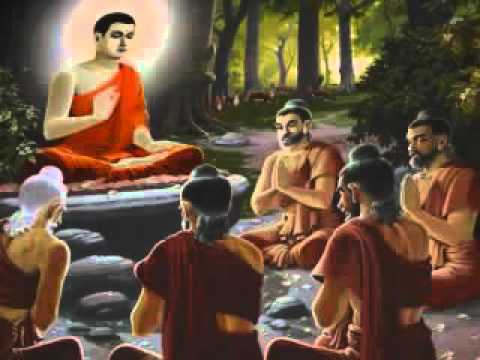
 Shoshin1
Re: Sitting comfortably
Everything counts.  Even the rippling universe.
In this sense (above my pay grade) it is not us who ripples outward and effects BUT the universe that counts/ripples with us.
You might call this synchronicity gone wild or Yab-Yum or a hired form of emptiness as in Mahayana.
Tee Hee! … but who counts if not everyone …
Even the Stoics (Whatever they are …)
lobster
Re: Is the middle way comfortable?
Call me crazy but the title itself reminds me of Goldilocks and the Three Bears.
This calls to question what is meant by comfort. If comfort is the lack of suffering then I'd say that's precisely what Buddha wants for us.
I think the Middle Way is comfortable but not too comfortable. We have to adapt to change.
When I think of self and the Middle Way, I always also think of the Two Truths. When we talk of these separate selves as an illusion, it isn't that they don't exist but that they are misrepresented by the senses. Like the rope we thought was a snake for a second there doesn't disappear with the snake. The illusion is dispelled but reality keeps on.
I think these separate selves are illusory tools. When we see through the illusion, we don't throw away the self, we keep on using them. Buddha kept using his as a tool to teach others. He almost didn't though. If it wasn't for Sujata showing him compassion and feeding him rice, he wouldn't have.
Is the practice to increase the frequency of "tranquil days" or to transcend the beings experience so tempest or tranquil come and go all the same? A marriage, a divorce, a birth, a death, the body responds, the thoughts respond, the feelings respond, but there is no being there? The tears still flow, the smile still forms but there is no being there to push it this way or that which makes new karma? Is this how past karma is worked off and future karma is not made?
I wouldn't say there is no being there but that we are calm. Being fully here now is the idea, not being carried away.
Karma is the causation of action.
Re: No Buddhist Quotes
“Can't you allow things to happen without asking why? what?
Do you understand why we ask such questions?
The mind asks these questions because it wants to control your lifestyle, it wants to know everything that is going on. Nothing should happen which is beyond it; everything should be in its control. The mind is a great controller. And if everything remains in its control, it will be a tragedy because nothing great can happen to you.
Everything that is great, magnificent, is beyond mind.”
— Osho, ‘Beyond Enlightenment’
 Jeroen
Re: Is the middle way comfortable?
As I understand it, in most traditions comfort is seen as not important for the serious practitioner. Look at the emphasis on correct posture in zazen, and the often-repeated instruction to ignore minor discomforts. I’ve known people who have done themselves significant damage (permanent numbness) by pinching nerves in meditation and ignoring the attendant warning signs.
Most meditation centers therefore supply chairs and cushions and don’t insist on posture but instead have taken an accommodating approach. Its much friendlier to beginners, and it means there is less chance of getting sued!
Ultimately there is a middle way to be found here as well. If you focus too much on comfort, you disturb the stillness of the body on which meditation relies, if you do it too little you could do yourself an injury.
Jeroen
Re: Is the middle way comfortable?
While the Buddha did not seek comfort, was the middle way comfortable?
I would say it is more along the lines of 'satisfying/fulfilling
Is the practice to increase the frequency of "tranquil days" or to transcend the beings experience so tempest or tranquil come and go all the same?
I guess the answer to the above is all of the above...To develop a sense of inner peace...
From what I gather, the subtle sense of self remains as a tool ( so one can interact with the conventional world) but the clinging aggregates are now Teflon coated so to speak...where Awareness no longer fuses/adheres to the clinging aggregates experience...In other words the more solid sense of self the "I" AKA the Ego no longer plays a dominant role in the phenomena arising/the drama unfolding ...
"May I clearly perceive all experiences to be as insubstantial as the dream fabric of the night and instantly awaken to perceive the pure wisdom display in the arising of every phenomenon."
~Part of a Tibetan Buddhist dedication prayer~
If you think about our habitual patterns, how we react in certain situations and not so much act.... And it's when we become more 'aware' (from which I gather practicing the middle way develops this awareness) of these patterns the less likely we are to follow through/react....
So I guess one could say the middle way leads to a tranquil way of life... Gradually changing those Dukkha moments into Sukha moments ( Sukha as in, where Dukkha no longer causes disturbances)
We are just vibrating bundles of energy flux held together by karmic glue, automatically reacting to situations, until the Dharma starts to flow on through...
I guess in the long run @FleaMarket we have to see for ourselves "Ehipassiko" AKA "Experiential Understanding"...Words can help to describe an experience but they are not the actual experience....
It pays not to let the mind become charmed by its own thoughts...
Shoshin1