
Best Of
Re: On having an Enemy
Most stories we're drawn to revolve around conflict. We imagine being heroic to save someone so we'd feel good about ourselves, but at the same time we also imagine the danger, the threat they're in for this very purpose. We give it a different face and name to keep it separate, but it's us, just like while dreaming. Sometimes we imagine ourselves to be the heroes so we could "get away with" also imagining nasty things that way. Wishing others to feel hurt just so they'd understand us being hurt and would keep us company in our traumatic memories. There is no other people, these roles and stories like stage plays are only tools which we use to embrace parts of us we otherwise struggle to, because we don't have the words to express them or are not conscious enough. I think it's a deeply human quality and I am sentimental about such, but perhaps a more spiritual practictioner like you are talking about completely different things here that you wouldn't describe to be emotional experiences in those hours or minutes between sleep and awake.
 RobinH
Re: Poem for the day
Any empire built upon deceit and destruction is no more than a shadow. It may exude power for a time. but power is not greatness. No matter how powerful a nation is it can never be truly great if it does not serve it's people.
look upon the powerful nations - they lack greatness when their own people are suffering,
Look upon the Great nations, be they large or small. Even though they may lack outward power, they serve their people. Denmark is a Great nation, as is Singapore, as is Canada.
Currently, Russia and the United States are powerful nations. But, because they do not serve their people, confusing power for greatness, they lack the grace, the humanism which is the hallmark of true greatness. They are wandering in the hallways of illusion and darkness, their leaders trapped in the blindness of their own vanity and greed.
The truly great person respect both self and others. A Great person celebrates both his or her own successes and that of others, freely. A great person feels others' losses as if their own, comforting them, sharing their pain, honoring and supporting their recovery.
Peace to all
 Lionduck
Season's Greetings From Down under
It was an overcast Christmas morning, however the clouds soon dispersed
Season's greetings folks ...
Christmas is a special day, a day to remember Baby Cheeses.....and how nice they are on crackers 
 Shoshin1
Re: Experience of mantra practice
I didn't know that there are mantras from centuries ago that have been dropped. I think when you personalise your spirituality, it goes deeper.
 Tavs
Tavs
Re: Experience of mantra practice
@Tavs said:
Is anyone is an experienced mantra practitioner? If so, how has your practice changed over time or your relationship with your practice?
I use it everyday. It has changed from group aloud and gradually become silent internal. Some mantra over the centuries have been dropped. They are not effective. I also have modified mantra and make a great deal of use of a personalised mantra.
 lobster
Re: What do you think of modern movies?
I think part of what made it interesting was that it wasn’t a superhero movie, and also hadn’t fallen prey to the ‘Marvel syndrome’ of interchangeable hero’s all with quips and jokes and monologues to camera and poses. It was a heartfelt story told with sincerity, good acting and moments of real tension.
It was really interesting watching Tom’s video about the Marvel syndrome, especially the section about corporate passion and real passion as embodied by the Lord of the Rings films and everyone who had worked on them. I don’t think there has been anything to match the craft and detail as shown by the appendices to those films since then.
In a way, all the TV series that were trying to be the next Game of Thrones were suffering from following in its footsteps and having one eye on potentially huge success and then not honouring their source material. Rings of Power, House of the Dragon, Foundation, Sandman, none of them really blew up to a must-see phenomenon.
 Jeroen
Re: Poem for the day
This poem was first published around 1914
Henry Dupre LaBouchere, 'Where Is The Flag Of England?'
Where Is The Flag Of England?
Let the winds of the world make answer!
North, South, East, West,
Wherever there is wealth to covet
Or land to be possessed:
Wherever the savage nations
To coddle, coerce or scare,
You may look for the vaunted emblem
For the Flag of England is there!
Aye, it waves over the blazing hovels
Whence its African victims fly
To be shot by explosive bullets
Or wretchedly starve and die:
Or where the beachcomber hammers
The isles of the southern sea -
From the peak of his hellish vessel
The English flag flies free!
The Maori, full of hate, curses
With his fleeting, dying breath.
And the Arab hath hissed his hatred
As he spat at its folds in death.
The hapless fellah hath feared it
On Tel el Kebir's parched plain.
And the blood of the Zulu hath stained it,
With a deep indelible stain.
It has floated over scenes of pillage
And flaunted over deeds of shame.
It has waved o'er the fell marauder
As he ravished with Sword and flame:
It has looked on ruthless slaughter
And assassination dire and grim.
And has heard the shrieks of its victims
Drown even the jingo hymn.
Where is the flag of England?
Seek the land where the natives rot
And decay, and assured extinction
Must soon be the people's lot.
Go to the once fair island
Where disease and death are rife
And the greed of colossal commerce
Now fattens on human life.
Where is the flag of England?
Go sail where the rich galleons come
With their shoddy and wasted cotton,
And beer and Bibles and rum.
Seek the land where brute force hath triumphed
And hypocrisy hath its lair.
And your question will thus be answered
For the flag of England is there!
Shoshin1
Re: Games that are spiritual
Games that are spiritual
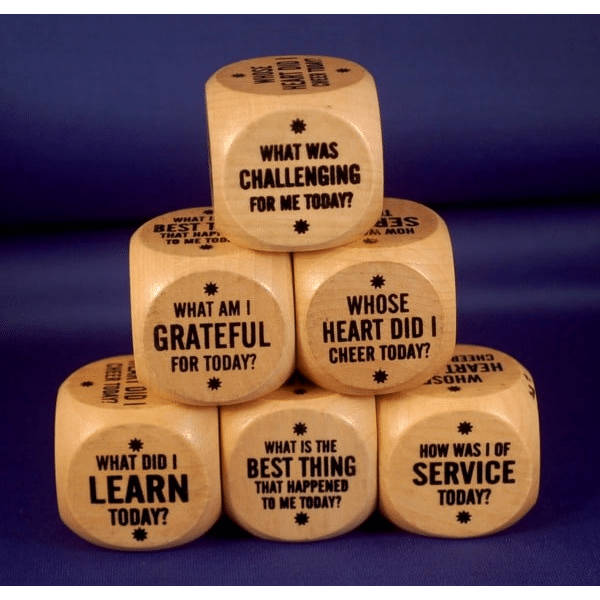
Life is the ultimate spiritual game, unfolding in cycles rather than straight lines. It moves through the ups and downs , attachment and loss, joy and sorrow, each moment passing as it arrives. There are no winners and no losers, only lessons. We all have to play until the very end, and if we do not get it right the first time, we replay it again and again.. Life becomes a teacher, returning us to familiar paths until we learn to walk them with awareness.
Life is like a game of dice...you never know what will come up....
So roll the dice and spice up your life ...
 ![]
![]
Shoshin1
Re: Experience of mantra practice
I’ve experimented with it, very casually. It struck me as being a kind of hypnotic technique, which is not at all a bad thing.
Jeroen
Re: Experience of mantra practice
I hear in dharma talks often chanting before and after. Like an example people might have heard in the heart sutra "gate, gate, paragete, parasamgati,,,bodhisvaha". There is a meaning to that mantra. Sometimes I find myself spontaneously thinking of a mantra during my ordinary day
 Jeffrey