
Best Of
Re: Good People
@Jeroen said:
I have a simple standard of goodness, and that is the golden rule, do not do onto others what you would not want done onto yourself. It points to empathy, to the idea of walking a mile in someone else’s shoes before you judge them. Empathic people are good, those who have hardened their hearts can commit bad acts.
I think that needs some refinement. Its a good place to start, but the platinum rule is better "Do unto others what they would want done to them". Its like I imagine much of the cat calling or dick pics that women get sent to them come from men who genuinely would like it if women did that to them.
And then Paul Bloom makes a decent case in Against Empathy, that in order to truly be ethical we need to be more deliberate and thoughtful. That having empathy can also cause us to act in negative ways. Anyway, people mean different things by empathy so maybe what you mean isn't the same thing as Bloom. I'm just making a point that I think its more complex and can use some unpacking.
 person
Re: Funny Stuff
"Would the owner of the seven limos parked in front of the executive entrance please move them. You are blocking the owner of the seven limos waiting to enter."
A commonly used term during a certain former Secretary of State's tenure.
Which turned out to be preferable to a certain former head of state proclaiming,
"There were good people on both sides."
meanwhile the pidgins took great pleasure in targeting the newly aqired Hummer.
[Note: If this make sense, report to your nearest psych ward immediately..you need help]
 Lionduck
Re: Good People
The trouble is almost everyone thinks of themselves as essentially "good" people.
Good People
In all cultures and in all religions, there are good people of high repute, wisdom and example.
So that is where we set our markers. We do not need to 'understand' or tolerate the impeded directions and warped viewpoints. Nobody human is entirely clear of their lesser tendencies. That is how we start. Sorting useful, skilful, helpful teaching and teachers and qualities in our being.
In a sense we are all the centre of our universe. Also we are responsible for others well being.
It is up to us too make good of what we know and share. We are good people, right?
 lobster

Re: Good People

Personally, I don't really try to meet a standard of being a "good person". What that is exactly and how it gets defined tends to shift and change with the times and the cultural context. Its also part of the comparing mind Buddhism tries to shift us away from. I think its better to focus on the trainings and leave goodness or badness to others.
person
Re: Good People
I'm reminded of this...
“With or without religion, good people can behave well and bad people can do evil; but for good people to do evil - that takes religion.”
~Steven Weinberg~
 Shoshin1
Re: Zen Mind, Beginner's Mind
Some cultures put a lot of attention on the minutia of a meditative posture.
It is not uncommon when folks first run into these posture prescriptions of formal meditative positions to think that they all need to be right or there is a problem, but the underlying purpose is actually to have our attention on the various aspects of the body to be no less embracing than the attention that we more commonly apply to the mind.
The mind can be likened to a Primadonna, mostly occupied with commandeering most of the space on the stage that we call life.
Meditative practice can simply describe that process of returning a more collegial usage of that stage space back to the other actors that represent all that we see, hear, smell, taste, and feel of life.
To the degree that such a balance can be manifested, equanimity becomes possible.
To this degree, zen is as much or is as little of posture as it is of mind.
Body & mind are....
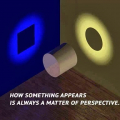
 how
Re: No Buddhist Quotes
“No thing in existence has a particular cause; the entire universe contributes to the existence of even the smallest thing; nothing could be as it is without the universe being what it is.”
— Sri Nisargadatta Maharaj
 Jeroen
Re: Zen Mind, Beginner's Mind
“What we call "I" is just a swinging door which moves when we inhale and when we exhale.”
― Shunryu Suzuki
“Emotionally we have many problems, but these problems are not actual problems; they are something created; they are problems pointed out by our self-centered ideas or views.”
― Shunryu Suzuki
“The true purpose [of Zen] is to see things as they are, to observe things as they are, and to let everything go as it goes... Zen practice is to open up our small mind.”
― Shunryu Suzuki
There’s a lot of good stuff packed in that small volume. I wouldn’t get too caught up in everything about posture, what happens in the mind is more truly Zen than the perfected art of sitting.
Jeroen