
Best Of
Re: The Guru Papers discussion
@Kotishka said:
Also, here is the quote."Darwin is a rascal. What is his theory? We kick on your face. [expose your bogus philosophy] That's all. That is our philosophy. The more we kick on Darwin's face, the more advanced in spiritual consciousness. He has killed the whole civilization, rascal."[Srila Prabhupada from a Morning Walk, May 12, 1973, Los Angeles]
It will never cease to amaze me, the illiterate dumb nonsense, forgive my French, that students of the Dharma will defend. I am reminded of when Tsem Rimpoche used to go on Twitter rants denouncing unnamed haters. His followers justified his anger as righteous. It takes all kinds, one supposes.


Re: Healthy Habits

What about GABA found in tomatoes and produced by meditation, yoga and tai chi?
https://en.m.wikipedia.org/wiki/Γ-Aminobutyric_acid
https://eocinstitute.org/meditation/meditation-boosts-your-gaba/
 lobster
Re: The Guru Papers discussion
Well, according to The Guru Papers one of the key ‘tricks’ to being a guru is to always be right. And people like Darwin challenge the religious viewpoint by providing a scientifically justified theory of the Earth’s past, proving that they are not right and causing a few religious guru’s to fall from their pedestals.
I think the Dalai Lama was right to enter into a dialogue with science, and even to day that if science proves something, then religious doctrine will make way.
 Jeroen
Re: Give
@lobster said:
Dharma is a curse if held too tight and too loose and lost …Few of us have sufficient dharma/understanding to give.
Better be kind in every way including sideways … meanwhile …
send your bad karma to:
Lobster hell realm giveaway. Nothing refused.

A lot is gained by just living in a relaxed way… many things cease to be important, like careers, status, how other people view you… I would suggest make room in your life for relaxation, and you will find a lot of stress just flows away from you.
Jeroen
Re: Newbuddhist has a MIner
Could someone translate into plain English, please?
Move along, nothing to see. Storm in a tea cup. A little knowledge is a dangerous thing.
oh … you want the rabbit hole? 
https://www.simplilearn.com/what-is-computer-security-article
lobster
Re: Just for fun: the random, useless announcements thread!
The Eurovision Song Contest is no longer about the song. That is almost incidental. It's just a political showcase, and a parade of people all vying for the most attention, by appearing in the most weird, eye-catching and controversial apparel. 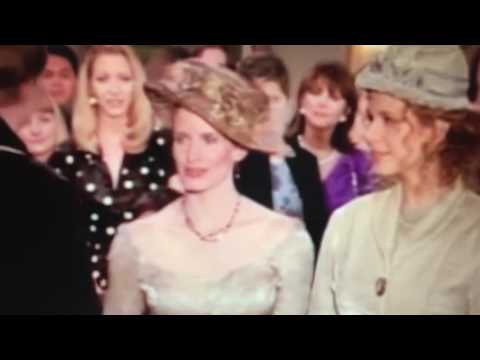
 federica
Re: How can someone practice no-self and improve his self at the same time?
@David said:
To say it has no existence is an extreme stance.
It almost seems counter to logic but non-self doesn't point to non-existence. It points to inclusiveness.
Right. To say that the self doesn't exist = nihilism. The Buddha cautioned against nihilism. But he cautioned against eternalism as well. Everything is in a state of change and flux. And, as David so aptly put it, everything depends on everything else working together.
Another way I've heard it explained, is that we're not to get attached to a self-identity. People do, you know; they think of themselves as all kinds of things: a parent, a "family man", a member of whatever profession they've chosen (what happens when they go through a career change though? Change is an integral part of life), a problem-solver, a creative thinker, a generous person or a frugal person, etc. These are all constructs people invent to describe themselves. To become invested in that identity = ego. Ego leads to suffering, if for example, life circumstances occur to force a change in our "self"-image. It's not something we should get caught up in.
And kotishka hit the nail on the head as well, when he said:
Or maybe at some point the self has stretched enough to provide the trampoline to jump into the non-self?
Exactly. It's a tool we use to help us move toward Enlightenment, or egolessness. And to simply get through our mundane lives: to open a bank account, to apply for a job, to lead a group, as the Buddha did, or to find ways to lighten the suffering of other sentient beings in whatever way our unique individual gifts may allow us to do, or to provide others with life skills. But our focus should be on the process and the goal, not on how great or special we are to be achieving what we've set out to do. The latter is attachment to self. The former is Right Livelihood, or Right Motivation.
The self is just a tool, not a be-all, end-all, or something like a material acquisition that enhances our status in the community, a badge to wear. Forget the badge; just get on with doing what needs to be done to bring about positive change.
 Dakini
Re: Blessings
I don’t like happiness, I like suffering:
If I am happy, the five poisons increase.
If I suffer, my past bad karma is exhausted.
I don’t value high positions, I like low ones.
If I am important, my pride and jealousy increase;
If I am lowly, I relax and my spiritual practice grows.
The lowest place is the seat of the saints of the past.
Patrul Rinpoche
https://www.lionsroar.com/simple-man-extraordinary-yogi-the-life-of-patrul-rinpoche/
lobster
Re: The Guru Papers discussion
@FleaMarket said:
I'm feeling a bit blind here in my examination but I'm struggling to see how this is different from any other relationship? From my observation, the same situation one who finds themselves in with a guru could be the same situation one finds themselves in with a trusted friend or family.Is it about the mental conditioning that takes place? Because that could be seen in friend and family and all relationships as well. Devoted family, friend, lover, student, worshiper all seem like the same person. Equally disillusioned family, friend, lover, student, worshiper all seem the same as well.
What am I missing?
I think its about the power imbalance and the responsibility that entails on the part of the guru that doesn't apply to many of those other relationships. There's a deep surrender and trust on the part of the student that goes beyond most other relationships. More like a parent and very young child.
If memory serves I think in the literature on guruyoga they say that one should examine a teacher for 12 years. In the real world today that almost never happens and in group dynamics there are heavy social pressures to conform.
I think the potential of a healthy, positive guru/student relationship for spiritual growth and realization is greater than other paths. But as @Vimalajāti says, when they go wrong, they go very wrong.
I also think the sort of deeply enlightened and ethical teachers are rare (maybe more so today than in the past???). So selecting a guru by proximity or first exposure or most popular or any number of other criteria, odds are you'll get one that's compromised in some way.
 person
Re: The Guru Papers discussion
I’ve been reading the chapter on guru ploys, and its interesting the excuses they use to evade accountability. I must admit, these things being said to me — “you can’t possibly understand what I am doing because you are not enlightened” for instance — would cause a few alarm bells to go off in my mind.
Another interesting chapter is the one on surrender, which goes into some depth about the psychological effects of surrendering and its attractions. Another chapter goes into how those teachings often attack the strength of a person’s reason and encourage a more emotive group-thinking.
It’s curious because if I compare this to what I read about people like Ramana Maharshi and Poonjaji then I come to the conclusion that although they are commonly called ‘gurus’ they don’t teach those things, and they also didn’t use those tactics to hold onto followers. Indeed they seemed to try their best not to accumulate followers.
Jeroen