
Best Of
Re: Mahayana vs Theravada Buddhism
The whole discourse between Mahayana and Theravada is very old. But if you take a step back and you look at enlightenment as the concept originally came out of India, there were many who tried to teach it but with only miserly success. If you look at the teachers who taught Gautama the Buddha meditation, he was a stellar student but there were not many like him.
So there is a question, can enlightenment be taught at all, or is it just luck when someone who is ready meets up with a teacher? There are cases in the literature, like Milarepa with Marpa, or more recently Papaji with Ramana, but these may be rare and gifted individuals. The Buddha is said to have had many arhat students, but that’s not something that has been said of anyone since then.
 Jeroen
Re: Mahayana vs Theravada Buddhism
@Jeroen said:
In Theravada there is a focus on the task of getting enlightened, it is difficult and few succeed. In Mahayana there are many streams that get caught up in the pure lands of one of its Buddha’s, or in clear view, or in just being.
I'm not going to contradict this per se, after all it is your opinion and you've stated your opinion accurately, but I would like to offer what I believe to be some nuance with regards to the above sentiment.
"Mahāyāna" is the "Great Vehicle," but it is also the "Large Vehicle" (大乘). Furthermore, it is the "Broad and Expansive" vehicle (大方廣). The audience of the EBTs are principally the Śrāvakas. They are consistent of Brahmin and non-Brahmin mendicant wanderers, members of the Saṃgha, and occasionally lay devotees. Gods and yakkhas, etc., also constitute the audience of some of these texts from the old dispensation.
Instructions to upāsakas are less common than instructions to bhikṣus in this literature, and instructions to non-upāsakas (i.e. "the laity who do not observe the Buddha's teachings to the laity") are even less common. Oftentimes, they appear as mischief-makers, like Migasālā and Sati the Fisherman's Son, rather than as someone who receives a teaching. These are examples of persons who lacked the great merit and noble roots to be able to hear the Dharma while the Buddha was alive. The EBTs are, in general, not addressed to them. They are mostly addressed to the Saṃgha, the upāsakas, and the upāsikās.
The Mahāyāna, being the large, broad, and expansive vehicle, has teachings addressed to those who are not yet even upāsakas. It also contains within it teachings for those who are not ready for the Buddhadharma quite yet. It has sūtras that teach "the true self" as a gateway for the non-Buddhist into the true "selfless" Dharma. It has sūtras and teachings addressed to those for whom the path of mendicant purification is far from them and/or impossible for them in this life (Pure Land comes to mind as but one example).
The audience of the dispensation to the Śrāvaka is principally the Saṃgha, but also the historical Buddhist laity of ~500BC. The audience of the dispensation of the Mahāyāna is "all sentient beings." The Buddha even taught the animals during his Bodhisattva tenure. As such, there is a much wider expanse of teachings, since this includes both those who are far-advanced in the cultivation of the Dharma as well as those with no such roots at all. It has teachings for non-Buddhists to lead them to the Dharma as well as Buddhist teachings on anātman and pratītyasamutpāda, etc.
The trouble is when the provisional is confounded with the ultimate. All of the teachings of the Mahāyāna were never originally meant to be considered equivalent. In the kind of Mahāyāna Buddhism that I am familiar with, for instance, those sūtras which speak of "the self" or "the true self" are provisional sūtras addressed to non-Buddhists. In contrast, those sūtras which speak of emptiness are definitive sūtras of ultimate meaning intended for the Bodhisattvas.
Re: The Park is mine
“Therefore, Ananda, be islands unto yourselves, refuges unto yourselves, seeking no external refuge; with the Dhamma as your island, the Dhamma as your refuge, seeking no other refuge.”
Maha-parinibbana Sutta (DN 16)
The Park is mine
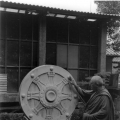
is the title of an old movie from the 80s.
But now it will have a more charitable purpose.
I am going to use this place for small autumn meetings and eventually short zazen sessions...
Autumn is coming


Re: The Park is mine
in Buenos Aires the monk Tamauchi did some zazen sessions in the streets...it is not particularly to my liking. it is a certain unnecessary exhibitionism?

Re: The Park is mine
The Secret Symbol of the Magenta Lobster is one of the highest Tantra practices. Very top top top
Re: The Park is mine
A great location @ShanJieshi2 hope all will go well there, and you won’t suffer from over-zealous park guardians, persnickety wildlife, or polluting habits of local teens.
Jeroen