
Best Of
Re: Recently Learned...
Yes… a friend of mine, who I have a chat with on WhatsApp every morning, suddenly stopped answering all her social media accounts. She wouldn’t pick up the phone either when I rung her up. That was a real exercise in letting go, when someone you are that close with, suddenly drops off the radar.
It turns out she had suffered a psychotic episode and was admitted to a closed psychiatric ward, she is now slowly recovering and letting a few people know what happened. She was gone for nearly a month… she is still there but now considered stable enough to communicate.
It is a shock when habits are disturbed.
 Jeroen
Re: Recently Learned...
We'z all gots opinions, views, wez all says whats we thinks 'n sumtimes wez fergets ta think.
But what counts is that we seek, we question, we advance, we stumble sometimes. Then we get back up, we take another step....repeat.
That is the fun of it.
Oh, due remember to laugh at yourself - Life is serious, we humans not necessarily so. That goes especially for that wierdo in the mirror.
Peace to all
 Lionduck
Re: Recently Learned...
That I too am of the nature to get old. Haven't learned that I cannot escape old age yet, still working on that one. Or rather nature is working on that one.
There isn't enough time.
Its either the beginning of the end or the beginning of the beginning
 person
Re: Buddhist Epistemology
The problem with ‘Buddhist epistemology’ is that there’s not just one POV. Depending on the tradition, especially in relation to the Abidhammic corpus of those traditions, you’re going to get slightly different answers. And the individual points and distinctions between them are no longer my focus, to be honest. I’ve long since taken Ajahn Thanissaro’s advice about keeping the goal of the path at the forefront—the cessation of suffering. And the most important question in that regard is, what when I do it will be for my long-term welfare and happiness?
There are many answers to what constitutes a valid cognition, as well as what makes for a valid cognition starting from the verification of healthy functioning sense organs onwards. And I’m not sure what answer would satisfy everyone considering the inherent difficulty of trying to categorize and verify someone’s subjective experience. The term used in the Pali Canon, panna, essentially means wisdom or knowledge that’s gained from our sense awareness (which includes congnition) and contemplation. This type of knowledge is broken down in many ways in the Pali Canon, often in terms of the three characteristics of inconstancy (annica), stessfulness/unsatisfactoriness (dukkha) and not-self (anatta). But there are other frameworks and perceptions, such as the knowledge of meditative absorptions through direct experience (e.g., DN 34. So throughout the Pali Canon, what’s often translated as insight, knowledge, understanding, wisdom, etc. is always associated with some aspect the four noble truths—dukkha, the cause of dukkha, the cessation of dukkha, and the path leading to the cessation of dukkha. Then, of course, later Abhidhammists and sects and traditions started creating epistemological structures and having debates with one another about who had it right.
 Jason
Jason
Re: Buddhist Epistemology
Ah, yes, it should have been: “Buddhism, on the other hand, is very much about empiricism, [first-person], and third party verification on the mental [and psychosocial] level and in terms of things that can be tested through mental processes via subjective experience.”
So you’re verifying things subjectively and often with an experienced teacher who can help to verify your progress from their own experience (and even possibly through supranormal ways (psychic powers). But even there, the Buddha gives guidelines on what to look for and how to judge a good teacher from bad, which again is very empirical. The only issue is, the primary focus of the path is something immaterial, our conscious experience of the world, and there’s no real way to test consciousness. One can only see corollary physical phenomena associated with consciousness and its effects on the body and vice versa, never the subject itself. That said, the Buddha did advocate a healthy skepticism in places like the aforementioned Kalama Sutta and Canki Sutta. But again, the heart of those is testing things out for yourself to see the results.
Whereas the knowledge of science is the physics of the material world, Buddhist knowledge is physics of the inner world of our mind—one that has a very specific purpose, liberation from suffering. Even if one doesn’t believe in or have any experience with some of the more metaphysical aspects like rebirth, one can still put the teachings into practice and see what the results are if they so choose. I don’t know how to tell someone when their subjective experience is ‘valid,’ as I think they’re all valid. But if you mean conform to some objective truth or reality, that’s not something I think anyone can do, which is why the Buddha gives so many guidelines—the most basic being observing the results of our actions and the intentions underlying them.
Jason
Re: Buddhism and the Suffering of the World
Ah yes, that seeking inner peace is too self absorbed and neglects the suffering of the world. Thich Naht Hahn tells that story about the person that stays calm on the boat helps save everyone else.
person
Re: Exercise
I passingly mentioned getting up for 5 minutes once an hour earlier. I think this is something I heard a while back that stuck with me. I listened to an interview today about some actual research into this and its actually 5 minutes of very light activity once every 30 minutes. Just something like walking at a light stroll or washing the dishes. The physiology of it is that when we're sitting, or standing, still for extended periods the blood and other bodily fluids stagnate and they can't do their jobs properly. But the effects aren't minor, it turns out they are pretty big in terms of lowering blood pressure, lipid counts, and other things. People report having better concentration and energy when they do return to sitting. Its a small thing with big effects.
person
Re: Buddhist Epistemology
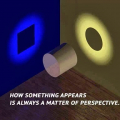
Then there is the whole issue of my truth, your truth, our shared truth. As you were already indicating with your mention of the cylinder seen as a circle or a square, but this in fact extends to many other areas. Dare I mention Trump and American politics - now there is a man who has mastered the art of appearing to some as a perfect circle while to others he is definitely a square.
Jeroen