
Best Of
Re: What is my practice? Where is my practice? Who is my teacher?
> A lost meditator here seeking advice once again..
- Getting Lost is a directive for finding or re-finding and refining
- Meditate as badly as you can, a lot harder than you imagine
- Learn to breathe before you crawl, Walk before sitting, Stand in awe before sitting
- Do not trust lists of pointers. Rather trust the moon that is not an influencer
Hope that helps (at least me) 
meanwhile...
https://laurahargreaves.com/tag/reflections/
 lobster
Re: Good and Bad People
Hi. I have worked with sociopaths and, unfortunately, they do commit a lot of very unwholesome acts and tend to justify their actions and denigrate other people to the point of dehumanising them completely. Some of them even hold positions of power and have a good economic balance in the sense of properties, income, etc. All of them by the way were extremely unhappy and could not find any pleasure beyond drugging themselves, sex, and other fetishes. There are also psychopaths who are people that are born without the ability of forming any connection whatsoever and, while it is not very common for them to become vicious killers or destructive, some careers and sectors of the world which are not very...clean... have their ranks composed by them.
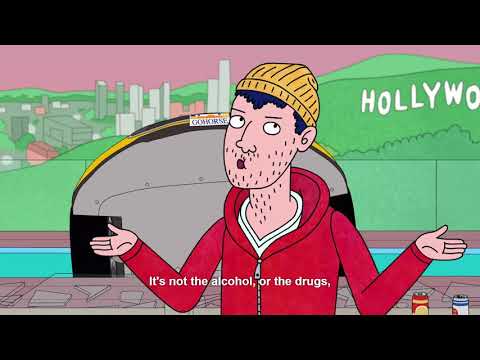
Going back to sociopaths or people committing bad acts purposely and knowingly do have traumatic childhoods and very adverse/poor upbringings. This, however, does not excuse them from their actions. Have you seen the series Bojack Horseman? Without spoiling it too much, it is about the life of a famous one-hit wonder series actor who deals with depression, substance abuse, and basically being a narcissist and using people (particularly women) for his own advantage. In the following scene which I attach, he is basically admitting his done wrong...but here is where his friend does say something that reminded me of your post: you are also to blame and responsible for the actions. And you need to do something to avoid this pattern of repetitive compulsion. Ah, so hard the latter to break....
 Kotishka
Re: The Plant Medicine Path
Interesting discussion between Rogan and Michael Pollan, touching on plants, diet, caffeine, psychedelics, legalisation, and other things.

 Jeroen
Re: No Buddhist Quotes
"The mind that's open to new ideas, never returns to its original size".
 Shoshin1
Re: No Buddhist Quotes
Remember humanity, and forget the rest
~Russell-Einstein Manifesto~
Shoshin1
Re: No Buddhist Quotes
The definition of insanity is doing the same thing over and over again expecting a different result.-Albert Einstein
 Ivomon77
Re: No Buddhist Quotes
“Above all, don’t lie to yourself. A man who lies to himself and listens to his own lie comes to a point where he does not discern any truth either in himself or anywhere around him, and thus falls into disrespect towards himself and others.”
~Fyodor Dostoevsky’~ " The Brothers Karamazov "1880
Shoshin1
Re: Good and Bad People
Here is a thought.
Happy and contented people don't do harm to others.
You can put the blame on the poisons of greed, fear, anger and aversion that is the cause of all the "badness".
The "rich" want more because they always feel they don't have enough.
The "poor" hate the rich because they fear that what they have is going to be taken away.
Mind precedes all mental states. Mind is their chief; they are all mind-wrought. If with an impure mind a person speaks or acts suffering follows him like the wheel that follows the foot of the ox.
Mind precedes all mental states. Mind is their chief; they are all mind-wrought. If with a pure mind a person speaks or acts happiness follows him like his never-departing shadow
“He abused me, he struck me, he overpowered me, he robbed me.” Those who harbor such thoughts do not still their hatred.
“He abused me, he struck me, he overpowered me, he robbed me.” Those who do not harbor such thoughts still their hatred.
Hatred is never appeased by hatred in this world. By non-hatred alone is hatred appeased. This is a law eternal.
There are those who do not realize that one day we all must die. But those who do realize this settle their quarrels.
Just as a storm throws down a weak tree, so does Mara overpower the man who lives for the pursuit of pleasures, who is uncontrolled in his senses, immoderate in eating, indolent, and dissipated. [1]
Just as a storm cannot prevail against a rocky mountain, so Mara can never overpower the man who lives meditating on the impurities, who is controlled in his senses, moderate in eating, and filled with faith and earnest effort. [2]
Whoever being depraved, devoid of self-control and truthfulness, should don the monk’s yellow robe, he surely is not worthy of the robe.
But whoever is purged of depravity, well-established in virtues and filled with self-control and truthfulness, he indeed is worthy of the yellow robe.
Those who mistake the unessential to be essential and the essential to be unessential, dwelling in wrong thoughts, never arrive at the essential.
Those who know the essential to be essential and the unessential to be unessential, dwelling in right thoughts, do arrive at the essential.
Just as rain breaks through an ill-thatched house, so passion penetrates an undeveloped mind.
Just as rain does not break through a well-thatched house, so passion never penetrates a well-developed mind.
Re: Good and Bad People
Platitudes for Buddhists? Or...
Maybe we should work out who is who and what is what? 
lobster
Re: Buddhist quotes
We are compelled more by the dreams of things than the things themselves. We crave and cling to mental fabrications. Even the “I” that is seemingly propelled along by this compulsive flow is an endless series of mental constructs.
Andy Karr, “Between Neuro-Skepticism and Ultimate Liberation”
 Jeffrey