
Best Of
Re: "Buddha's Teachings" - in 1,000 years, how will they know?
@Jeroen said:
But perhaps online archives like Access To Insight will stay the course and provide the authentic words of the Buddha to LLMs.
Your other thread about control reminded me that whatever happens to Buddha's teachings in 1,000 years is what happens, regardless of how much I worry about it. 😄

Re: Top 5
Top 5 Buddhist books
- The Complete Teachings of Ajahn Chah, by Ajahn Chah
- Buddhist Scripture, by Edward Conze
- The Tibetan Book of Living and Dying, by Sogyal Rinpoche
- The Heart of the Buddha’s Teachings, by Thich Nhat Hanh
- In the Buddha’s Words, by Bikkhu Bodhi
 Jeroen
Re: About control: to pursue it or not?
In art, in painting, without control you just make a mess. If you exercise too much control, you make a different kind of mess. Life seems much the same. You must discern how and when to exercise control, and when to just let things flow as they will. There is no instruction booklet for this, no verbal formula, there is only mindfulness. No instruction manual for that either?
 Fosdick
Re: The Plant Medicine Path
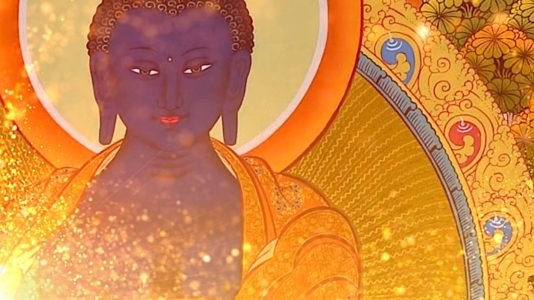
In my earliest formal Buddhist Path... Food/nutrition was medicine.
https://elissagoodman.com/lifestyle/eating-for-spiritual-connection/
Now as I eat the best I can (time for a late breakfast soon), I remind everyone:
- Cooking is practice
- Eating slowly and mindfully is practice
- Sharing with the invisible realms is practice
https://buddhaweekly.com/who-is-medicine-buddha-king-of-lapis-lazuli-light-and-how-can-we-attain-healing-blessings/
 lobster
Re: No Buddhist Quotes
“The journey is long because we do not take the first step.”
— Indian saying
Jeroen
Re: About control: to pursue it or not?
@marcitko said:
Coming from a background of being too lazy and unfocused, I much prefer control and the phases of my life when I was systematically "winning over myself" a.k.a. learning to control myself.Free will can be trained, like a muscle, and ever more things can be controlled.
@Jeroen said: An illness, a death in the family, a car accident… life doesn’t seem to lend itself to control.
Life, not. But our response, yes. Body, emotions, speech, thought: all of these can be controlled. And what a difference they can make!
There's that saying "go with the flow". Sure, if you're already blessed with wonderful habits. But if not? I vote for "go against the flow" a.k.a. "win over yourself" again and again and again and again. It really does work.
"Only the disciplined ones in life are free. If you are undisciplined, you are a slave to your moods and your passions." Eliud Kipchoge (Marathon GOAT).
PS. If someone has a different background, maybe an A-type personality always on the gogogo that tries to control everything, maybe they will have an opposite view to the above.
Agreed, its all about the balance and direction. Disciplined towards what? If you're too loose, tightening it up a bit is good. If you're already tight, more discipline isn't the way. And then what are you disciplined about? Disciplined to meditate daily or eat better is different than being disciplined at the gun range or poker table.
So it isn't like discipline or letting go are good or bad in themselves. They're skillful or not as medicine in relation to what any individual needs at the time.
 person
Re: About control: to pursue it or not?
We have choice. To strive for control is to fail to see choice. Chaos is always present. When we understand choice vs control, we gain true control. True control does not come from directing everything. That is an impossible task. For we cannot see everything and that which we do not see or are not aware of is beyond control.
When we have choice, we are fluid, we can adapt readily to our situations of the moment. We can adjust for alternatives, we are free. We are not bound by the need of total control. We can not control the river. But we can choose to use it's currents, it's characteristics to navigate it, utilizing those currents, making the river our highway instead of our nemesis. In human interactions, in our internal interactions, choice is the ultimate control. We can maneuver within the flow of interaction. Thus we have control, not of the others thoughts or actions, but of our own which enables us to navigate the rivers of interaction.
Put another way, a ship upon the sea has no control over the sea. The ship's pilot, however, chooses the speed, direction and overall relation to the sea to navigate the ship upon the sea.
Thus we see that Control is an illusion, an impossible task whereas Choice is a reality our control is actually our ability to choose, regardless of the circumstance. What we may seek as "Control" is actually Choice - We have the "control" of choice. Control is the illusion while choice is the reality.
Peace to all
 Lionduck
Re: About control: to pursue it or not?
Coming from a background of being too lazy and unfocused, I much prefer control and the phases of my life when I was systematically "winning over myself" a.k.a. learning to control myself.
Free will can be trained, like a muscle, and ever more things can be controlled.
@Jeroen said: An illness, a death in the family, a car accident… life doesn’t seem to lend itself to control.
Life, not. But our response, yes. Body, emotions, speech, thought: all of these can be controlled. And what a difference they can make!
There's that saying "go with the flow". Sure, if you're already blessed with wonderful habits. But if not? I vote for "go against the flow" a.k.a. "win over yourself" again and again and again and again. It really does work.
"Only the disciplined ones in life are free. If you are undisciplined, you are a slave to your moods and your passions." Eliud Kipchoge (Marathon GOAT).
PS. If someone has a different background, maybe an A-type personality always on the gogogo that tries to control everything, maybe they will have an opposite view to the above.
 marcitko
Re: About control: to pursue it or not?
Control implies that you want to influence something. A baby learns to control bowels and muscles and learns to walk and run in order to control where they go and what they do there. A person controls their love life in order to find a partner and manage their family and home life. People want to control their work life in order to have the lifestyle they want.
What kind of control would you want over subtle bodies? What do you want them to do or not do? If you don't have any aim or goal control seems something you would not want.
 zorro
zorro
Re: The Plant Medicine Path
Thank you for that, I ended up watching most of the interview. He is an interesting character, he says he is a Christian and therefore he believes in external beings of evil, which they call the antichrist and which they say is trying to manifest as ‘the machine’. But then he says his literary style is one of exaggeration, which is what makes him hard to grasp, he talks a lot in archetypes and fragments of memes.
His book appears to be an attempt to understand the modern age. It puts me in mind of something that Terence McKenna used to say, that mankind as a species “extrudes technology”, as a kind of matrix within which we exist. There is an extensive discussion of AI, as a kind of ultimate manifestation of that matrix.
This is very much about a way of looking at Western civilisation as a kind of agent of creating the machine, and so in a way his book “Against the Machine” is a critique of Western civilisation.
Jeroen