
Best Of
Re: Idle Chatter
So "idle chatter" is prohibited. You're what, commiting a sin or making bad karma or anyhow being UnBuddhist if you don't shut up and stop talking to people. That cashier who smiles at you at the store checkout and asks how your day is going? Idle chatter! Don't you dare spend a few minutes letting her know you see her as a person worthy of talking to. That coworker who wants to talk about the movie they saw the day before? Idle chatter! Ignore them until they go away. I talk to my mother several times a week in Ohio, and to an old friend in a nursing home by phone once a week or so. About nothing in particular, just...idle chatter.
People are social animals. Sometimes it's not the content of what we're talking about that's important, it's that we make the effort to connect. Sometimes that means talking about the weather, or a favorite TV show.
So why this prohibition against idle chatter when the sutra talks about right speech? It's supposed to refer to the usual group of monks. They're supposed to be learning. The temple is their school. It's a teacher telling the class to sit down and shut up. So yes, there is a time and place for everything, and shutting up is included. Just don't try to wrap your entire life around it.
 Cinorjer
Re: The Twilight Zone called “Anatta”
The topic of self and not-self can seem awfully complex or paradoxical from the Buddhist POV, but I think it’s helpful to see it this way: The word self, atta, is defined as that which is constant, completely under one’s control, and happiness/comfort. Not-self, on the other hand, anatta, is defined as that which is inconstant, conditioned, not fully under one’s control, unsatisfactory/painful. And one of the practices that the Buddha advises a practitioner to develop is mindful awareness, first analyzing the body and searching for such a self. Then the same for mental states, feelings, and the confluence of object, sense base, and the sense consciousness that arises from it. And even in the depths of meditative states of concentration and pleasure. Along the way, one notices that neither our body nor our mental states constant or fully under our control. And, if one is fortunate enough to be able to develop and sustain them, one may even find the same for deep and subtle states of meditative absorption. Some may seem more constant than others (e.g., the body vs. mental states, the latter of which arise and cease much faster), and some may be more pleasant (like the jhanas obviously); but ultimately, we begin to see that none are truly stable, lasting, and under our total control. And so, the perception arises that the body isn’t self, mental states aren’t self, and even blissful states of consciousness within meditation aren’t self. We also start to see the causes and conditions that go into their arising and ceasing, as well as the limits of control we have over that arising and ceasing and our experiences related to them, i.e., “When this is, that is. From the arising of this comes the arising of that. When this isn't, that isn't. From the cessation of this comes the cessation of that” (Ud 1.3). And eventually, we come to realize that what we tend to think of as self is less of a solid reality and more an active process of self-identification with the objects, organs, and qualia of our experience—a realization that makes it easier to unidentify when appropriate, reducing our attachment and the suffering that arises from our clinging to that which is inconstant, not fully under our control, and not truly fit to be metaphysically labeled as self. Perhaps there’s something underlying our experience that we can touch or realize that is constant, blissful, and totally sovereign over itself. But for the most part, that’s not the case. Nevertheless, we can still use this process of selfing skillfully in our practice, as well as our day-to-day lives, in order to reduce our suffering and increase our happiness and ease. And who knows how much more.
 Jason
Jason
Re: The AI tsunami
It’s very on track, because it’s all about who owns what, who’s benefiting from these social relations and in what ways, who’s being harmed by these relations, and who’s interested in keeping things this way vs. who’s trying to change them. AI is no different, as Hawking so perceptively noted. AI will certainly allow for the development of new tech and ideas and be great for science and predictive models for experimentation, likely paving the way for so many innovations. It’ll also cost jobs, allow for more corporate and government invasiveness into our lives, expand spying on our lives, and make it easier to control the ideas of the population and what knowledge they’re presented. And much of that is dictated by those who own and control this technology and its implementation.
Jason
Re: Just for fun: the random, useless announcements thread!
It's only boring because there is a "YOU" doing it.
 Shoshin1
Re: The AI tsunami
This conversion reminds me of a few things. The first is the news of layoffs of human labour happening due to AI investment and utilization (e.g., Microsoft). The second is a report from the IMF that came out at the beginning of 2024, which sounded the alarm about the future economic effects of automation and AI and made the headlines for a hot millisecond. While trying to highlight the ways AI will complement workers' abilities and boost productivity and efficiency, one article noted another potential outcome is that:
Artificial intelligence will affect about 60% of all jobs in the US — and worsen income and wealth inequality, the International Monetary Fund warned.
Advanced economies such as the US are at the greatest risk due to the prevalence of cognitive task-oriented jobs, the IMF said, cautioning that the disruptive technology could replace more than half the jobs available in regions that also include Canada, the UK, Japan, Germany, France and Italy.Comparatively, AI exposure was estimated to impact 40% of jobs in emerging economies and 26% of positions in low-income countries.
The third thing I was reminded of was an Op-ed Stephen Hawking wrote in the Guardian 9 years ago or so re: automation, which I believe AI will be a huge part of. For starters, Hawking notes the role of automation in the elimination of many jobs, which advances in AI will obviously exacerbate. And when he talks about 'breaking down barriers within and between nations,' what he's really talking about, in my opinion, is the socialization of opportunity (and the weakening of class antagonisms and hierarchies arising out of social relations unique to capitalism and other predominantly exploitative systems) and internationalism, i.e., about breaking down barriers between capital and labour and between competitors within markets, local as well as globally.
The ways we view the necessity of wage-labour (economically, morally, etc.) are outdated and counterproductive. Our productive capacities are such that we no longer have a material necessity for capitalist wage-labour or social relations (not to mention the cyclical crises created by capitalisms internal contradictions), but the demand for profit creates an political-economic system that consistently depresses our productive capabilities and produces artificial scarcity, limiting the production and consumption of commodities to only that which can realize profit, among other things. And when too many people have jobs and are earning decent wages, the system reacts to strip them of their gains (both in terms of wages and purchasing power) and ‘discipline’ them into more subservient and precarious positions. For instance, a recent article from The Atlantic framed it this way:
The New Deal did indeed avoid a repeat of the ’30s, but its software had a bug. If full employment meant running the economy hot to keep unemployment down, then eventually employers’ ability to keep their profits up by augmenting productivity would fail as workers’ demand for higher wages outstripped firms’ ability to pay them. By the mid-’70s, profits were falling as wages and inflation rose, so the U.S. investor class reached for the reboot switch. Holders of capital founded political-action committees, funded think tanks and media outlets to promote free enterprise, and helped get Ronald Reagan elected in 1980. Reagan busted unions and deregulated markets, accelerating the movement of capital from union strongholds to 'right to work' states, which was effectively an onshore tryout of offshoring. Simultaneously, the Federal Reserve under Paul Volcker raised interest rates to almost 20 percent to squeeze inflation, a measure that induced a harsh recession, which disciplined labor further by raising unemployment.
We've reached an epoch of material abundance via the technological advancements and innovations of the past, thanks in large part to the more positive elements of capitalism; but the old masters, who must increasingly rely on the state (so much so that the two are almost indistinguishable, with the state essentially acting as the national capitalist), are refusing to let go of their death grip on wealth and power, their ownership of the means of production, finance, etc., stalling our transition to a post-capitalist society and the socialization of economic means that can make it possible.
What's worse is that most of us follow suit, fearing that society would drift into chaos and crisis and economic barbarism without them, without capital, wage-labour, profit, and even money itself, when the reality is that we're actually descending into chaos and crisis and economic barbarism because of them, because we refuse to let these relics of a past epoch go, because these things are holding us back and we lack both the imagination and the motivation to conceive of a future without them. Just look at our healthcare system and it should be plain to see how our current for-profit approach is failing us and those who need care (e.g., this, this, and this). (And this is fascism’s playground, because the people they’re appealing to are desperate and cynical and propagandized enough to listen to all the poisonous nonsense blaming scapegoated others for the current state of affairs, along with their promises of a strong state that’ll make friends with benevolent job creators and enemies with anyone they can blame for making things difficult for the hardworking people (which is conveniently never themselves or their corporate partners, but minorities, immigrants, and other marginalized groups.)
We've reached a point in history where, even with vast reductions in hours of labour and/or employment, we're able to consistently produce more than can be productively consumed in the capitalist production process (i.e., in a way that produces surplus-value for the capitalist) despite no shortage of want or need — with much of it being destroyed, including food — and yet we're so worried about robots, AI programs, and 'foreigners' taking our jobs that we don't realize 'we' don't need those jobs anymore, capital does. But in the end, it really all comes down to control and ownership. As Hawking noted in his last AMA on a question about automation and unemployment:
Everyone can enjoy a life of luxurious leisure if the machine-produced wealth is shared, or most people can end up miserably poor if the machine-owners successfully lobby against wealth redistribution. So far, the trend seems to be toward the second option, with technology driving ever-increasing inequality.
I think the ownership part is so critical to everything because it directly relates to who controls, programs, and predominantly benefits from the economy and technology as a whole, particularly when it comes to things like AI. Workers are losing their jobs and what little say they have in the production process while CEOs and shareholders increase their profits as their pet money-making projects of the day feed us bullshit information, steals and regurgitates other people's work without acknowledgement or compensation, and takes on our worst character traits and biases (one even dubbing itself MechaHitler).
And it's ultimately up to working people to decide and tilt the scale in one direction or the other. As things stand today, even more so than they did in 1892 when Karl Kautsky first wrote The Class Struggle, "capitalist civilization cannot continue; we must either move forward into socialism or fall back into barbarism." As it stands, the scale seems to be heavily weighted towards barbarism at the moment. The question is, how can we come to a consensus that something needs to change and then organize in a politically powerful way to change it?
/soapbox
Jason
Re: What documentary are you watching?
i am currently reading a book by Peter Cornish the man who came to Ireland with his wife and bought the land that he eventually gifted to rigpa. to me Peter Cornish seemed the true spiritual presence there rather than the since disgraced sogyal rinpoche

Re: The Plant Medicine Path
I haven't heard much from Pollen in a few years, but I remember liking what he had to say back then. His guidelines for food is what I try to follow to this day.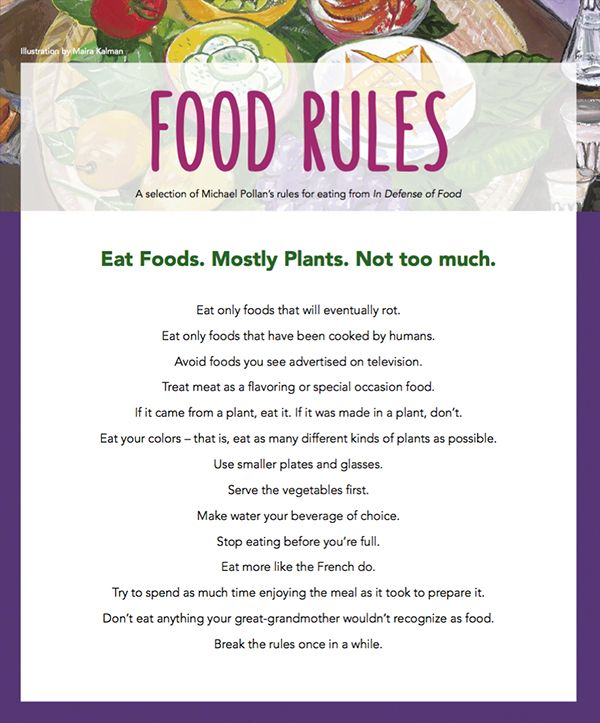
 person
Re: The Plant Medicine Path
fascinating beliefs
Indeed. I believe we can find value in ideas of even rocks having 'medicine', teaching. Everything becomes sacred. Special. In vajrayana, blessing the river nagas (dragons) is one of many, some including me have participated in.
 lobster
Re: No Buddhist Quotes
Awareness is like a timid, shy creature. It watches you constantly, wary and cautious. Only through patience and diligence can you gain its trust, and when you do, it will let you see yourself through its eyes.
~Thoughts from the cushion~
Shoshin1
Re: The AI tsunami
@Jason said:
As Hawking noted in his last AMA on a question about automation and unemployment:Everyone can enjoy a life of luxurious leisure if the machine-produced wealth is shared, or most people can end up miserably poor if the machine-owners successfully lobby against wealth redistribution. So far, the trend seems to be toward the second option, with technology driving ever-increasing inequality.
I think the ownership part is so critical to everything because it directly relates to who controls, programs, and predominantly benefits from the economy and technology as a whole, particularly when it comes to things like AI.
Very insightful, and thank you for the Hawking citation.
 Jeroen