
Best Of
Books and movies that have soul
Lately I have been reading ‘Meetings with Remarkable Men’ by G. I. Gurdjieff, and in the introduction I came across a long memory of the writer where he cited a speech by a Persian gentleman of his acquaintance. This man told of how literature formed the minds of subsequent generations, and how he felt that modern literature had lost its soul. As an example of an older book that did have soul, he held up ‘A Thousand and One Nights’.
So that made me start thinking about modern works of fiction that did have soul, and I think this is the start of a very interesting discussion about fiction that has soul, versus that which is just entertainment. I did a little research on Goodreads, about what people there consider books that are food for the soul, and I’ve made up a short list of books and movies that may fit the bill.
The Alchemist, book by Paulo Coelho… This is a short book about a shepherd boy who goes on a journey from Spain across North Africa to the Pyramids in order to find treasure. What he finds is not just physical treasure but something of the mysterious.
The Little Prince, book by Antoine St Exupery… This novella follows a young prince who visits various planets, including Earth, and addresses themes of loneliness, friendship, love, and loss. Despite its style as a children's book, The Little Prince makes observations about life, adults, and human nature.
Eat Pray Love, book by Elizabeth Gilbert… This memoir chronicles the author's trip around the world after her divorce and what she discovered during her travels. She rediscovers food in Italy, prayer in India and love in Bali.
The Way, movie… This film follows a physician on a journey along the Camino de Santiago, as he follows in the footsteps of his dead son in order to leave behind his ashes. Along the way he discovers companionship, lightheartedness and diverse communities.
Spirited Away, movie… This animated film follows Chihiro, a young girl who finds herself in the world of the spirits. It is arguably Hayao Miyazaki’s masterwork, speaking visually and emotionally to the soul.
I think these works speak to the sensation of wonder and the mysterious, the sense of being nourished by something extraordinary. I stayed away from things like ‘The Lord of the Rings’ (too much darkness and battle) or ‘The Count of Monte Christo’ (it’s a story about revenge), which although they are great stories do not actually nurture.
 Jeroen
Re: Unusual mantra?
I saw you on another thread and I thought I recognized the name, so I went to look at most recent comments. First, welcome back. Second, since we're now living in the future, have you tried google translate with an image search? My phone recognizes this as Tibetan, but I can't get a shot of it without all the other text in the post. I'm kind of curious myself what it could say.
 person
Re: For the coming year
When you give attention to your breath with friendliness and love, you get to recognise the wisdom of the body. It just breathes in a shallow way, taking in just enough breath to keep the body functioning when you are at rest. It doesn’t breathe deeply or bring in lots of oxygen when it isn’t necessary — it knows when enough is enough.
Sometimes I find that the in-breath generates energy and tension, and the out-breath is a moment of release and relaxation, then my in breath is short, and my out breath is long, and I find myself in a tremendous space of let-go.
Jeroen
Re: Some troubles with new sila efforts
I too have been thinking about this thread. I started a new job and from day 1 my main responsibility has been to interact with and help an external stakeholder of the company with a track record of extremely dubios affairs in relation to the best practices of the industry. This stakeholder, while being external, is still closely related to the company and the company can fire him. It's clear to me that this stakeholder should have been fired ages ago, but he's too big and important for that, from the perspective of the company.
I'm trying hard to act professionaly and ethicaly but am becoming really pissed off by the situation.
Anger and self-rightesousness? Aha!
I think I will try to seek out counsel from someone within the industry who is both ethical and more senior than me and who is not embroiled in the situation and can thus be objective.
 marcitko
Re: Some troubles with new sila efforts
You might find some inspiration/pointers by following the Sila Zen Ox...
https://www.lionsroar.com/searching-for-the-ox-the-path-to-enlightenment-in-10-pictures/
 lobster
Re: Community
@Linc said:
(This is not an invitation to rebellion lol)
Oh well. Was looking forward to the rebellion. 
Will have to look elsewhere or just enjoy some free time... 
lobster
Re: Some troubles with new sila efforts
For whatever reason this thread came up in my mind today. The thoughts that percolated up were that a good portion of our personality is genetic, we're disposed to being introverted or extroverted. Agreeable and disagreeable is another similar personality spectrum. Its often hard to change these traits in a deep way about ourselves (neuroticism <-> emotional stability being the most changeable I'll note as a point in favor of a spiritual practice), but we can develop skills in the other direction. I'm pretty introverted, but need to meet new people and persuade them of my ability professionally often so have developed extrovert skills.
The other reflection I had was that for much of my life people never really confronted me on certain behaviors or when work I did wasn't up to par. As such they never got corrected or improved upon and it led to problems in my life. Since, I've adopted an attitude that its often kinder in the long run to tell someone they need to use deodorant for example. But there are kinder and more tactful ways of doing that.
Then this interview on 10% Happier came up today and felt very relevant.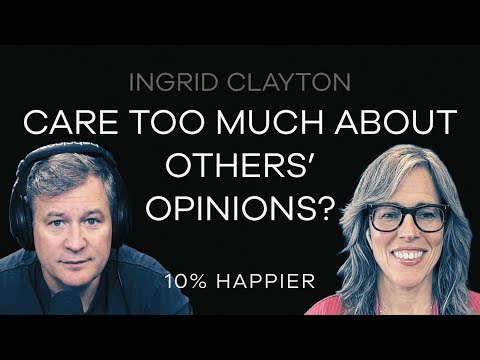
person
Re: Community
@person said:
its also possible for a bottom up sort of authoritarianism to develop, a sort of mob mentality.
This is the type I was most concerned about in my first decade or so of moderation & group organizing. It was the primary reason for accepting that Brian and I were "benevolent dictators" and the underlying rationale was that these aren't civic spaces, they are opt-in, and so little of tangible value is lost (to you) if you choose to leave, so why be concerned so much with its governance?
I now think it was a useful but overly-convenient perspective that allowed me to ignore some of the tensions therein.
(This is not an invitation to rebellion lol)
 Linc
Linc