
Best Of
Re: Should a Buddhist own a gun ?
@Shoshin1 said:
Thus have I heard and found to be true:There is not much that one cannot justify if one puts one’s mind to it. If one enjoys doing something and is told that it is unethical, one will look for ways to make it seem more ethical, to give oneself, or those who share the same unethical practice, peace of mind.
So it is with those who own guns, for they tell themselves it is for sport, for safety, or for freedom, while overlooking that the weapon they cherish was made for the taking of sentient life. Then they start to say, but a knife kills, and so the justification continues, forgetting that knives were made to carve and create, while guns were made to destroy.
Then some might say, who am I to judge another who chooses to own a gun, all the while continuing to justify something unethical. Some people justify killing, but if those carrying out the killing are not liked by them, then that is a different story.
This no doubt will make some uncomfortable, but Buddhism and Dharma practice can make one feel uncomfortable when facing one’s own shortcomings, reminding us that the hardest truth to face is often the one about ourselves. And I’ve been there and done that on more than one occasion.
Ethics and judgmentalism aren't the same thing.
...It is very difficult to convert these strongly held viewpoints and opinions. One reason is that it gives us a sense of superiority to look at others and judge them. We know the way things should be, whether it is the behavior of other people, the way the world is, or how we should be. It is helpful to look at this critical mind and see how it feels and where it brings us. It never brings us to real happiness and joy, nor real peace and contentment...
...We can view our opinions as being reality and believing in their truth. But all opinions are based on only a partial view and we can never know everything. This means that we can never know when we will see something that we were previously unaware of. This new insight can completely change the way we view and judge something. This also means whenever we are certain of our opinions or judgments, we can still be wrong. It does not mean we ignore the judgmental mind; it means we should not let that faculty of judging and discriminating dominate us. We want to approach everything in our life with an open mind that recognizes that we could be wrong. The mind of Buddhist training is not obsessed with being right or being perfect...
...Rev. Master Jiyu used to like saying “if we look with the eyes of a Buddha, we will see the heart of a Buddha.“ The eyes of a Buddha sees everything as clean and immaculate. The only thing getting in the way of us viewing the world with the eyes of a Buddha is the mind that condemns and judges. The mind of meditation and the practice of the Buddhist Precepts soften our harsh judgments and strong opinions and helps our heart and mind to be more open and see everything with more acceptance and compassion...
https://berkeleybuddhistpriory.org/2020/02/27/judging-and-criticizing/

 person
Re: Should a Buddhist own a gun ?
While ethics and judgmentalism are not strictly identical, they are often intertwined in practice. Ethical reasoning involves making judgments about right and wrong, and when applied rigidly or without empathy, it can easily slip into judgmentalism.
Distinguishing between principled critique and unkind condemnation is important, but insisting that ethics is entirely separate from being judgmental overlooks how moral standards are inevitably experienced and enforced in social contexts.
 Shoshin1
Re: Should a Buddhist own a gun ?
Thus have I heard and found to be true:
There is not much that one cannot justify if one puts one’s mind to it. If one enjoys doing something and is told that it is unethical, one will look for ways to make it seem more ethical, to give oneself, or those who share the same unethical practice, peace of mind.
So it is with those who own guns, for they tell themselves it is for sport, for safety, or for freedom, while overlooking that the weapon they cherish was made for the taking of sentient life. Then they start to say, but a knife kills, and so the justification continues, forgetting that knives were made to carve and create, while guns were made to destroy.
Then some might say, who am I to judge another who chooses to own a gun, all the while continuing to justify something unethical. Some people justify killing, but if those carrying out the killing are not liked by them, then that is a different story.
This no doubt will make some uncomfortable, but Buddhism and Dharma practice can make one feel uncomfortable when facing one’s own shortcomings, reminding us that the hardest truth to face is often the one about ourselves. And I’ve been there and done that on more than one occasion.
Shoshin1
Re: Why Sangha?
The Buddha Sangha is a tough call too. For example. The Dharma is everywhere in everything. One could say the three jewels are One and the Same...
https://billhulet.substack.com/p/internal-alchemy-part-four-ad1
 lobster
Re: My Dharma practice today
I’ve been contemplating what the Dharma has brought to my life, and whether I have been approaching it in the right way.
The two teachers to whom I’ve owed most of my Buddhism have been Thich Nhat Hanh and Ajahn Chah. Thich Nhat Hanh for books such as ‘The Heart of the Buddha’s Teaching’ and Ajahn Chah for his many Dhamma talks. This has led to an increased measure of mindfulness, peace and much letting go.
Yet it has not led to more energy, more joy, more blissfulness, more spontaneity. So in some ways it has been good, leading me to rest and peace and spirituality, and in another way it has led to me slowly losing touch with many of the elements which had energised my life, like games, news, science fiction, cinema, music and so on.
After twelve years of relatively single-minded pursuit of the spiritual — not only Buddhist Dharma but also the Tao, non-duality, Eckhart Tolle and Osho — I wonder if my attempt to let the spiritual sink into my bones and marrow has not come to a point where a slight change in approach is necessary.
It isn’t necessary for me to be a ‘cyber-monk’ or a ‘dharmist’ or to have deep knowledge of all these things. Studying is perhaps not the way, and memorising is certainly not helpful.
That is as far as I have gotten today. To be continued.
 Jeroen
Why Sangha?
“The next Buddha will be a Sangha” – Thich Nhat Hanh
Sanghas are communities of monastic and/or lay Buddist practitioners. A sangha is the best way to practice meditation, as it offers deep support and wisdom for beginners and seasoned practitioners alike, and can start with a minimum of four practitioners. Not only do they help create a routine and improve individual practice, but the energy of a community of practitioners can create ripples of understanding and compassion that reverberate throughout society and the world.
Why Sangha?
Alone we are vulnerable, but with brothers and sisters to work with, we can support each other
We cannot go to the ocean as a drop of water—we would evaporate before reaching our destination.
But if we become a river, if we go as a Sangha, we are sure to arrive at the ocean…
You need a sangha;
you need a brother or sister, or friend to remind you what you already know.
The Dharma is in you, but it needs to be watered in order to manifest and become a reality.
A Sangha is a community of resistance, resisting the speed, violence,
and unwholesome ways of living that are prevalent in our society.
There is no religion, no philosophy, no ideology higher than brotherhood and sisterhood.
Not even Buddhism.
In society, much of our suffering comes from feeling disconnected from one another. Being with the
Sangha can heal these feelings of isolation and separation. We practice together, share a room
together, eat side by side and clean pots together. Just by participating with other practitioners in the
daily activities we can experience a tangible feeling of love and acceptance.
A sangha is a garden, full of many varieties of trees and flowers.
When we can look at ourselves and at others as beautiful, unique flowers and trees
we can truly grow to understand and love one another.
One flower may bloom early in the spring and another flower may bloom in late summer. One tree
may bear many fruits and another tree may offer cool shade. No one plant is greater, or lesser, or the
same as any other plant in the garden. Each member of the sangha also has unique gifts
to offer to the community.
We each have areas that need attention as well. When we can appreciate each member’s contribution
and see our weaknesses as potential for growth we can learn to live together harmoniously. Our
practice is to see that we are a flower or a tree, and we are the whole garden as well, all interconnected.
https://plumvillage.app/a-short-guide-to-joining-or-starting-a-sangha/
Let’s work on our online Sangha here, at NB. With all that’s going on in the world….I miss my little safe place to practice. 🙏
Any ideas? Ways to foster the community feel and participation? More Buddhist topics, yes?
 Vastmind
Re: Should a Buddhist own a gun ?
A large number of gun fatalities are accidents. Quite a few others are intentional by young people who don’t know any better. Others are due to gang violence.
Here in Europe, gun ownership laws are much stricter. Generally guns are forbidden, although some criminals still know ways to get around that. But for instance, there are no cops or private guards at schools. And because people generally don’t have guns, they don’t feel the need to defend themselves from them, and generally life is much safer. It’s something that Americans remark on when they walk around in cities in Europe, how much safer they feel.
Gun deaths are a relative rarity around here. Thankfully.
Jeroen
Re: My Dharma practice today
I've been doing a mindfulness practice recently. It's maybe a little like Jon Kabbat Zinn's teaching of eating a raisin mindfully and appreciating all of the facets of the experience. And I've also read about mindful washing of dishes. Normally when I do tasks like laundry, dishes loading and unloading, or tidying I am thinking of how it is my task and I want to get it done. I think of it as a daily goal. And that is fine as it's fine to have goals and tasks. But I bring mindfulness by doing everything slowly and noticing more of what I am doing rather than thinking. So instead of being efficient I slowly bring a plate out of the dishwasher and heft it and slowly walk to the cupboard then slowly open the cupboard and notice what's inside as a slowly set down the dish.
 Jeffrey
Re: The AI tsunami
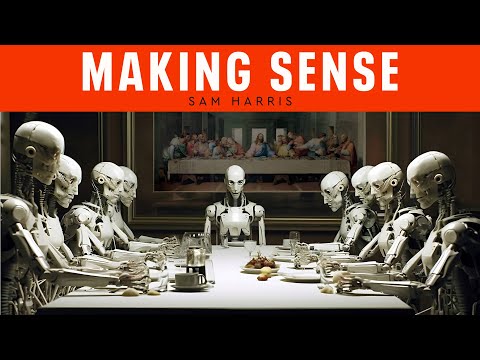
I realize what got me to start this thread was some people talking about how AGI was only a few years away. I think I've been swayed off of that point but I was reminded again about the risks that still exist even if it isn't right around the corner. Super intelligent beings seem kind of inevitable whether its 10 years or 50, the roadblocks can probably be overcome.
So I go back to my original concerns of the alignment problem. If we do build super intelligent machines will they care about what we care about? There are already indications that they'll do things no one programmed them to do. Terminator style robots coming to kill us isn't as likely as beings who consider our needs about as much as we consider the needs of the ants living in the ground where we farm, or build a home.
person