Best Of
Re: Right Speech
I do practice right speech and find it helpful, in as far as I try to be factual, true, beneficial and pleasing to other people. I’ve always found the Buddha’s sutra to Prince Abhaya to be good in this.
Although I did just respond on another forum to someone with the statement “that’s prime codswallop” which strikes me with a certain irony in retrospect.
 Jeroen
Re: Buddhist quotes
“If you think you are too small to make a difference, try sleeping with a mosquito.”
— H. H. the Dalai Lama
Jeroen
Re: About mind-altering experiences
Not sure Boris Johnson on mushrooms would be a good idea.
 Angus
Angus

Re: Engaging with Freedom
@Jeroen said:
@person said:
Relationship and connection with others are some of the best things life has to offer. I think it also kind of goes back to the distinction between happiness and meaning. I'm pretty sure in happiness studies parents often score lower than people without children, but having children gives people a lot of purpose and meaning in their lives.How do you feel this fits with Buddhist thought? The Buddhist ideal is a monk who has renounced and left the home, not creating a family or being a householder, all in pursuit of the end of suffering and the underlying happiness. In a way Buddhist goals replace the biological imperative to reproduce.
Sure, the pursuit of enlightenment works best when one is free from such constraints. The monastic life has many of its own constraints though, in the form of precepts or duties to maintain the monastery or serve the public.
Nature itself constrains us in many ways. I'm not free to swim to the bottom of the ocean if I wish. If you want to live in a state of nature you need to spend time gathering food and water, building shelter. In the modern world we engage in the constraint of work to overcome that natural constraint. At least most people do that, some are able to find a way to live off the efforts of others for sustenance (freegans, those on disability, etc.)
The Harvard economist Thomas Sowell had a book a good while back about the conflicting visions of the world that kind of even goes back to Hobbes vs Locke about the state of nature. In practice it isn't a binary and people usually exist somewhere along a spectrum between an unconstrained and a constrained view of human nature and the world.
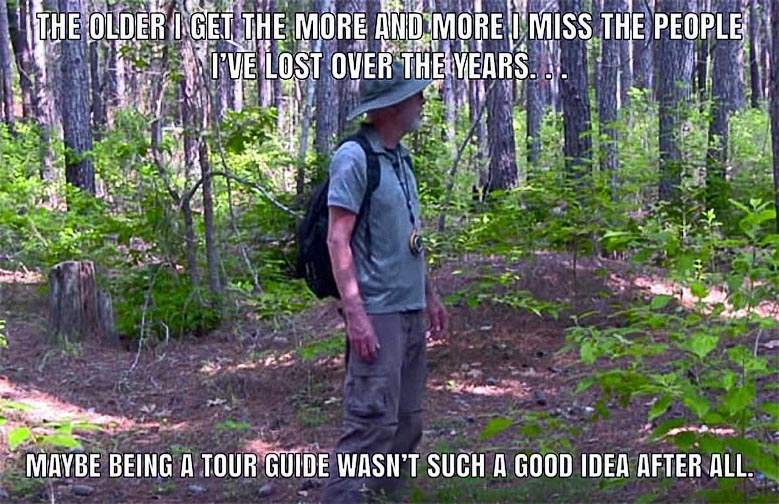
If I get down to it and try to be honest, I suppose the only place I think we can ever be truly free is in our minds. And at some level I feel disregarding our obligations and duties to pursue or own ends is, to some degree, a selfish pursuit.
 person
What is NewBuddhist.com?
I started this site in 2003 for people, specifically Westerners, who have zero experience with Buddhism. I'm talking utter ignorance like my dear, sweet departed grandmother who thought Buddhists were orange-robed Christians—her worldview literally couldn't comprehend a non-Christian existence.
Many of us are raised in cultures that completely ignore Buddhism; at most it's a footnote in the local bookstore, a "religion for Asians", or a special on evening television. In Western pop culture, it's a religion for weirdo celebrities, and most middle Americans would be hard pressed to tell you the difference between Buddhism, Hare Krishna, Hinduism, and Kung Fu movies.
This site was founded on the idea that Westerners who come from these types of backgrounds need a safe place where there are no stupid questions. Do Buddhist celebrate Christmas? Was Buddha a real person? Is the fat Buddha in Chinese restaurants a God that Chinese people worship? How can I be happy?
Anything else that this site has become is a direct result of the people who choose this as their online home. We have monks, laypeople, born again Christians, Muslims, and people from every internet-connected nation on Earth visiting here. It's going to be wild and diverse and crazy; that's what we love about it.
There is no single answer to the question "What is this site?". It is a place where the moderator team and myself will keep things nice so that everyone can talk about Buddhism at any level, freely, and without fear of being ripped a new asshole for saying something someone else disagrees with or thinks is stupid. Nothing more, nothing less.
 Brian
Brian