
Best Of
Re: Why Sangha?
My sangha is largely nature these days. Old white pines have much to teach. As did the songs of 2 Grey Jays while hiking this afternoon. The pattern of the wind on the water. I don't live remotely close to anyone who does Buddhist teachings.
We had a small group here once upon a time that dissolved after the teacher decided he didn't want to deal with a group so far from his home location (even though he only saw us once a year). He helped us start a local group and then we did a yearly retreat together, and also watched his weekly teachings remotely for several years. If I'm being honest it made me a little bitter that I took refuge vows with him where we both made promises in the student-teacher relationship and he bailed after saying he was responsible to be my teacher forever 😆 The local guy who started that Sangha no longer considers himself Buddhist. Several of the people were older and have since passed. A group leader I am not. I miss gathering in a group with like-minded curiosity and interest. It was especially nice in meditation. The pitfalls of living in a rural town with 3,000 residents 😂 Our local Presbyterians do a meditation group, I have considered joining them even though it is Christan-focused just to have the group connection.
 karasti
Re: The Dalai Lama in ‘Wisdom of Happiness’
A review I found and translated…
Against the background of an empty, dark universe, he looks straight at you. Wrapped in his red-yellow py. “Eight billion people. Everyone, including our enemy, wants peace.” That's how you get to the movie Wisdom of Happiness 'face to face with the Dalai Lama', sitting in a cinema chair of course.
Of course, this is not a meeting with the 90-year-old Buddhist spiritual leader, born Tenzin Gyatso. But there are less comfortable seats to listen to an hour and a half sermon about inner peace.
In addition, this reading will be provided with a musical and visual setting. With beautiful nature images, and historical film material, such as the Dalai Lama among the refugees crossing the Tibetan mountains on foot.
Professor Paul van der Velde, a specialist in Asian religions at Radboud University in Nijmegen, watched the film at our request.
The Dalai Lama says that he would have preferred to be just a child in the past. And could have played, instead of having to memorise all those Buddhist texts. Very painful.
“Yes, that boys should become monks or, like him, dalai lama, really deprives a child of the chance to want something else. The sixth Dalai Lama, who lived around 1700, stepped down and was killed perhaps because of that. That really couldn't be heard, that was a drama.
The Dalai Lama when he was young.
“It's a whole system in Tibetan culture: you take a boy away from his parents' tent. That's the rules. You may have reservations about that. But the journey of an average tourist to Tibet was only successful with photos of those little, cute monks.
“If I compare that to what is happening on Sumatra in Indonesia with five thousand boys being educated with the Koran, it is suddenly harmful. If I bring that up, it sounds like 'yes, but in Tibet the children are experiencing spiritual growth'. Yes, hoho.”
There was even a special, 'holy' whip for him, reveals the Dalai Lama. About which he says: 'But I didn't feel any sacred pain'.
“That whip is not an overdoing. If you now enter a Tibetan monastery, you will see that those monks are very ordinary boys, who just want to mess around. But there is often a monk's agent walking around there with a sturdy stick. He's hitting. That is still the case.”
Where does the rosy image of the Tibetan Buddhist world come from?
“At the beginning of the last century, it was the theosophists who became obsessed with Tibet. They came into contact with ancient Buddhist texts about Shambhala, a mythical kingdom, which was located in Tibet. This movement again had a lot of influence on the New Age movement of the 1960s and 1970s. Thus remained the somewhat naive idea of paradise around Tibet.
“An age-old deep wisdom would have solidised there, a 'culture of peace', the Dalai Lama calls it in the film. But that's not true. Tibetan history is all war, one and all struggle.
“What has been done by China, which occupied Tibet, is horrific, that is so. What has been done to the Tibetans is indefensible. Only the dream image of Tibet deserves an adjustment: we should not sweep the dark sides of that culture under the carpet. The Tibet of the Dalai Lamas also experienced a lot of slavery.”
Yet the Dalai Lama is widely seen as a moral leader. How did that happen?
“He owes that moral leadership in part to what happened to him, to the fact that he is the leader of an oppressed people, that he had to flee Tibet, and lives in exile in Dharamsala, India. When this became world news, he became a globally known figure.
“He is also a man with huge communication skills. Look, much of what he says is not that impressive, you can hang his tile wisdom on the wall in Delft blue in no time. But his lessons are very much about his personality. He sits there and looks at the man. You can clearly see that he himself believes in it. He embodies his message. That's cool.
In the film, the Dalai Lama addresses the viewer and talks about finding inner peace and universal happiness.
“What I liked about the film is that he has endured so much misery in his life, and has had to do such difficult things, but still comes with a relatively simple message. You should know: Tibetan Buddhism is full of complicated terms and concepts. But he knows how to bring everything back to a story about inner peace. As an old man, he looks back on a well-spended life, and no longer finds it necessary to be so difficult.
“He knows how to keep people together. It is a connecting figure. And he knows how to hold attention, no matter how old he is. That is admirable.”
Towards the end of the film, the Dalai Lama expresses the hope that women will rule the world, because they would be more peaceful. Is Tibetan Buddhism so female-friendly?
"No. That's really his own message. In the entire Buddhist world, the man is at the top. And people look down on nuns, who also have to abide by many more rules. Tibet does have a tradition of wise women, you have female gurus there. But here, too, the position of women is much less than that of men.
“I completely agree with the Dalai Lama that if we were to seek inner peace, we could make it a wonderful world. We have that potential. But the fact is, in the end we don't do it. That is the point. And that unfortunately remains fairly undiscussed.
“What I did like to hear is that you achieve that inner peace and mutual connection according to the Dalai Lama by using your head. With Western Buddhists you often hear that it would be about the heart. No, it's something that's essential, that's just Buddhism.”
 Jeroen
Re: My Dharma practice today
I’ve been continuing my contemplation of what the Dharma has brought…
In a way the books I have valued the most have been those of which I couldn’t afterwards remember much of the content, but which left me feeling uplifted and more blissful. Books which try to imprint themselves on my memory with lists and methods rarely brought me much.
By clearing out much of the unnecessary stuff in my mind, the Dharma allowed me to focus on what remained. The brahma viharas featured strongly — benevolence, compassion, empathetic joy, equanimity — as did meditation through relaxation. But this too passed.
The end of today’s consideration. To be continued.
Jeroen
Re: My Dharma practice today
My Dharma practice today
I practise what I preach, and what I preach is what I have been taught, and what I have been taught is to practise what I preach.
 Shoshin1
Re: Why Sangha?
Lobby, this part hit to me:
“ You can be an enlightened Buddhist master, for example, and still be an ethical moron who willingly supports the most oppressive regimes and who exploits his students.
This point hasn’t been lost on the Buddhist tradition, which is why many teachers put a big emphasis on the concept of “compassion”. The idea is that you don’t just learn how your mind operates, but you also put a lot of work into building up your sense of compassion for all other sentient beings. Indeed, my first meditation teacher told me that “smart guys like you need to REALLY work on compassion because you can get so angry at the stupidity you see all around you”. Sage advice indeed.”
I will admit, anger and frustration has been getting the better of me …..And, truthfully, I’ve been justifying that anger by what I think/feel is the compassion that fuels it. Quite the mind mix-up, hahaha.
Next part of the read:
“ There is a complexity to compassion however. You need to learn what is and is not something to get upset or compassionate about. It is easy to see the simple problem when a gang of criminals rob you. But there are types of crime that are totally invisible unless you have the information needed and the intelligence to “make the connection”. There are also a great many responses that one can have to any given situation. It is one thing to recite the Metta Sutta when you are the passive recipient of violence, it is another thing altogether to find a way to act on the basis of the urgings of your compassionate heart. And once you accept that compassion is more than just passively responding to whatever conventional morality dictates as being “bad”, then there has to be some sort of process for deciding when and how one needs to respond.”
This. I’ve really been practicing this lately ….once I saw that I didn’t like how/where the anger was showing itself. Once WFH was revoked, being in cubicles all day with many different types of people, I’ve been working on it. Pray for me, 😜….. And even here, I do recognize there have many times when responding was a knee jerk reaction that later, I felt did the NB Sangha a disservice.
May we be the inspirational type. 😁
Gratitude for the teaching I received. 🙏 ❤️
Do you have his next post after that refers to Practical Philosophy? I do see he has a book that came out that next year (2016)…I think I’ll support him and buy it, either way
 Vastmind
The Dalai Lama in ‘Wisdom of Happiness’
I heard about this from people who had gone to see in the cinema here in the Netherlands…
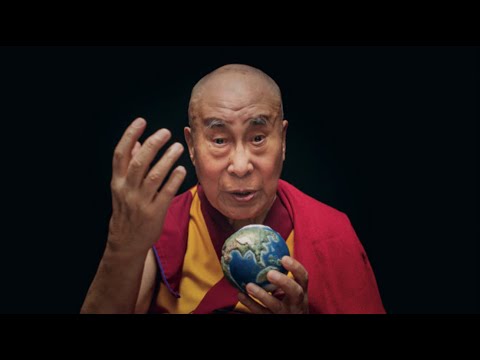
It’s a 1 hour 30 mins documentary, which seems to have been quite professionally done, in which the Dalai Lama brings his message in relatively simple terms. I might buy it once it releases on Apple TV, it’s on pre-order there for 10 euros. I heard it might be out on the 16th of October.
Has anyone seen it?
Jeroen
Re: Why Sangha?
I think italic does work.
But you are right. How do we build the sangha? I heard there is a new film out called ‘Wisdom of Happiness’ in which the Dalai Lama talks you through his philosophy, which seems to be quite good. He is doing his bit at 90 years old to build the sangha.
We aren’t all as respected as the Dalai Lama, but we can fill our little corner of the internet with what eloquence we can gather together.
Jeroen
Re: Why Sangha?
What a beautiful and timely sharing @Vastmind. 
With the Buddha often offering several remedies for various ailments, and being precise on the right view on this and that issue, I nearly fell off my chair when I read the following story a few months ago:
Start of story (italic does not seem to work):
"Ananda went to his cousin, the one we call the Buddha.
Ananda was the Buddha’s assistant, so he was around all the time. That’s important to the story, just to say that Ananda heard essentially everything that the Buddha said.
So, one day Ananda went to his cousin, like I said. And Ananda said,
“I think spiritual friendship, sangha, is half of the spiritual path. It’s so important to our journey.”
And the Buddha replied, “Ananda, spiritual friendship is the whole way. Find refuge in the sangha."
(end).
I believe we have all indulged in a lot of divisive and harsh speech lately.  And so we are suffering the consequences. I too miss, as you say, "my little safe place to practice".
@Vastmind said:
Let’s work on our online Sangha here, at NB. With all that’s going on in the world….I miss my little safe place to practice. 🙏
Any ideas? Ways to foster the community feel and participation? More Buddhist topics, yes?
Mode Buddhist topics, definitely! This is one reason I opened the "my Dharma practice today" thread that I am very happy to see has already gained some traction.
 marcitko
Why Sangha?
“The next Buddha will be a Sangha” – Thich Nhat Hanh
Sanghas are communities of monastic and/or lay Buddist practitioners. A sangha is the best way to practice meditation, as it offers deep support and wisdom for beginners and seasoned practitioners alike, and can start with a minimum of four practitioners. Not only do they help create a routine and improve individual practice, but the energy of a community of practitioners can create ripples of understanding and compassion that reverberate throughout society and the world.
Why Sangha?
Alone we are vulnerable, but with brothers and sisters to work with, we can support each other
We cannot go to the ocean as a drop of water—we would evaporate before reaching our destination.
But if we become a river, if we go as a Sangha, we are sure to arrive at the ocean…
You need a sangha;
you need a brother or sister, or friend to remind you what you already know.
The Dharma is in you, but it needs to be watered in order to manifest and become a reality.
A Sangha is a community of resistance, resisting the speed, violence,
and unwholesome ways of living that are prevalent in our society.
There is no religion, no philosophy, no ideology higher than brotherhood and sisterhood.
Not even Buddhism.
In society, much of our suffering comes from feeling disconnected from one another. Being with the
Sangha can heal these feelings of isolation and separation. We practice together, share a room
together, eat side by side and clean pots together. Just by participating with other practitioners in the
daily activities we can experience a tangible feeling of love and acceptance.
A sangha is a garden, full of many varieties of trees and flowers.
When we can look at ourselves and at others as beautiful, unique flowers and trees
we can truly grow to understand and love one another.
One flower may bloom early in the spring and another flower may bloom in late summer. One tree
may bear many fruits and another tree may offer cool shade. No one plant is greater, or lesser, or the
same as any other plant in the garden. Each member of the sangha also has unique gifts
to offer to the community.
We each have areas that need attention as well. When we can appreciate each member’s contribution
and see our weaknesses as potential for growth we can learn to live together harmoniously. Our
practice is to see that we are a flower or a tree, and we are the whole garden as well, all interconnected.
https://plumvillage.app/a-short-guide-to-joining-or-starting-a-sangha/
Let’s work on our online Sangha here, at NB. With all that’s going on in the world….I miss my little safe place to practice. 🙏
Any ideas? Ways to foster the community feel and participation? More Buddhist topics, yes?
Vastmind