
Best Of
Re: The importance of mudra in zazen
Thanks @how that improves my understanding of what Shikantaza is all about, much appreciated 🙏
 Jeroen
Re: The importance of mudra in zazen
The difficulty in switching up different mudras in Shikantaza, to bring about different experiences of meditation, is that such **deliberateness **detracts from the underpinning foundation of that practice. You could still call it meditation, just not Shikantaza.
It is not that different mudras don’t affect different flavors of meditation, it's that our choosing of one over another will often in later hindsight, be seen to have been more about self indulgence than of selflessness.
This is where a teacher who is familiar with your particular life koan might give some objective guidance on mudra choices that amount to skillful means for you. In that teachers absence, not switching up your mudras at this time will at least offer an ego during formal meditation, less avenues of potential meditative distraction.
 how
how
Re: The "ill fitting axle" all the way down
Thus have I heard and from what I gather, the whole idea of Dharma practice is for the practitioner to see through the veils of deception conjured up by a conditioned mind, a mind that defaults to the negative outcome when confronted with dukkha events.
And those negative outcomes more often than not involve the misleading concept of permanence, perceiving some situations as unchangeable, when the ultimate teaching is that nothing is permanent, everything is flux.
Pleasant things are dukkha just as much as what one perceives as negative things, because the same conditioned mind grasps at pleasure as if it could last.
There is no permanent entity doing the thinking, feeling, or living, and the more there is a realisation of this, an experiential understanding, the looser the attachment to things becomes, which will eventually lead to going with the flow of change and not against it.
None of this should stop the practitioner from showing empathy and putting this empathy into action, aka compassion, when confronted with a situation where other sentient beings are suffering injustice.
 Shoshin1
Have I done well… or have I done ill?
I’ve been following a video podcast called The Book Club for the past week or so, and one of the episodes that set me to thinking was about John Steinbeck’s novel East of Eden. Here is a link in case you have an hour to spare, it’s good fun:

So basically the book is about good and evil, whether they are predestined. It references the biblical story of Cain and Abel, the two brothers where Cain murders Abel, and also the story of the fall from paradise and original sin. There is this famous quote from the book:
“I believe that there is one story in the world, and only one. . . . Humans are caught—in their lives, in their thoughts, in their hungers and ambitions, in their avarice and cruelty, and in their kindness and generosity too—in a net of good and evil. . . . There is no other story. A man, after he has brushed off the dust and chips of his life, will have left only the hard, clean questions: Was it good or was it evil? Have I done well—or ill?”
― John Steinbeck, East of Eden
We have already talked about this a little in the ‘Good and Bad People’ thread, but this question has stuck with me and I wanted to revisit it, from a more personal perspective.
At age 53 enough of my life has passed that I can see the general shape of it. The largest influence of my life on others has likely been the work I did on computer games, where I worked on some titles that sold in the millions of copies. And I find it hard to say whether that was a good influence or an ill influence on the world — it was probably a bit of both, but I think the fact that computer games inevitably get you to strive and struggle, that they do not encourage introspection or meditation, makes it tend more towards being an ill influence.
Some of the graphic design and illustration work I did early in my career also had wide reach, I did some scientific illustrations in a book that sold millions of copies, and that may have clarified certain things for people. I’d say that had a neutral influence, it was encouraging people to think, but it was also encouraging clarity and reason.
In recent years I have contributed to mental health forums, and here on NewBuddhist, and I have helped care for my stepfather and mother. I have reached out to family and tried to create a good atmosphere for sharing and togetherness. Those are net positives, but probably lesser in impact on the world.
Of course it depends what measures of good and evil you use. You could say, being a warmonger like Netanyahu or Putin is proliferating great evil, they caused many deaths and much ill-feeling. Compared to that, the amounts of influence we exert on the world are tiny. But there is a personal balance as well, how you relate to your neighbours and close relatives. One can be deeply twisted and leave little trace on the world.
Jeroen
Re: No Buddhist Quotes
"Another beautiful day. Another difficult day."
~ Father Peter Owen Jones
 Kotishka
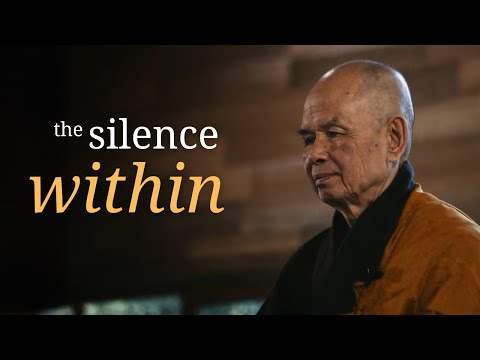
Thich Nhat Hanh on Inner Silence
My YouTube feed has been bringing up a few new (to me) teachings by the late Thich Nhat Hanh. It’s been good to hear his voice again… I used to listen to him often, and he did both teachings and meditations very well, it’s good to see Plum Village reach back and give him the rightful place.
Jeroen
Re: The "ill fitting axle" all the way down
Great Insight everyone,
Dharma has many ways of explaining and understanding and practicing. It is the ability to hear, see (for example the yin/yang animation that @Shoshin1 posted) and understand from different impacts/directions that allows us to to unravel our own bundle of meaning and Way...
A bit like a hall of mirrors or shards of reality...
https://en.wikipedia.org/wiki/Melong
 lobster
Re: What movies are you watching?
I saw Project Hail Mary yesterday and enjoyed it. Definitely not your typical movie. I don't want to spoil it but it's more a thoughtful movie rather than constant action. My partner who doesn't like science fiction liked Ryan Gosling and the alien
 Jeffrey
Re: The "ill fitting axle" all the way down
@person said:
Over and over getting to the bottom of one thing pushes up something else.
I am reminded of a seeker who quietly but powerfuly realized: 'My life will not turn out'. I take that to mean: as you say, there is no way to fiddle with ourselves and our lives and produce a suffering-free state. A deep realization of the 1st NT. However, he continued by deeply inquiring into 'what then is it like to be human?' for 1.5 years and had a big realization.
https://www.amazon.com/Awake-Wheel-Highway-Adventures-Unmasking/dp/0986445738
Personally, I am reminded of David R Hawkins' Map of Conciousness. Around six to seven years ago I had an intense period of personal training for around 1.5 years in which I believe I rose up for sustained periods of time to his level of 'willingness'.
The mental and emotional 'space' of this way of being is totally different from how I lived before. For instance, when some trouble arose, I would no longer think 'woe is me' or be frustrated/scared/angry/etc. Rather, I would think: 'What must I be doing to remedy or improve the situation?' and then 'OK, I guess I'm doing that' and continue with doing it with a positive attitude.
There was a lot of acceptance, energy (freed up from a diminishment of negative emotion), courage, joie de vivre even in the midst of difficulties and... willingness. So, here Dukha was not eliminated, but very much reframed and encountered with a much healthier overal attitude.
https://share.google/FWwrrpcjHHfLKqhXN
 marcitko
Re: Good and Bad People
@person To place it as good (skillful,helpful) or bad (unskillful, harmful) action from essentializing an individual who engages in said action is a significant clarification
From that viewpoint, I present no dissenting argument. From that vantage, an individual's statement or action is either good or bad. From that point on, argument would be a mear semantic exercise.
it is my hope we have both gained from this exchange.
Thank you
 Lionduck