
Best Of
The Dalai Lama in ‘Wisdom of Happiness’
I heard about this from people who had gone to see in the cinema here in the Netherlands…
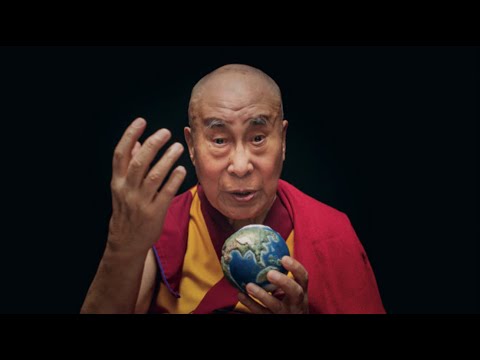
It’s a 1 hour 30 mins documentary, which seems to have been quite professionally done, in which the Dalai Lama brings his message in relatively simple terms. I might buy it once it releases on Apple TV, it’s on pre-order there for 10 euros. I heard it might be out on the 16th of October.
Has anyone seen it?
 Jeroen
Re: Why Sangha?
I think italic does work.
But you are right. How do we build the sangha? I heard there is a new film out called ‘Wisdom of Happiness’ in which the Dalai Lama talks you through his philosophy, which seems to be quite good. He is doing his bit at 90 years old to build the sangha.
We aren’t all as respected as the Dalai Lama, but we can fill our little corner of the internet with what eloquence we can gather together.
Jeroen
Re: Why Sangha?
What a beautiful and timely sharing @Vastmind. 
With the Buddha often offering several remedies for various ailments, and being precise on the right view on this and that issue, I nearly fell off my chair when I read the following story a few months ago:
Start of story (italic does not seem to work):
"Ananda went to his cousin, the one we call the Buddha.
Ananda was the Buddha’s assistant, so he was around all the time. That’s important to the story, just to say that Ananda heard essentially everything that the Buddha said.
So, one day Ananda went to his cousin, like I said. And Ananda said,
“I think spiritual friendship, sangha, is half of the spiritual path. It’s so important to our journey.”
And the Buddha replied, “Ananda, spiritual friendship is the whole way. Find refuge in the sangha."
(end).
I believe we have all indulged in a lot of divisive and harsh speech lately.  And so we are suffering the consequences. I too miss, as you say, "my little safe place to practice".
@Vastmind said:
Let’s work on our online Sangha here, at NB. With all that’s going on in the world….I miss my little safe place to practice. 🙏
Any ideas? Ways to foster the community feel and participation? More Buddhist topics, yes?
Mode Buddhist topics, definitely! This is one reason I opened the "my Dharma practice today" thread that I am very happy to see has already gained some traction.
 marcitko
Why Sangha?
“The next Buddha will be a Sangha” – Thich Nhat Hanh
Sanghas are communities of monastic and/or lay Buddist practitioners. A sangha is the best way to practice meditation, as it offers deep support and wisdom for beginners and seasoned practitioners alike, and can start with a minimum of four practitioners. Not only do they help create a routine and improve individual practice, but the energy of a community of practitioners can create ripples of understanding and compassion that reverberate throughout society and the world.
Why Sangha?
Alone we are vulnerable, but with brothers and sisters to work with, we can support each other
We cannot go to the ocean as a drop of water—we would evaporate before reaching our destination.
But if we become a river, if we go as a Sangha, we are sure to arrive at the ocean…
You need a sangha;
you need a brother or sister, or friend to remind you what you already know.
The Dharma is in you, but it needs to be watered in order to manifest and become a reality.
A Sangha is a community of resistance, resisting the speed, violence,
and unwholesome ways of living that are prevalent in our society.
There is no religion, no philosophy, no ideology higher than brotherhood and sisterhood.
Not even Buddhism.
In society, much of our suffering comes from feeling disconnected from one another. Being with the
Sangha can heal these feelings of isolation and separation. We practice together, share a room
together, eat side by side and clean pots together. Just by participating with other practitioners in the
daily activities we can experience a tangible feeling of love and acceptance.
A sangha is a garden, full of many varieties of trees and flowers.
When we can look at ourselves and at others as beautiful, unique flowers and trees
we can truly grow to understand and love one another.
One flower may bloom early in the spring and another flower may bloom in late summer. One tree
may bear many fruits and another tree may offer cool shade. No one plant is greater, or lesser, or the
same as any other plant in the garden. Each member of the sangha also has unique gifts
to offer to the community.
We each have areas that need attention as well. When we can appreciate each member’s contribution
and see our weaknesses as potential for growth we can learn to live together harmoniously. Our
practice is to see that we are a flower or a tree, and we are the whole garden as well, all interconnected.
https://plumvillage.app/a-short-guide-to-joining-or-starting-a-sangha/
Let’s work on our online Sangha here, at NB. With all that’s going on in the world….I miss my little safe place to practice. 🙏
Any ideas? Ways to foster the community feel and participation? More Buddhist topics, yes?
 Vastmind
Re: The AI tsunami
I work in e-commerce and have for the last 8 years. One of the things I see that is already happening is replacement of customer service reps. Part of the issue with that is that CSR jobs have long been a foot-in-the-door into industries that often hire from within, allowing you to start in a CSR job and move up.
My husband started in a CSR roll taking phone calls for one of our state govt. offices. He now works in data analytics and makes recommendations to the governor's office. He wouldn't have that job without having had the CSR job first. He wouldn't have been qualified to apply for that job if it were listed separately, but he built the skills in this job by taking on projects and worked his way into the position.
The ability to do that is going to be much hampered by AI. We've had meetings with management of the company we use for our help desk, which is 75% of my work load. Which I found kind of funny to sit in a meeting where they encouraged us to sign up for a plan that would basically eliminate my job 😂 It would raise our monthly cost from about $50 to $350, but that's still less than I make. Thankfully I work for a very small family-owned business and have a great relationship with the owner/my boss. But if I were just one of 100 CSRs, and the higher ups saw the opportunity to reduce that by half with only a $300 a month increase? It's definitely happening.
 karasti
Re: My Dharma practice today
Did my last goodliness from yesterday
https://universeodon.com/invite/J8ZvPdef
I liked in particular @Jeffrey effort. But all good.
Today:
- My new printer is definitely my Buddhist Master. I nearly threw it out with the impediments. Decided to persevere

- Had a very simple almost Japenese style luncheon. That too was my Master.
- My God! They Be everywhere... I knew IT.
- Meditated on the meaning of Death. That was good for a laff.
Must be time for a void coffee. Void of milk that is. And Void of caffeine (decaff only for lobsters

 lobster
Re: Should a Buddhist own a gun ?
Although I live in a country with an astounding number of firearms, I personally do not own a firearm.
Some people own firearms as collector's pieces. They will never be fired except in rare safe displays and absolutely not on a living being.
I know individuals who have firearms who only use them on approved ranges.
I must point out that, in certain situations, even martial arts are potentially fatal.
Again, it matters not the potential weapon, gun, bow, club, rock, hand or foot. What matters is not the potential choice of weaponry, it is the mind set of the individual.
a knife to an assassin is a deadly weapon while a knife to a sushi chef is an indispensable tool. Archers were the field artillery until modern weaponry took over the battlefields.
Now, we have bow hunters and, while bows an arrows can be lethal, competitive and recreation target shooting are the prevailing uses. In Japan, archery is stylized and meditative in nature. Their ritual of the archery is the point, the target is an afterthought.
I could go on with various examples, but these will suffice.
Again, as a Buddhist, it is intent and mindset that matters, not the specific weapon. With the proper intent and mindset, weapons become not-weapons. Tool of death and destruction become tools of mending, healing, teaching.
Peace to All
 Lionduck
Re: My Dharma practice today
I've been doing a mindfulness practice recently. It's maybe a little like Jon Kabbat Zinn's teaching of eating a raisin mindfully and appreciating all of the facets of the experience. And I've also read about mindful washing of dishes. Normally when I do tasks like laundry, dishes loading and unloading, or tidying I am thinking of how it is my task and I want to get it done. I think of it as a daily goal. And that is fine as it's fine to have goals and tasks. But I bring mindfulness by doing everything slowly and noticing more of what I am doing rather than thinking. So instead of being efficient I slowly bring a plate out of the dishwasher and heft it and slowly walk to the cupboard then slowly open the cupboard and notice what's inside as a slowly set down the dish.
 Jeffrey
Re: My Dharma practice today
Yesterday, within the difficulties of poor sleep and anxiety/excitement due to moving, I practiced:
Right speech: especially with my mother. No need to take my troubles out on her. I screwed up once, but apologised, a.k.a. tried to make it right.
Not taking what is not given: my father gave me a small liquidity loan to pay for the movers. A small amount was left over. I typically might postpone paying him back until I 'feel like it' a.k.a. would not prioritise it highly. But I paid him back immediately, even though there was a lot of unpacking to do a.k.a. it slightly inconvenienced me.
Insight: I think it is safe to say that those around me would say that I already am moral/ethical. But when I look at the little things, there is so much room for improvement. And of course, when aggravated by negative emotion/thought, I too can be a vanilla asshole 😄
marcitko
Re: All Squares Are Rectangles...
It’s true that language has its limits. And it’s also true language can be twisted and utilized unskillfully or even maliciously. I think it all comes back to context and intention. Sometimes generalization or categorization is useful in a particular context. Taking the example of slavery and racism in the US. For two centuries, a group of people were the legal property of other people. The people considered as property were then freed, but the other people created new laws segregating them and preventing them from having equal rights. Eventually they became free of those laws as well, but were subsequently prevented from getting loans, buying certain homes, etc. There’s some easy ways to categorize these segments of the population to make it clear who each group is and which group had political and social power over the other. And we can say not all of one group agreed with the way things were and tried to change them. But if we’re intellectually honest, we’d also have a hard time time saying that those categorizations didn’t matter or have real consequences, especially when talking to someone who experienced those consequences firsthand.
It’s definitely admirable to judge each person by their actions, as well as viewing them as an individual rather than a stereotype or through a preprogrammed prejudice. But it’s also a skill to see patterns and privileges and injustices and the ways some groups benefit from the oppression of others in an effort to ameliorate that harm and imbalance.
 Jason
Jason