
Best Of
Re: So HUNGRY to NOT CRAVE
Hunger is but a part of, a condition, we all possess.
It is neither good nor bad.
Allowing the hunger to become the the controlling condition, the basic "world", the base from which one sees, lives one's life, is negative (bad).
Understanding that Hunger is but a part, an element within us over which we have control, enables us to overcome, to not be enveloped by the state of Hunger.
When talking of "eliminating desires", it really means redirecting, channeling our desires from selfish and destructive (negative) desires toward selfless and positive desires.
An example in the mundane world is in the desire for a position of influence.
Selfish hunger (desire) says, " I want that position to gain power, to get bigger, better toys, to control.
Selfless hunger (desire) as a manifestation within a higher state, says,"I want the position in order to help, to better serve or represent those who do not have such power or influence.
Thus Hunger is neither good not bad. It is what we wish to do and what we actually do with hunger that makes it something good or something bad.
A Buddha has hunger. But, that hunger (desire) is for the peace and happiness of all the people. That hunger is for the world to become a land of countless Buddhas.
 Lionduck
Re: So HUNGRY to NOT CRAVE
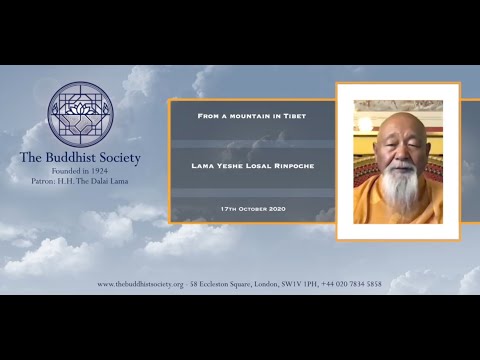
Here is a long interview which talks about the giving.
Given to the Buddhist Society (started by Father Christmas Humphreys)
by Lama Yeshe, one of my Tantric meditation teachers.
"Crave or crave not, there is only try'" as Master Yoda might say...
 lobster
Re: So HUNGRY to NOT CRAVE
Basically you are craving the sensation of not-craving.
Another mode to appreciate is relaxing. Thich Nhat Hanh recommended “three deep conscious breaths” in a teaching I saw not long ago, to shift into relaxed spaciousness.
 Jeroen
Re: So HUNGRY to NOT CRAVE
But of course she did know, even if I didn't yet.
Imagine someone has Nothing to offer. We of course want something. So we give them an impossible task.
... And the funny thing is they are up to the task until we stop taking and start giving
Nothing. 
lobster
Re: All things Sport(s)
I've been following the World Chess Championship. It's a 1v1 14 game match with 4-7 hour games (ie. classical/long time controls). Obviously, few watch the actual games, since they are too long, but there are many recaps online.
We have Gukesh from India. He is 18 and if he wins will become the youngest chess champion. He might be young but talks, is stable under pressure/praise/blame, and wise several decades beyond his age. So far, he has underperformed, since the expectation was that it would be an easy match for him to win, maybe due to pressure/nerves and playing such a match for the first time.
We also have Ding Liren from China, the defending champion. They should literally make a Holywood movie about this guy! It's a "against all odds, the underdog, losing the whole time, manages to win at the last second" kind of story that keeps repeating itself.
It's currently 6-6 after 12 games with 2 more classical games to go and then the playoffs of 4 rapid games ie. games with faster time controls (20 minutes each).
For anyone that might be interested to follow the last leg of the match, the Guardian has good text recaps, while this Youtube channel has good and wholesome video recaps.
https://www.theguardian.com/sport/world-chess-championship-2024
 marcitko
Re: Sharing practice through non-practice
Thus have I heard...
Expectation is the killer of meditation.
 Shoshin1
Re: Sharing practice through non-practice
I feel we can engage with a series of stages until we find the just resting place.
For me (at the moment) formal sitting starts with a period of unloading. Just watching the mind drifting away and returning. Always returning to the rest. The breath. The gentle but alert posture. The unloading leads to a gentle slowing. And before I know, I start chanting. Usually aloud but very quietly. Noticing the nature of the chant. The smoother the breath and mind. The clearer the sound.
I rarely time meditation because at a certain point it stops when ready. Quite a natural process.
In a strange way, it is not a practice. It is just sitting. In this sense, practising meditation is very much ease, eased into...
lobster