
Best Of
Seven Factors of Awakening
1. Mindfulness
2. Investigation
3. Energy
4. Joy
5. Tranquility
6. Concentration and
7. Equanimity
Eight Worldly Preoccupations
1. Hope for happiness
2. Fear of suffering
3. Hope for fame
4. Fear of insignificance
5. Hope for praise
6. Fear of blame
7. Hope for gain
8. Fear of loss
Taken together, these preoccupations represent attachment and aversion.
Re: What Meditation Is About
What is meditation for?
There are many types of meditations with different purposes and outcomes but from the point of view of the Buddha, the most important is this.
"Through the ending of the mental effluents, he remains in the effluent-free awareness-release & discernment-release, having known and made them manifest for himself right in the here & now.
https://www.accesstoinsight.org/tipitaka/mn/mn.119.than.html
In other words, it is the outcome of the practice that is important.
Does it lead to a reduction in stress, anxiety, and fear of being attacked?
Since everything is but an apparition, having nothing to do with good or bad, acceptance or rejection, one may well burst out in laughter.
Longchenpa
What Meditation Is About
Meditation is not about trying to become non-conceptual or to rid ourselves of negative emotions and thoughts; it's about trying to recognize that our thoughts and emotions arise from, and dissipate back into, the natural state.
Lonchenpa's Three Cycles of Natural Freedom: Oral Translation and Commentary - Traleg Kyabgon Rinpoche (IX)
Re: What Meditation Is About
Just got an error message @Linc
"Body is required." in RED/read
The Buddha was right!
... and now back to the jokers who think meditation is something!
Since everything is but an apparition, having nothing to do with good or bad, acceptance or rejection, one may well burst out in laughter.
 lobster
Re: What Meditation Is About
Often when trying to see the wisdom in a piece of writing it is about understanding the boundary where wise text strays into the unwise. You may see a piece of text and feel intuitively that it is wise, and you may see another piece of text and feel nothing towards it. This is the understanding of the heart, and does not bring clarity about the boundaries of wisdom. That requires a deeper seeing, and only then can you untangle what is wise about a certain text.
 Jeroen
Re: Four Immeasurables
Perhaps examples of the "Four Immeasurables" in daily life.
Equanimity: You have a car which you use and like very much. You have a strong aversion to it getting damaged or destroyed. Yet, though you take meticulous care of that car, it gets totaled. Attachment means you get very upset that your car is destroyed.
Equanimity means you realize that, though you enjoyed your car, it is replacable and you are not upset at the destruction of your car but concerned for anyone who may have been hurt in the incident which resulted in the lose of your car.
Love Self explanatory In terms of day to day, you wish for your family, your neighbors, your reatives and friends to be safe, healthey, happy, and bring happiness to others.
Compassion This meas all people. Even the ones who cause you suffering or disrespect you or your family or friends. Fir instance, Devadata opposed and tried to kill the Buddha(Sakyamuni). Yet in his compassion, he did not hate Devadata. He instead declared him to be a friend, even stating Devadata would ond day become a Buddha.
Joy Even those who give you trouble, whom oppose you, a self-declared enemy.
In reguards to our fellow human beings, (men, women, them they...) A 19th century Japanese statesman stated it well: "Hate the action, not the person".
In closing, we are all imperfect. As we strive to realize the Four Immeasurables, we may stumble, we may fall from time to time. That is not failure, so long as we get right back up, dust ourselves off, take a deep breath, and continue our journey upon this path we have chosen.
Peace to all
 Lionduck
Re: The Other Elephant In The Room
Interesting interview with Jeffery Sachs about the Israeli settlers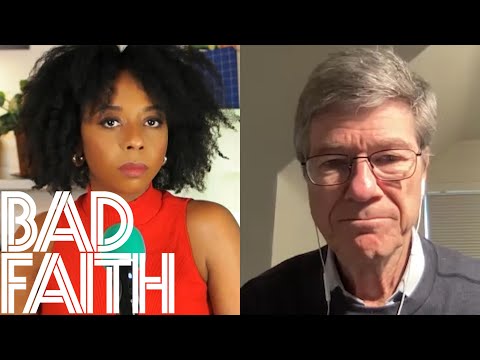
He makes an interesting point (around 28 minutes in) regarding a two state solution..
"There are two possibilities. Basically, the Israeli government says explicitly every day, 'We will control Gaza.' Well, there can be no peace on that basis, and my guess is no ceasefire, even if that were to lead to that outcome at the end of a period. The other possibility is what has been part of international law for 57 years, and that is a Palestinian State. My own view is that the UN Security Council, and of course it would do it if the US would not veto it, should immediately recognize a Palestinian State as the 194th member state of the United Nations upfront. Not at the end of a process, but upfront. The rest can follow, but I would make that the fact on which all the rest happens. So that it's negotiations between two sovereign states. And this, to my mind, would flip the kind of phony process and the failed process of the last dozens of years."
>
 Shoshin1
Re: The Other Elephant In The Room
Irish lawyer's powerful speech spelling out case against Israel for crimes against Palestine
- Mr. President, I wish to turn now to the question of self-determination. As submitted in our written statement, Ireland has concluded that – by its prolonged occupation of Palestinian lands and continuous settlement activity on those lands – Israel has prevented the exercise by the Palestinian people of their right to self-determination. The principle of self-determination is a fundamental principle of international law, enshrined in the Charter of the United Nations and the two 1966 International Covenants on Civil and Political Rights and on Economic, Social and Cultural Rights. The content of that principle was elaborated in the 1970 Declaration on Friendly Relations, adopted by consensus at the General Assembly. That Declaration makes clear that:
‘Every State has the duty to promote, through joint and separate action, realization of the principle of equal rights and self-determination of peoples … bearing in mind that subjection of peoples to alien subjugation, domination and exploitation constitutes a violation of the principle, as well as a denial of fundamental human rights, and is contrary to the Charter.’
The Declaration solemnly proclaims that ‘(e)very State has the duty to refrain from any forcible action which deprives peoples … in the elaboration of the present principle of their right to self-determination and freedom and independence.’
In the Wall case, the Court found that the construction of the wall and its associated regime severely impeded the exercise by the Palestinian people of their right to self-determination. It therefore breached Israel’s obligation to respect that right. In Ireland’s view, the combination of Israel’s prolonged occupation of the OPT and its escalating settlement activity has done so on a far greater scale. That escalating activity has increasingly fragmented Palestinian presence upon – and restricted Palestinian use of – the land and natural resources of the Palestinian people. It threatens the viability of a future Palestinian State. The nature, scale and duration of settlement activity is such that its purpose can only be to permanently obstruct the exercise of the Palestinian people’s right to self-determination.
For those interested, the full transcript of the speech can be found "HERE"
Hmm I wonder what the US, UK and the Israeli government have got planned to try and distract public attention away from these hearings...Perhaps more illegal bombing raids to ramp up tension in the Middle East ... ( There's nothing like a war to distract public attention away from the real issues)
The feeble attempts made by the "Three Um Egos" to conceal their true motives for their illegal actions would be comical if it weren't for the fact that innocent lives are at risk.
Shoshin1
Re: What Meditation Is About
I would describe my meditation as that which allows phenomena to freely arrive, live, and depart, unmolested by the storylines of my own ego/identity.
....But I suspect that the variations in describing "what Meditation is about" might be as diverse as there are people experiencing it.
 how
how