
Best Of
Re: What movies are you watching?
@lobster said:
Watched the Documentary "Going Clear" about Scientology. Fascinating.
I saw it some time ago, and also saw Louis Theroux’s My Scientology Movie about the same time. Indeed fascinating, but also more than a little scary.
 Jeroen
Re: The Work by Byron Katie
What I find good about BK’s process is that it leads you to question your own beliefs, the things that you used to be certain about. It encourages you to look at those beliefs from a new direction. Especially within relationships this can be liberating.
Jeroen
Re: The Work by Byron Katie
Which remind me of this....
I Am just a thought who thinks 'I Am' thinking I Am just a thought
There's a couple on the island who regularly run BK's courses...
I haven't been to them but a few years ago, I did attended a half day BK workshop which a Buddhist psychologist friend was running.
I found her techniques interesting and compatible with Buddhist practice of observing the mind AKA mindfulness ...
I've had a few friends over the years who have done one of her courses...not sure if they have really benefited from it...It' a case of some will benefit greatly from the course, and some will not...
When it comes to Buddhism and Byron Katie's approach, both approaches emphasise the power of inquiry and introspection to challenge and transcend the influence of conditioned thoughts and beliefs, with the aim of ultimately fostering inner peace and liberation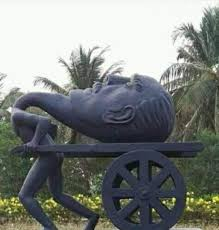
 Shoshin1
Re: Questioning your thoughts
I wouldn't be surprised if Byron Katie like other Western modern day gurus had read a few spiritual books which left a lasting impression, planting a seed in the mind, germinating into a personalise Western style version of an ancient Eastern mind taming and training techniques....
In some cases when a person's life has reached rock bottom, empty, nothing to lose, example Byron Katie, Eckhart Tolle...the mind is fertile soil, some are fortunate enough to plant the right seeds ....one could say karma....
Shoshin1
Re: What does a seeker after truth really seek?
Definitions are important here, the word truth can mean different things, two people can both be after truth while being in pursuit of distinct goals. Generally I use the meaning of truth as what continues to exist even when you stop believing in it.
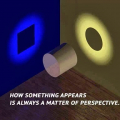
There's a usage that I think conflicts with that definition when talking about personal truths, or lived experience as they say today. We all have perspectives that are important to us and can give us meaning. Someone's experience of the world has a large impact on their level of happiness and suffering. Very beautiful people generally get treated well by others and their experience of the world is often a kinder one than average. A devout theist will see evidence of God's work all around them. These things are true for them, the world is kind or cruel, beautiful or ugly, that's the way people move through life.
I always want to ask, what is it really? Theoretically it makes sense that there is an actual answer to that question. Though I think practically truth is really more of a pursuit and a mindset than an attainable goal. Do you reflect and ask the question? Also, as I've learned more about people's cognitive biases and put effort into negating my own, I've come to realize that while it helps, its really kind of an impossible task. We really rely on others to show us our blind spots. Truth kind of is a collective effort.
Regarding spiritual practice, I am skeptical about its truth claims about the world. When I say that I don't mean I believe they aren't real, I mean I don't know if they're real or not. I do know that people, including myself, are able to develop or uncover greater and greater levels of a balanced and expansive state of mind.
Its a complex and deep topic that I have a lot of interest in. I think I barely scratched the surface and no doubt didn't express things as articulately as the subject deserves.
 person
What does a seeker after truth really seek?
For me it was always a case of “I will know it when I hear it or when I read it” rather than “I know what I am looking for”. It is like an internal bell that tinkles. It didn’t really start ringing bells for me until I had my breakdown in 2012, and I started listening to Osho regularly again, and after that got involved in Buddhism. During my introductory course in Buddhism I saw this a lot, that people who had had an illness or accident or had lost a job or career would come do the course, in search of… something.
A lot of psychologists term this the search for meaning, but I don’t think it really is that. For me it starts with an understanding of the self, and that begins with the body-mind and an understanding of childhood. How we enter into the world, what we are from the very beginning, determines how we see ourselves in adulthood. Mental growth is a process of accreting things onto ourselves, and only later, in the process of understanding ourselves as mature beings, do we start to shed those layers.
Truth plays a special role in this. By seeking and learning to recognise truth we see the things that were hidden from our view. Clarity begins to dawn on us. And in the first instance we seek these truths outside ourselves — we seek to consult the wisdom of the world, as we have gotten used to doing in learning and education.
For me the clearest source of truth has been not religion or philosophy, but the words of the recent awakened ones, gurus and people who share their truth with us. Just in the last century, I would name Jiddu Krishnamurti, Osho, Ramana Maharshi, Papaji, Nisargadatta Maharaj, Eckhart Tolle and U.G. Krishnamurti. I name U.G. last because he is an end-point of the search. On their words you can hone your sense for the true… eventually our truth starts to erupt from within.
At that point you have found the things in yourself which correspond to the truths imparted by the wise, and you have found the things which are uniquely yours. All of which contributes to your truth. Which is my 0.02.
Maybe you have sought different truths?
Jeroen
Re: Just for fun: the random, useless announcements thread!
Well @Shoshin1 I’m flattered you dreamed of me, even if I did turn to jelly and wobbled all over the place! Maybe it was a sign of some sort…
I was thinking of this bit of Shakespeare’s play As You Like It yesterday,
“All the world's a stage,
And all the men and women merely Players;
They have their exits and their entrances,
And one man in his time plays many parts”
It seems to me one of those quotes which make you change your viewpoint relative to the world, similar to this bit of the Diamond Sutra:
"So you should view this fleeting world --
A star at dawn, a bubble in a stream,
A flash of lightening in a summer cloud,
A flickering lamp, a phantom, and a dream."
Jeroen
Re: Unsocial Media
@Jeroen said:
I am glad you’ve decided that Buddhist forums are among the wise uses of social media.
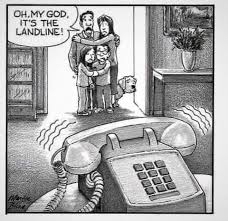
Jonathan Haidt who's doing the rounds at the moment with his book makes a distinction between social media and the internet generally. I'm not totally sure what he thinks about forums and discussion groups but I think his main focus are the algorithmically boosted areas that are warping people's minds.
person
Re: Unsocial Media
I am glad you’ve decided that Buddhist forums are among the wise uses of social media.
Jeroen