
Best Of
Re: Two minutes of meditation?
I have that sometimes.
The other day I came across a lovely short 10-minute meditation by Mooji which was about “focusing on your sense of being”. It was the first time in years that I actually enjoyed meditating.
 Jeroen
Re: Everyone sees the world through cultural glasses
In this post I will claim that it is excellent to intellectually see all groups neutrally but that for many (most?) of us - even as we claim to see this way - in our hearts the us/them dichotomy remains active on a deeper level. Exorcising this deeper level through spiritual practice is highly commendable, even though difficult.
Here is the shortest version of my personal example: I grew up in a war-zone, a normal part of the day was to watch war-related news, my city was bombed, I went to bomb shelters, etc. It was always "the Serbs" which were vilified, and "the Croats" which were sanctified. I never knew any Serbs but as a young leftist and student of political science took great pride in not harbouring any ill-will towards them. In every debate on the issue I would argue along the lines as has been argued in this thread - that there are no "Serbs", just various individuals.
At around age 20 I participated in an international youth camp and met the first Serbs I ever met. To my great shock and dismay, my first reaction was one of - fear! My later life-long Serb friends told me that they felt exactly the same way and had exactly the same views before our meeting.
I don't know who cracked the first joke, but the way in which we loosened and transcended this fear was to call each other the worst nationalistic names we could in a humoristic and endearing manner: I called them "Četnici", they called me "Ustaše" (basically, a Nazi). Through this humoristic approach, without avoiding the underlying tension, we quickly became best friends and did everything together during the camp and remained excellent friends to this day. A decade later I was gladdened to see that our "method" is endorsed by Slavoj Žižek, a world-famous Slovenian philosopher.
I thought I had this cracked. Then, one day, I realized that STILL whenever I heard the word "Serb" there would be a low-level fear response in my body. I asked my Serb friend whether she felt the same when she heard the word "Croat", and she said yes!
I became really, really pissed off and decided I would not tolerate this for one more minute. I meditated on this issue for three hours, had a realization, and the fear went away. I tested myself on various youtube videos of Serbian singers, politicians, etc., and was sooo happy that it went away.
However, today I find that this fear has crept back in, so another meditation might be in order. I believe it is due to the continuing Serb-villification in my surroundings.
What I'm trying to say is: we can have one view intellectually - and it is very good to have a good one - but still harbour the reverse in our "pain-body". The real work, to my mind, is working with this pain body, to align it with a better state of being.
 marcitko
Re: How is dependent origination different than determinism?
From a personal training/habits perspective:
When one is lazy, unfocused, and controlled by negative habits, it appears subjectively as if one has little control and free will.
When one 'wins over oneself' frequently, trains discipline and focus, lets go of negative habits, and cultivates positive habits, it appears subjectively as if one has much more control and free will.
'Only the disciplined ones are free' (Marathon runner Eliud Kipchoge).
marcitko
Re: The Other Elephant In The Room
The suffering of the Palestinian people breaks my heart, and it fills me with guilt that my country has been complicit in the violence inflicted upon them and has sustained their oppression. And I feel powerless to do much to stop it.
The attack on 10/7/23 by Hamas isn't something I condone; but as this article points out, the imbalance of power between these two sides is staggering and the violence is unproportionate as well. In the words of legal scholar Noura Erakat, "It becomes about a 'cycle of violence,' despite the fact that Israeli military and settler attacks on Palestinians aren't cyclical at all but constant. What we witness during specific periods of escalation is just an intensification of such attacks."
While one can obviously blame segments of the population in Gaza for adding fuel to this violence, the nation-state of Israel has created an apartheid state for Palestinians and is currently engaging in systematic settler colonialism and war crimes by punishing everyone in Gaza with, in the words of the UN, "indiscriminate military attacks against the already exhausted Palestinian people of Gaza ... [who] have lived under unlawful blockade for 16 years, and already gone through five major brutal wars."
Gaza is an area that's smaller than Portland, OR, with twice the population, half of which are children. And they have no freedom of movement, let alone control of their own borders, water-ways, air-space, or their supply of water and electricity. It's an open-air prison.
Peace will only be possible when Israel's government stops its inhumane policies, gives equal rights and autonomy to Palestinians in their shared homeland, and truly gives them a choice to live as one people. Because the only other option is continued displacement and ethnic cleansing until the Palestinian people cease to exist.
 Jason
Jason
Re: Two minutes of meditation?
Most People, including me, can't meditate for even a minute, until they have unloaded. Here is some of the unloading:
- Spend a minute thinking of all the things you should be doing
- A minute worrying about the past
- A minute on future plans
- A minute on all the bodies tensions
- A minute wondering what meditation is for or about
- Imagine a minute spent on doing something useful
- Do something useful for a minute
Then spend a minute NOT meditating (you deserve a break from all that activity)

 lobster
Re: Pratyekabuddhas, enlightenment and entheogens
Entheogens? I had to look that one up.
One of the cautions that a teacher of my tradition might bring up to a student undergoing a powerful transformative experience is to be careful not to squander it.
This is partly because of how common it can be to have unresolved aspects of our ego lay possessive claims over such experiences.
This is especially true when such experiences have arisen from means that were exterior to our efforts. While such experiences can undoubtedly be the most powerful that an individual has yet to realize, our remaining unaddressed attachments can quickly reduce it to a treasured memory more akin to being a still photograph of suffering's cessation than being a living or a continuing manifestation of it.
Here, meeting the transformative as an acquisition, rather than a renunciation, results in a student not only being unable to digest the full potential of its offerings but additionally compounds the very delusions needed to be transcended before one is ever able to progress beyond such an experience again.
One of the best values of a good spiritual practice is just learning how to get yourself out of its way.
 how
how
Re: Pratyekabuddhas, enlightenment and entheogens
I’m not in the camp of psychedelic drugs give way to enlightenment. Yeah, they give trippy, un realistic experiences…but that’s a form of escapism. Yes, I’ve heard the argument of “well, escaping IS the way of realizing “…. I don’t trust people that mix drugs with any kind of spirituality. The real hard shit of letting go is dealing with what comes your way, everyday….the struggle with the mundane or the struggle of the struggle…..not running from it. Creating psychosis is not fluffy and soft. And the effects on the body are not as romantic as these people make it sound
 Vastmind
Pratyekabuddhas, enlightenment and entheogens
One of the Dutch Buddhist forums I frequent has recently had a number of new members added, from another forum which was known as a “truth discovery forum”. These truth-discoverers have varying backgrounds, and one of them claims to have had an enlightenment experience from smoking the venom of the Sonoran desert toad. He had been a spiritual seeker for thirty years.
He described the experience like this…
It might happen to you...
Dropping an atomic bomb (God's molecule / 5-Me0-DMT) into my brain...
Kaboom, a Nagasaki and Hiroshima scene... the terror of death, crying like a werewolf while being dragged along and destroyed in scorching whirlwinds, but to no avail... nothing was left… 'I' was destroyed... both the searcher and the search completely wiped away.
Silence... An empty plain… surrealistic... absolutely nothing of my beliefs was still standing. Dazzling light... the observer became the universe (and partly because of this the mystical experience is often described as experiencing your own death).
This happened to him in 2019 and since then in certain circles he has been calling himself enlightened. He laughs a great deal and is a jolly kind of fellow. He still takes psychedelic substances two or three times a year.
So it strikes me that there is this tradition in Buddhism for pratyeka buddhas, who have reached enlightenment on their own, without the guidance of an awakened one. Could it be that people who have this kind of experience are on that path? Of course a lot is dependent on how you integrate this kind of experience, what it means for your mind and body. A real enlightened master has undergone an evolution which has changed mind and body, having an experience of this type is temporary.
It seems to me that strongly held beliefs, of what is true in this world, are a barrier to most types of enlightenment. There is a stanza in the Tao Te Ching which goes, “The man of knowledge gains something new every day, the Man of Tao lets something go every day.”
Jeroen
Re: How is dependent origination different than determinism?
We have had a number of discussions about this topic. A couple past threads:
https://newbuddhist.com/discussion/comment/574653#Comment_574653
https://newbuddhist.com/discussion/25996/things-you-can-control/p1
I've given most of my opinions on them re: free will and causal determinism and I won't rehash them here. The jist of my POV, however, is that while I'm sympathetic to the idea of free will, I've yet to be convinced that we have an agency independent of causality, hence I see dependent co-arising as a description of psycho-physical causal determinism in line with what we currently know about the world. It's primarily concerned with the causes and conditions of suffering, but I think the underlying logic of this complex, non-linear casual chain applies to the outside world as well.
In addition, I've become an admirer of Spinoza and his philosophy expounded in his Ethics. And in this video series in particular, I see a lot of similarities between his ideas on causal determinism and achieving equanimity in part 3 and the Buddha's ideas on causality (esp. kamma) and freedom from suffering:

That said, I did listen to an interesting argument on the biological possibility of free will that has me more open to the idea. If you're interested, you can check it out here:
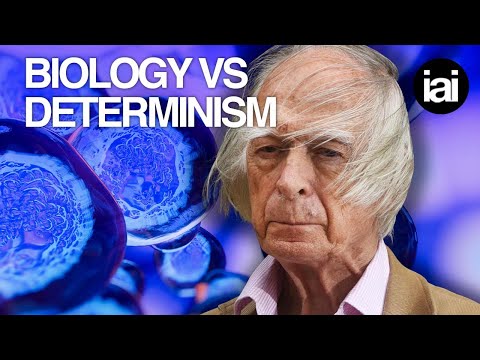
Jason
Re: How is dependent origination different than determinism?
The whole issue is fraught with a lot of nuance and semantics. So many of the terms have very specific definitions and two people can be using the same word but be talking about slightly or very different things.
Take free will, the sort of common sense notion is akin to the philosophical definition known as libertarian free will. That at any moment we can choose one thing over another. (I heard some breakdown of the percentage of surveyed philosophers and where they stood on the issue recently, if memory serves I think the number of libertarian free willers was at around %20 (don't quote me on that)). But not everyone who talks about free will means that sort of freedom when they use the term. My point being, check definitions.
Currently I'm something of a compatibilist. I believe in causes and conditions, but don't think that quite means we're all on a completely predictable set of train tracks. I hold open the possibility of present moment causation, that in the moment we can be aware of what is arising in the mind and that information acts in the causal chain to allow divergence from strict past determinism. It frees us from Laplace's demon. I also think the common sense notion of the self as being a homunculus separate from the world and biology that makes decisions is a false view that confuses people. Just because a process in your decision making comes from the subconscious doesn't mean that's not you. Just because environmental factors influence decisions doesn't mean they don't affect your unique makeup differently than another's. Practically and morally there is a distinction between being pushed off a diving board and deciding to jump off yourself even though both are deterministic.
Regarding determinism and dependent origination I don't know how much of a distinction, if any, can be made. The word determinism to me has a feeling more in line with fatalism, that the future is set and there's nothing to be done about it. Whereas, for me, dependent origination speaks to "what leads to what" as Joseph Goldstein puts it. It shows practical tools for creating conditions that lead to certain outcomes. Maybe its all in my mind, but one says its out of your control and one says its in your control.
 person