
Best Of
Re: Lobsters latest website/microblog
The spirituality that you grow up with will always have a special meaning for you. But I think later in life there is a blossoming that comes through the perennial philosophy, the realisation that all these religions are at their heart thinking about the same thing.
 Jeroen
Re: Space - the final frontier
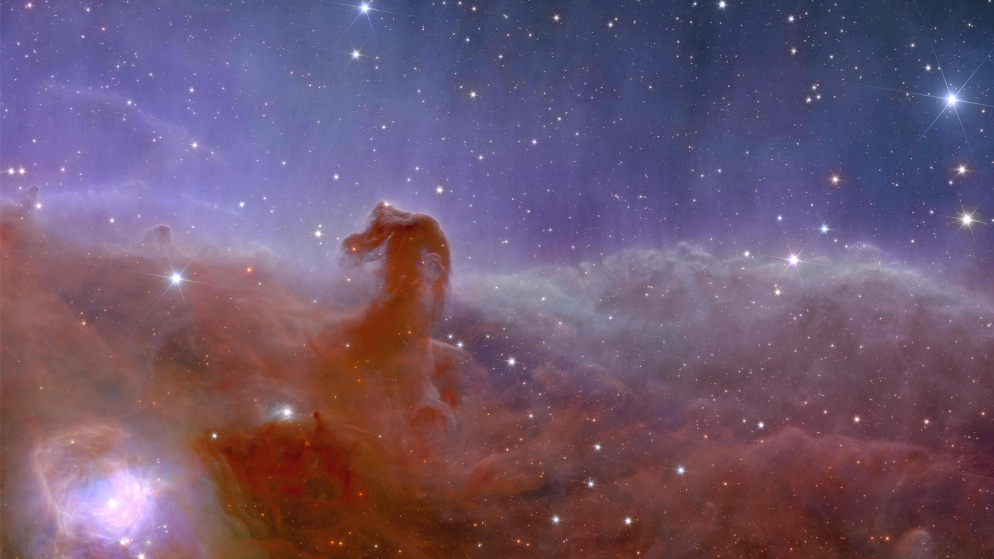
The Euclid space telescope’s first images released…
https://www.extremetech.com/science/euclid-telescopes-amazing-first-images-released
It’s a 1.2m diameter space telescope at the Earth-Moon LaGrange point, intended to survey large swathes of the sky so it doesn’t have such a narrow small-area view as the James Webb.
Jeroen

Re: Ozempic
@Vastmind said:
....the results are not permanent. The cravings return.
Yep, it's always that way. To eliminate craving, you have to understand the cause of craving. The cause is, ultimately, ignorance. Deal with the cause.
See: Dependent Origination

Re: Alan Watts and the peak experience
I like your third paragraph. Not sure I got that summation from the video, tho. Well, wait…maybe I do, haha…it’s the climb, fall, etc. as opposed to all about the peak. Ok. Gotcha
Divine inspiration? 🧐 Mystical experiences.? Never had one and to quote him from the video….the testimonies I have heard from others appear very ‘thin’. It’s nothing ever new. It’s validating/confirming info and/or opinions already expressed to that person or the person that gave it.
I do find it fascinating to discuss the ‘authority’ aspect. Once we determine who our trusted authority is on matters, the rest seems to fall in place to fit that narrative.,,,,which I guess he also said in a lot more words 😁. Critical thinking skills are a lost art in a world where sheep-hood feels comforting.
AFA the Canon:
“It’s a 4th century creation masquerading as a 1st century eye witness report “
-Bernard Brandon Scott, Ph.D.
Phillips Theological Seminary, OK.
 Vastmind
Re: Alan Watts and the peak experience
A bubble in a stream, a phantasm, a dream...
or cheat notes that meditators might consider carrying for life's tests or in labeling peak experiences.
The profundity of any spiritual awakening is directly proportional to the degree of delusion that one was formally laboring under.
So..a large awakening represents the large size of the delusion that the recipient was formally suffering under, just as lesser awakenings simply represent the smaller degree of delusion that the recipient was having to address. Consequently, the size of an awakening might say more about how deluded you were, that how awakened you might be now.
One of the most important functions that a good teacher can offer a student is how to prevent those awakened experiences from devolving back into glossier representations of our former states of delusion. This can mean the difference between a transcendence of a delusion and an eventual compounding or the entrenchment of that delusion.
The strength, length of time or fluidity by which an awakening remains an active unfolding experience in our daily lives, is directly proportional to the degree to which one avoids personally attaching to it in any way.
Meditation is a practice run on how to transcend all of suffering's causes,
not just a swap out of one attachment for one that is more agreeable to us.
 how
how
Re: Wordless knowing
Listening to a podcast today, someone said something else that reminded me of my thinking around this topic.
It was about how animals are aware and present in their surroundings and that biblically humans ate from the tree of knowledge and were banished from the garden of eden.
I've kind of related that to the progress of human evolution rather than anything literal. Humans evolved from animals to a state where we do have knowledge and meta cognition. That does help us, but it also confuses and masks our awareness. Our journey as a species though is not to "get ourselves back to the garden" as the song says, or maybe it is in a way, but with knowledge and understanding grown into wisdom and a mature sort of awareness.
 person
Re: The importance of forgetting
@Jeroen said:
If you really look at who the Buddha was, he was a man of his time and place, and to give his wheel of the dharma another turn seems a nigh-impossible task.
I'm not talking about "the" Buddha, though. I'm talking about "a" Buddha. The next Buddha will not turn the previous Buddha's Wheel. By that time, Shakyamuni Buddha's Dharma will be completely forgotten and a new turning will take place. It won't be that Buddha's own wheel any more than the one turned by Shakyamuni was his.
Alan Watts and the peak experience
I came across this piece of a lecture by Alan Watts this morning:
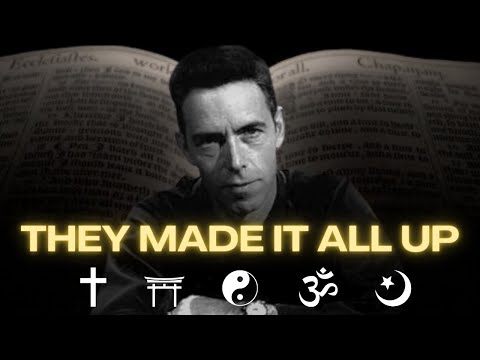
First he talks about the origins of the Bible, then about the origins of scriptures from other religions (turns out they were all written by men). There is no such thing as a single holy book. But next he turns to the religious experience, the core of which motivates all these various views of the holy. That which Abraham Maslow referred to as a “peak experience”. For a lot of people that experience is the peak of the mountain, the encounter with god.
Of course, for a lot of other people there is no monotheistic creator god. For Buddhists there are many gods, yet they are not very important, they come to learn the Dhamma from Buddha. Instead Buddhists take their refuge in the Buddha, the Dhamma and the Sangha. And Buddhism is also different in placing enlightenment, or buddhahood, as the peak of the mountain.
But what is often forgotten is that in making your way to the peak of the mountain you spend most of your time on its slopes, and you can hardly make your home at the mountaintop. What about coming down? What about living in the valley by the stream and the meadows? Whether a peak experience really is a good thing is very questionable. Certainly it can be as much curse as blessing, if you look at the average psychiatric ward.
Achieving a modicum of inner peace, and then just finding a creative mode of living, a way with love, a way of simply being. That seems to me to be enough, spirituality can be simple too.
Jeroen
Re: From the non-dual book pile…
Just to add something that I see people miss sometimes when talking about emptiness, non self and impermanence. I think you're probably aware, but it wasn't specifically spelled out and I suppose its a bit of philosophical pedantry on my part.
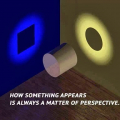
"Things" aren't just impermanent and ever changing. Even if we were to take a snap shot in time of something, it still wouldn't be "thing" in its own right. At every point any thing is made up of other things, which are made up of other things, and so on.
So less this
And more this
The "thing" isn't changing, all the parts that make it up are shifting and changing.
person