
Best Of
Re: Realising ‘I am not the body’
Today, all I see behind my eyes is an ever-shifting collective of divergent interests.
Finding some consistent "who" behind my eyes is like looking for some solidity in the rotating reflections of a kaleidoscope.
Sometimes, such searches find only an ever-diminishing "who", whose job description as a herder of cats, better describes a dream than an occupation.
 how
how
Re: Realising ‘I am not the body’
Heck, even our mind doesn't obey us in a lot of respects. So much of what we think and feel comes from subconscious processes. I'm of the opinion that the things we regularly do with our body affects the way we see the world. I've heard psychological advice that a way to combat a feeling of helplessness is to regularly do practical things with your body like gardening or building something. That sort of behavior tells our nervous system that we can accomplish things.
The average human has about 3 pounds of bacteria in their body. Some of this is responsible for producing about 95% of the bodies supply of seratonin. There are a number of other processes that these 'aliens' in our body do to make 'us', 'us'.
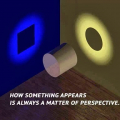
I think a lot of our confusion about the self revolves around the notion that what appears to our conscious minds is us. I go back to the Two Truths, ultimately there isn't one core homunculus in charge of everything, that doesn't mean pragmatically and conventionally there isn't an us. Conventionally we are the accumulation of all these non self things.
 person
Re: The Medical Model of Mental Illness
Maybe we need a Mental Elf? We might even be one …
https://www.nationalelfservice.net/about-mental/

 lobster
Re: No Buddhist Quotes
“The only difference between television and heroin is that on heroin you can still think your own thoughts.”
— Terence McKenna
 Jeroen
Re: The importance of forgetting
3 Perhaps.
Perhaps a practice heading towards suffering's cessation is not so much about learning or forgetting as it is about no longer feeding those impulses that habitually pattern knowledge into more fodder for our ego dream-making machinery.
Perhaps as long as one relates to knowledge as a potential self-related acquisition, that specific knowledge is likely to be as limited as it is intrinsically corrupted.
Perhaps, to the degree that an absence of attachment to knowledge is developed, a limitless gnosis arises wherever the self was formally obscuring it.
how
The importance of forgetting
It seems to me that the right way to read religious writings — Dhamma talks, discourses, books and so on — is to let them sink in, to absorb them and then to forget them almost immediately. In this way one learns the essence, one is changed by what one reads, without memorising, or calling to mind the specific words and trying to live by them.
It makes no sense to try and live by another’s exact words, you cannot imitate him or be him come again. Instead, be the unique expression of the universe you were meant to be. But you cannot stop changing or evolving, as long as you are alive change will be there. So it is with letting those changes teach you, alter you, shape you.
So learning means to absorb, which means to read slowly, deliberately, to let realisations which come from the words of a text arise and be considered. It is often good to pause and contemplate for a few seconds. But when you’re done, discard the words and carry on.
Memorising is a form of clinging. It is better to let the words go, and just let their essence stay with you, even if it means occasionally returning to texts you had read before, in order to see if a new appreciation arises. Even with quotes, which are meant to be memorable, it is good to just let them be and forget them for a while… if they are truly worth remembering they will stay with you. So I thought I would close this with a quote 
“The man of knowledge learns something new every day. The man of Tao forgets something every day.”
— Lao Tse
Jeroen
Re: Ozempic
It’s not as unattainable as it once was…for some people.. I know several middle income women who have taken it for weight loss, and my own Dr tried to push it on me. Several insurance companies cover it ( copays vary, of course).The problem was diabetics with no insurance or who were on a fixed income couldn’t afford it, and once it became the fad for weight loss, supplies dropped. That being said….you can’t take it forever, and the results are not permanent. The cravings return.
AFA fostering ‘motivation’….the Buddhist POV would be intentions and right effort.
 Vastmind