
Best Of
Re: Blessings
Life is a blessing unto itself
Challenge is a blessing
Loss turns to blessing
Gain reflects blessing
Compassion enhances blessing
Mercy expands blessing
Gratitude creates blessing
Empathy enriches blessing
Peace to all
 Lionduck
Re: Good news
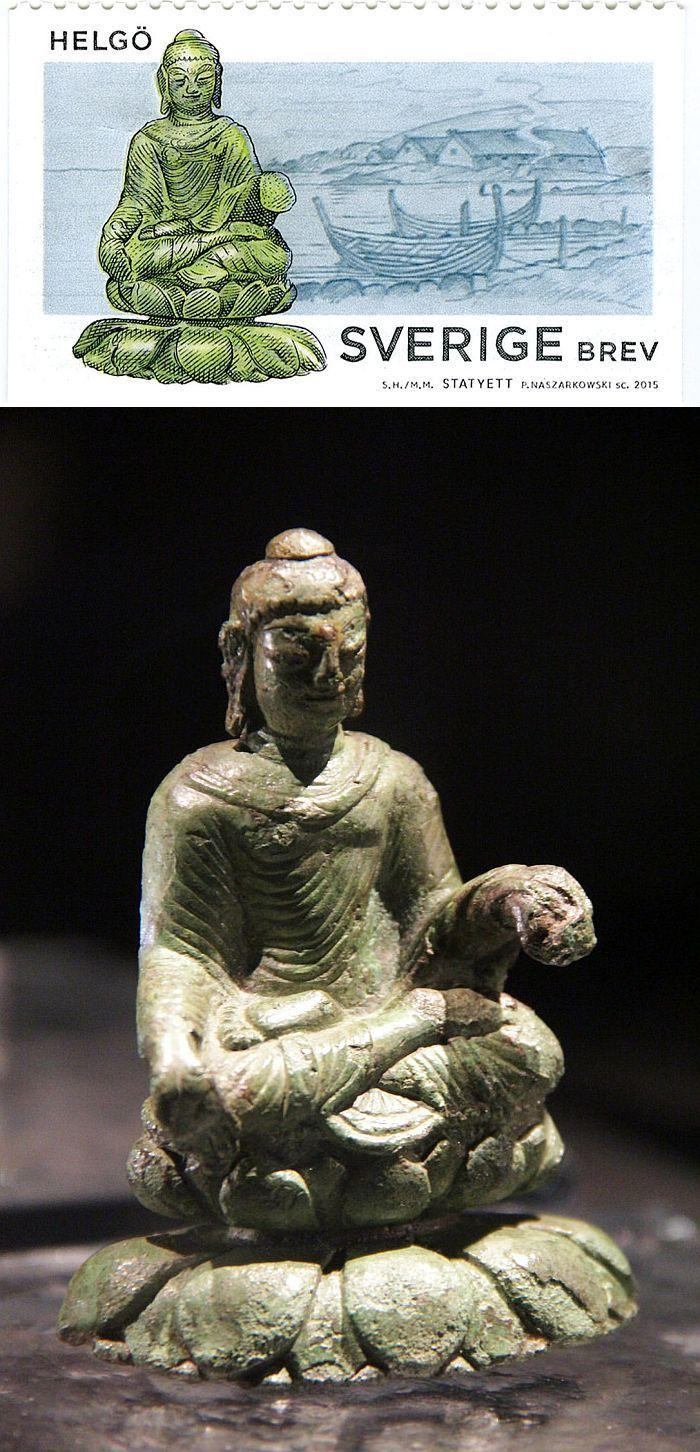
Historically, Buddhism did indeed reach Europe. Perhaps that is behind the early Christians warning about Influences from the East hundreds of years before the Mongol invasion. I am not surprised at the discovery "Viking Buddhist statues" from the 6th century.
Lionduck
Re: Bugs bug me
@Ning said:
If I'm not supposed to harm other living beings, what should I do if there's an ant infestation at my house 😅
I'm serious please help me 😭
If ants they can be guided to new sites with trails leading to their favourite food. I use tiger balm smeared trails.
Wasps and bee I have a particular affinity with and place gumdrops or plant flowers for the bee visitors.
You can also try talking to them or moving them on an individual basis...
 lobster
Re: Bugs bug me
It’s a tricky problem… in the past I’ve put my Buddhism on temporary hold in order to had exterminations done, and then make reparations by leaving a cake in the forest for the ants there to eat.
 Jeroen
Re: Good news
This is a viking Buddhist Statue from the 6th CE
Maybe we have them all wrong and they were civil celts? Who knows? Maybe they were the first Berserker Buddhist Evangelicals? 
lobster
Re: Bodhisattvas?
As we know and even experience:
Enlightenment occurs in all ages, religions and secular life. The level , intensity and nature of which can:
- Drive one crazy
- Drive one sane
- Drive one to spirituality or away from it
And yet...
It is nothing, a flash of realisation of where one has always been
How can we prepare? According to Zen we can not 'polish a stone to make it a mirror' BUT we can find a mirror in the wisdom that rings true and constantly from many sources...
Happy Easter Sunday
https://en.wikipedia.org/wiki/Mysticism
lobster
Re: Bodhisattvas?
@Tavs said:
Are Bodhisattvas important to you or do you think the opposite and consider them irrelevant to your practice? Or somewhere in the middle?
Thank you for the question. Just some musings...
I am not well-acquainted with the 'requirements' for being considered an 'official' Bodhisattva, either in Theravada or Mahayana.
Maybe my personal definition would be someone that a) provokes in me and others a deeply wholesome sense of 'gimme some of that!' and b) provides tools that actually move me and others in that direction.
Since in offline life, with only a couple of exceptions, I am rather isolated in my spiritual meanderings (something to remedy), since I am mostly surrounded by decent but 'ordinary' people, and since the Buddha rightly said that good spiritual friends and mentors are the whole of the path, I consider such influences (whether from books or modern forms or people I meet and associate with) tremendously important in my development.
Finally, personally, I'd say that 'Bodhisattvahood' lies not in a binary distinction but on a continuum. Each one of us sometimes manifests 'Bodhisattva-action'. Some rarely, some often, and some (maybe) always. Each one of these 'Bodhisattva-actions' helps to lower aggregate suffering in the world and, maybe to some paradoxicaly, in self too. Great success!
I don't think that musing too much about the details of Bodhisattvahood is very helpful. One zen monk came to an elementary school and, in silence, wrote on the blackboard: 'Everyone wants to save the world, but no one wants to help mom with the dishes'. Let us 'help mom with the dishes' with cheer, this is Bodhisattva-action. It's a training, like in the gym. We practice over and over and over again, keeping failing but slowly hitting the mark closer and more often, and slowly 'move up'.
 marcitko
Re: I'm Thankful For...
This list…
THE 5 OMNIPRESENT (EVER-RECURRING) MENTAL FACTORS
- Feeling (the first aggregate)
- Recognition / discrimination / distinguishing awareness (the second aggregate)
- Intention / mental impulse - I will ...
- Concentration / attention / mental application - focused grasping of an object of awareness
- Contact - the connection of an object with the mind, this may be pleasurable, painful or neutral as experienced by the aggregate of Feeling.
THE 5 DETERMINATIVE MENTAL FACTORS
- Resolution / aspiration - directing effort to fulfil desired intention, basis for diligence and enthusiasm.
- Interest / appreciation - holding on to a particular thing, not allowing distraction
- Mindfulness / Recollection - repeatedly bringing objects back to mind, not forgetting
- Concentration / Samadhi - one-pointed focus on an object, basis for increasing intelligence
- Intelligence / Wisdom - "common-sense intelligence", fine discrimination, examines characteristics of objects, stops doubt, maintains root of all wholesome qualities.
THE 4 VARIABLE (POSITIVE OR NEGATIVE) MENTAL FACTORS
- Sleep - makes mind unclear, sense consciousness turns inwards
- Regret - makes mind unhappy when regarding a previously done action as bad, prevents the mind from being at ease.
- General examination / coarse discernment - depending on intelligence or intention, searches for rough idea about the object.
- Precise analysis / subtle discernment - depending on intelligence or intention, examines the object in detail.
THE 11 VIRTUOUS MENTAL FACTORS
(Note that 18 and 19 are not necessary always virtuous. The first 3 are also known as roots of virtue.)
- Faith / confidence / respectful belief - gives us positive attitude to virtue and objects that are worthy of respect. Three types are distinguished, with the last one being the preferred type:
a. uncritical faith: motivation is for no apparent reason
b. longing faith: motivation is by an emotionally unstable mind
c. conviction: motivated by sound reasons - Sense of Propriety / self-respect - usually the personal conscience to stop negative actions and perform positive actions
- Considerateness / decency - avoids evil towards others, basis for unspoiled moral discipline.
- Suppleness / thorough training / flexibility - enables the mind to engage in positive acts as wished, interrupting mental or physical rigidity.
- Equanimity / clear-minded tranquility - peaceful mind, not being overpowered by delusions, no mental dullness or agitation
- Conscientiousness / carefulness - causes avoiding negative acts & doing good; mind with detachment, non-hatred, non-ignorance and enthusiasm
- Renunciation / detachment - no attachment to cyclic existence and objects
- Non hatred / imperturbability - no animosity to others or conditions; rejoicing
- Non-bewilderment / non ignorance / open-mindedness - usually understanding the meaning of things through clear discrimination, never unwilling to learn
- Non violence / complete harmlessness - compassion without any hatred, pacifist
- Enthusiasm / diligence - doing positive acts (specifically mental development and meditation) with delight
THE 26 NON-VIRTUOUS MENTAL FACTORS
THE 6 ROOT DELUSIONS (Delusion is defined as any secondary mental factor that, when developed, brings about suffering and uneasiness to self or others.)
- Ignorance - not knowing karma, meaning and practice of 3 Jewels, includes closed-mindedness, lack of wisdom of emptiness.
- Attachment / desire - definition: not wanting to be separated from someone or something. Grasping at aggregates in cyclic existence causes rebirth & suffering of existence
- Anger - definition: wanting to be separated from someone or something, can lead to relentless desire to hurt others; causes unhappiness
- Pride - inflated superiority, supported by one's worldly views, which include disrespect of others
- Doubt / deluded indecisive wavering - being in two minds about reality; usually leads to negative actions
- Wrong views / speculative delusions - based on emotional afflictions. Distinguished in 5 types: belief in the self as permanent or non-existent (as opposite to the view of emptiness); denying karma, not understanding the value of the 3 Jewels; closed-mindedness (my view -which is wrong- is best); wrong conduct (not towards liberation)
THE 20 SECONDARY NON-VIRTUOUS MENTAL FACTORS
Derived from anger:
32. Wrath / hatred - by increased anger, malicious state wishing to cause immediate harm to others
33. Vengeance / malice / resentment - not forgetting harm done by a person, and seeking to return harm done to oneself
34. Rage / spite / outrage - intention to utter harsh speech in reply to unpleasant words, when wrath and malice become unbearable
35. Cruelty / vindictiveness / mercilessness - being devoid of compassion or kindness, seeking harm to others.
Derived from anger and attachment:
36. Envy / jealousy - internal anger caused by attachment; unbearable to bear good things others have
Derived from attachment:
37. Greed / avarice / miserliness - intense clinging to possessions and their increase
38. Vanity / self-satisfaction - seeing one's good fortune giving one a false sense of confidence; being intoxicated with oneself
39. Excitement / wildness / mental agitation - distraction towards desire objects, not allowing the mind to rest on something wholesome; obstructs single pointed concentration.
Derived from ignorance:
40. Concealment - hiding one's negative qualities when others with good intention refer to them this causes regret
41. Dullness / muddle-headedness - caused by fogginess which makes mind dark/heavy - like when going to sleep, coarse dullness is when the object is unclear, subtle dullness is when the object has no intense clarity
42. Faithlessness - no belief of that which is worthy of respect; it can be the idea that virtue is unnecessary, or a mistaken view of virtue; it forms the basis for laziness (43)
43. Laziness - being attached to temporary pleasure, not wanting to do virtue or only little; opposite to diligence [25])
44. Forgetfulness - causes to not clearly remember virtuous acts, inducing distraction to disturbing objects - not "just forgetting", but negative tendency
45. Inattentiveness / lack of conscience - "distracted wisdom" after rough or no analysis, not fully aware of one's conduct, careless indifference and moral failings; intentional seeking mental distraction like daydreaming
Derived from attachment and ignorance:
46. Hypocrisy / pretension - pretend non-existent qualities of oneself
47. Dishonesty / smugness - hiding one's faults, giving no clear answers, no regret, snobbery & conceit, self-importance and finding faults with others
Derived from attachment, anger and ignorance
48. Shamelessness - consciously not avoiding evil, it supports all root and secondary delusions
49. Inconsiderateness - not avoiding evil, being inconsiderate of other's practice, ingratitude
50. Unconscientiousness / carelessness- 3 delusions plus laziness; wanting to act unrestrained
51. Distraction / mental wandering - inability to focus on any virtuous object
Jeroen
Re: The space between self esteem and self compassion
Nice talk. I hope many people read it and become inspired to find out more about compassion.Her concern seems to be with the rise of narcissistic self-esteem which is based in unrealistic expectations.
I agree that the definition she gives of self esteem (feeling better than others) is not particularly useful. It's also not really 'buddhist' in my experience. But there is another type of self esteem that can arise, in my experience. That self esteem is the knowledge that whatever situation may arise, I will find a way through it. I will not let anything or anyone get the better of me. It a type of trust, but it feels comparable to self esteem to me.
Re: Bodhisattvas?
I see them as an ideal to work towards even if practically its out of reach for us.
I think its also important to understand what a bodhisattva is. Its more than a very compassionate person, there is also an element of awakening involved.
 person