
Best Of
Re: The straightjacket of scientific thought
Someone who studies spirituality scientifically. Seems very helpful and grounded to me.
I think the topic of the thread has more to do with the way we hold our view of science or spirituality rather than the rigidity being in the thing itself. Or at least, our views of science and spirituality are subject to the way we approach them mentally. We can hold either science or spirituality rigidly or loosely. The straightjacket or lack thereof exists in us more than it does out there.
 person

Re: Just for fun: the random, useless announcements thread!
@lobster said:
Well done #how,I planted individual supermarket garlic cloves next to my strawberries. I might dig one up to see what it is doing, expect no pics though … I have a feeling nothing much there …
I only have any experience with hard necked garlic (not the soft necked ones)
A number of garlic producers spray their commercial garlic crop with a growth inhibiter to limit the potential competition of everyone just growing their own...so say many displeased DIY u tubers, as well as the producers of more expensive organic garlic cloves grown specifically for reproduction.
Also...while the common garlic plant might grow somewhat when planted normally, mine requires a mature clove to go through a number of hard freezes over winter before it will produce its bulb for the following summer.
 how
how
Re: Vassa Dhamma Challenge
@Kotishka said:
I prefer my Thai Forest Tradition and Soto Zen mixture. They tend to co-exist peacefully.
I was a Shambhalian, myself, but I tired of the controversy and never really cared for the whole "Sakyong" thing. So I moved on into more traditional presentations and teachers in the Kagyu lineage.
As you said, more peaceful.
Re: Modern teachers and money
Teachers have, historically, required something of value from students. A good example is the relationship between the yogi, Milarepa, and his teacher, Marpa. Milarepa pursued Marpa to receive Dharma teaching. Marpa refused for a time. Finally, he told Milarepa, to build a tower of stone. He made the tower as Marpa ordered. Marpa looked at it and told him to tear it down and build another. They went through several rounds of building and then Marpa accepted Milarepa as his student.
Mila's time and effort was as valuable as money, but he didn't have any money. Marpa, wisely, relied on the next best thing.
Milarepa would go one to become a founder of the Kagyu lineage - a great Yogin, holder of Marpa's lineage handed down from Tilopa and Naropa, maker of songs of realization, and teacher of Gampopa.
Re: The straightjacket of scientific thought
Here is my poorly worded, addled stab at it.
Science is the study of the physiological phemomia. Even psychology is within the measurable relm. it deals with our reaction to stimuli and what synaps are associated with X Y or Z. it deals with how we may change our reactiond based upon a measurable and identifiable input.
Spirituality including religion, deals with the immeasurable.
in terms of religion, there is the story:
A man approached a leader/mentor within a particular school of Buddhism.
He stated that he had been studying and observing this school for 20 years.
He knew it's history and it's positive effects, philosophy, etc.
He knew all about it, but was at a loss as to how or what actually made it work.
To this, the leader/mentor replied that, with that study, there was one element missing.
The man was encouraged to apply all that knowledge by doing the practice.
Upon doing so, the man quickly, and with great appreciation, understood.
The scientific study of the theory, and other aspects, from a third person perspective, gave the man a theoretical undertanding of the philosophy and mechanics of the practice. But only when he actually crossed the line to open the spiritual application, actions, did he truely undertand. We can study all there is about riding a bicycle. But, if we never actually ride a bike, we will never know the actuality of riding a bike.
All this, of course means Science is the observation, study and measurement of ideas and things. Engineering is manifesting these concepts, theories, in a material form.
Spirituality is going into the immeasurable. The study of life itself, rather than just the physical, observable, measurable manifestations of life.
Peace to all
 Lionduck
Re: The straightjacket of scientific thought
@Lionduck said:
Spirituality is going into the immeasurable.
That I think is closer to the truth. Jiddu Krishnamurti once said, “truth is a pathless land” and he indicated that in a spiritual search one could not follow any man or doctrine. But the conditioning which we pick up from toys, clothes, parents, teachers, schools, the government, they all limit the paths we walk.
In order to walk and pursue the truth freely, we have to perceive and let go of the conditionings. It’s a slow process. Science is a good tool for examining the physical world, and it even says some things about spirituality and the origins of life. But once you start looking at the self, at consciousness, at the immaterial realms, it is a serious constraint.
The thing is, many of the things you encounter in an Ayahuasca experience are not physical, but our spirit is profoundly affected by them. Things like magical chants, song, myths and legends all acquire a kind of meaning that renders them significant as the mind expands.
 Jeroen
Re: Vassa Dhamma Challenge
@IdleChater said:
@Shoshin1 said:
You may find this interesting...perhaps even helpful...
The 10% advantage
I guess what he is saying is....when setting goals, it's important not to bite off more than you can chewWow! I would not have expected this group to have a post promoting what the Sakyong taught. Disgraced teachers usually don't very good treatment, around here, nor should they.
That said, he did have some interesting things to say in his book, Turning the Mind Into An Ally. He advised beginners to meditate in easily managed times - 5, 10, and ideally, 20 minutes sessions. This is plain, old Shamatha meditation; simple resting, calm, abiding meditation. Beginner meditation, in the Shambhala tradition, is taught with that in mind.
@IdleChater It's a case of not throwing the baby out with the bath water
If you think about it. over the years 'famous' Dharma teachers have given Dharma talks which have been of great benefit to many people, then later they may fall from grace...Does this mean those beneficial teachings should be ignored ?
No doubt he won't be the last well known Dharma teacher to be discredited

Don't mistake the finger pointing to the moon for the moon
 Shoshin1
Re: Vassa Dhamma Challenge
You may find this interesting...perhaps even helpful...
The 10% advantage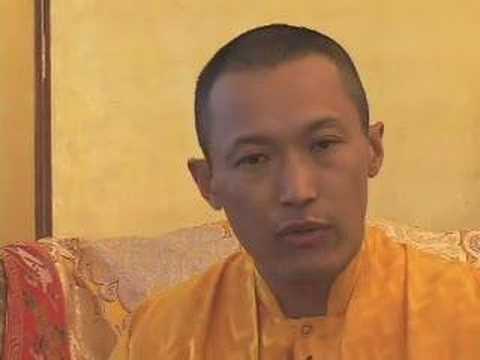
I guess what he is saying is....when setting goals, it's important not to bite off more than you can chew
Shoshin1