
Best Of
Re: Getting better "blog"
The London trip was a great success in all aspects and I am happy that I went. I was on good terms with my mother and had a good mix of activities with her and alone. I also had a good mix of touristy stuff and things like lectures (LSE), theatre, roaming around with no specific plan, meetings with my mother's friends, and Buddhist stuff.
As for Buddhism, I visited the British Museum and the first three halls I stumbled upon were Southeast Asia, Korea, and Japan. Felt that was quite serendipitous. I also participated in an excellent Tibetan Meditation at the London Buddhist Society.
The only complaint I have is that London is VERY big and there was so much walking that I was often very tired. I'm not 18 any more  (37 now) and have too much weight. As you all already know, I have been working on my physical health and stamina, but need to continue and work on it more. There is no reason that I cannot be in excellent shape even at 37.
Today I have a long list of post-travel chores to do and will report tomorrow on how it went.
Tomorrow I want to try a new work + sports regime by going to the library and working for five hours and then going to the gym which is close by. I work from home and this change of scenery might be very good for focus. The library has an excellent working space with computers and not many people there.
 marcitko
Re: Koji
ah @Lobster, your claws have latched onto some interesting information.
Also, if you make rice balls, we sometimes put in a pickled plumb and we put sesame seeds and shredded seaweed on them. Mmmm mmmm good! 
 Lionduck
Re: Vertical vs Horizontal Transcendence
Definitely interesting.
In terms of my Buddhist studies I’ve always avoided getting too invested in the Bodhisattva ideal because it is a commitment that you do not know if you’ll be able to keep. I was always more comfortable with the paramita’s as an aspirational quality, and doing in this life what you can.
The goals that Buddhism places in front of you — enlightenment, a good rebirth, the Pure Land — I have recently realised are not my goals. My goals have to do with the path right now, being where I am and gradually unfolding as my awareness shows me more of who I am.
Ramana Maharshi (whose book Be As You Are I am currently reading) once said “the greatest gift you can give the world is your own realisation.”
 Jeroen
Vertical vs Horizontal Transcendence
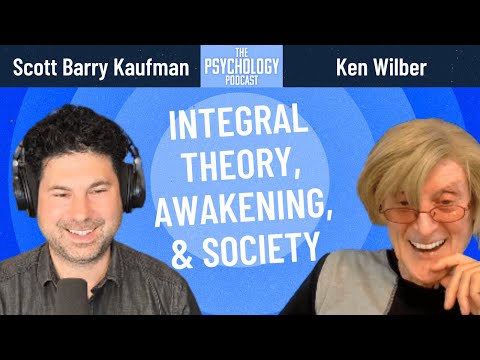
Listening to a podcast between Scott Barry Kaufman and Ken Wilbur, Scott raised an interesting concept I hadn't heard of before, vertical vs horizontal transcendence. It opened up a lot of thoughts and feelings around my spirituality at present. These are pretty much just my thoughts and are pretty much completely ignorant of existing thinking on the matter.
I'm relating horizontal transcendence to the bodhisattva path and its feeling to me as life affirming. In my practice I've long started with the prayer "Until enlightenment I go for refuge to the Buddha, Dharma, and Sangha. Through the merits of this practice may I free my mind from craving, hatred and delusion so I may be of benefit to others". I think years of having done this practice has created in my mind the notion that even though my practice benefits me, ultimately it is also for others, in experience and intent it isn't a purely selfish pursuit. Scott mentioned that in the idea of horizontal transcendence there isn't such a strict delineation between what is good for oneself and what is good for others. In terms of the interview it felt a lot of the time like Scott was pushing back against Ken's more vertical notion of transcendence.
The way it has me thinking at the moment is in terms of the notion that the path of the Arhat is relatively quick and the path of the Bodhisattva is eons long. The enlightenment of an Arhat is that vertical transcendence that escapes the world, the enlightenment of a Buddha embraces the world. But because it embraces the world it has to psychologically bring the rest of existence along with it.
I'm just making stuff up, but it feels opening and empowering for me. Probably in part because I don't really feel able to escape life right now, and in my experience my practice does have a positive impact on those I interact with. Or maybe it fits with the type of bodhisattva I've always resonated with, that of the ferry man vs king like (Amitaba) or shepherd like(Avalokiteshvara).
 person
Re: Buddhist quotes
Here is a very straightforward mental task: be continuously aware for one full minute as you breathe in that you are breathing in, and as you breathe out that you are breathing out. Almost everybady finds this task extremely difficult.
But why is that?
Why can't you just think about the things you want to think about, and not think about the things you don't want to think about. You can decide to keep your hands still in your lap and do it. Why can't you just decide to make your mind still and do that? Why are you unable to ever be sure what your next thought will be?
Questions like these have important implications, Consider the role your views, opinions and beliefs play in your sense of who you are. Those views, opinions and beliefs may seems solid and substantial, bedrocks of your personality and identity. But the mental stuff of which they are composed is thought, And thought is the opposite of solid and substantial. This is one of the reasons why Buddhist meditation can be so world-shaking. It makes you question everything you hold most dear. Including the very you who is asking the questions.
If you are blessed with at least one good friend, if you find joy in generosity and kindness, if you have clear moral boundaries, you can assimilate the discoveries made during meditation. They do not fill you with fear: they feel like a huge weight falling from your shoulders.
Ajahn Jayasaro
24/06/2023
 Bunks
Bunks
Re: Funny Stuff
TEE HEE @Shoshin
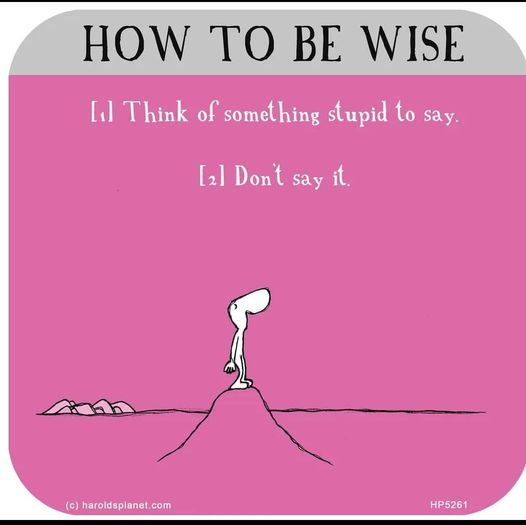
Now (ye ex theists) we know why the gods say nothing. They are always thinking up stoopid shit … 

I prefer my gods, bodhisattvas, Tantric deities, fiends etc to be my minds creation.
Up they come, snap of the fingers and … gone … 
 lobster
Re: No Buddhist Quotes
"No one and no thing can free you but your own understanding'
~Ajahn Chan~
 Shoshin1
Re: No Buddhist Quotes
Q: Will not right conduct be enough to secure salvation?
A: Salvation for whom? Who wants salvation? And what is right conduct? What is conduct? And what is right? Who is to judge what is right and what is wrong? According to previous samskaras, each one regards something or other as right. Only when the reality is known can the truth about right and wrong be known. The best course is to find out who wants this salvation. Tracing this `who' or ego to its original source is the right conduct for everyone.
(Question asked to Ramana Maharshi)
Jeroen
Re: Buddhist quotes
We feel ourselves surrounded by unpredictable and uncontrollable change. This provokes fear and anxiety. People adopt different strategies to deal with their unease. Some people try to make themselves so busy, physically and mentally, that they have no time to dwell on deeper matters.
It is the ideas behind the cartoon characters that can run off the edge of a cliff, but not fall as long as they don’t look down. Other people devote themselves single mindedly to a cause or a dream. Many people distract themselves with alcohol or illegal drugs.
Perhaps the most common response is to place faith in a changeless but benevolent supernatural force.
The Buddhist approach is different. The Buddha taught us to study change, to understand its causal nature.
When we look more closely within, we can discover the root cause of our fear and anxiety. The culprit is the idea we have of ourselves as a solid, separate independent entity. In fact, all that can be found is a flow of phenomena with no owner or controller standing behind it. We realise that we are not vulnerable, fragile creatures threatened by change. Our life is simply a particular expression of that same universal change that surrounds us. Seeing this, how could there be fear?
Ajahn Jayasaro - 17/6/2023
Bunks