
Best Of
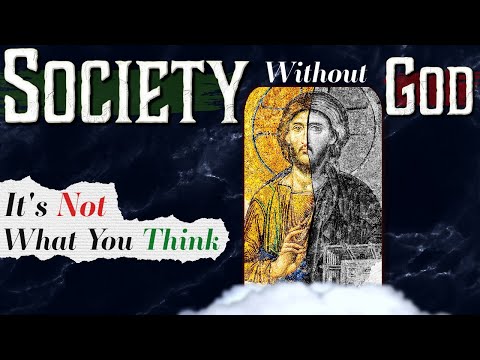
Re: What Happens When Societies Stop Worshipping God?
@marcitko said:
@person said:
The question that occurred to me was which comes first? Do less organically religious people create better societies or do better societies create less religious people? Or is it some sort of self reinforcing spiral?You might find interesting and illuminating the findings of the World Values Survey: https://www.worldvaluessurvey.org/wvs.jsp
To the best of my knowledge, this is some of the best stuff coming out of social science.
From what I remember, their findings are that while culture retains some significance, economic development is the predominant factor influencing values, including religious values.
When I studied political science, the main debate was as you framed it. Max Weber said that culture determines economics. Karl Marx said that economics determines culture. From my understanding of the World Values Survey, it turns out that Marx was much more right.
I'm hardly a Marx scholar, but my general impression is that he (or maybe its down to those implementing his ideas) misses the organic vs forced distinction in the video. The former being positive the latter a disaster. At any rate its a helpful place for me to try to sort the question out, thanks for the pointer.
 person
Re: What Happens When Societies Stop Worshipping God?
@person said:
The question that occurred to me was which comes first? Do less organically religious people create better societies or do better societies create less religious people? Or is it some sort of self reinforcing spiral?
You might find interesting and illuminating the findings of the World Values Survey: https://www.worldvaluessurvey.org/wvs.jsp
To the best of my knowledge, this is some of the best stuff coming out of social science.
From what I remember, their findings are that while culture retains some significance, economic development is the predominant factor influencing values, including religious values.
When I studied political science, the main debate was as you framed it. Max Weber said that culture determines economics. Karl Marx said that economics determines culture. From my understanding of the World Values Survey, it turns out that Marx was much more right.
 marcitko
Re: What Happens When Societies Stop Worshipping God?
The question that occurred to me was which comes first? Do less organically religious people create better societies or do better societies create less religious people? Or is it some sort of self reinforcing spiral?
person

Re: Walking Meditation
Walking meditation is a fundamental tool in extending one's development of meditation from physical stillness into the activity of daily life.
Ya know, for all those times when meditation within some form of life's movement is what's called for.
It also helps the practitioner learn how to not limit the activity of meditation to some external dependence upon a state of physical stillness.
 how
how
Walking Meditation
Walking meditation is misrepresented!
Sitting is the absolute favourite, no doubt. People associate meditation to the cushion, not to walking. But it is such a powerful practice.
This morning, early, I felt like meditating and began walking in shashu. I noticed the same though I felt less agitated and uncomfortable than sitting. I guess the walking does soothe a bit the mental fantasy and the discomfort it faces when you need to remain still.
What is your experience? Any advice?
 Kotishka
Re: Lobsters latest website/microblog
The spirituality that you grow up with will always have a special meaning for you. But I think later in life there is a blossoming that comes through the perennial philosophy, the realisation that all these religions are at their heart thinking about the same thing.
 Jeroen
Re: Space - the final frontier
The Euclid space telescope’s first images released…
https://www.extremetech.com/science/euclid-telescopes-amazing-first-images-released
It’s a 1.2m diameter space telescope at the Earth-Moon LaGrange point, intended to survey large swathes of the sky so it doesn’t have such a narrow small-area view as the James Webb.

Jeroen

Re: Ozempic
@Vastmind said:
....the results are not permanent. The cravings return.
Yep, it's always that way. To eliminate craving, you have to understand the cause of craving. The cause is, ultimately, ignorance. Deal with the cause.
See: Dependent Origination
