
Best Of
Re: The Dalai Lama doing nothing about sexual abuse?
"It is right for you to doubt; doubt has arisen in you about dubious matters. Come, Kalamas, do not rely on oral tradition, or on the lineage of teachers, or on holy scriptures, or on abstract logic. Do not place blind trust in impressive personalities or in venerated gurus, but examine the issue for yourselves. When you know for yourselves that something is unwholesome and harmful, then you should reject it. And when you know for yourselves that something is wholesome and beneficial, then you should accept it and put it into practice."
— AN 3.65
 Kotishka
Re: The energy of a holy place
The amount of weight and effort put into constructing certain places does indeed leave a mark. It has the elements of what Human emotions, inspiration, even greed or delusion that got settled upon at some point in time. Then the flow of people, work, worship. That leaves dent in reality. It is hard to measure, but I can understand it.
You can get the a similar effect when visiting a forest or a mountain's peak, but "holy places" as in constructed or manipulated by man do have their own taste and they differ. But just like black tea, green tea or oolong tea are different, they are also all tea at the end of the day. Just a different taste in that moment, if you permit me this analogy.
Kotishka
Re: The Wise Heart, by Jack Kornfield
I especially enjoyed the chapter where he talks about desire. He goes into his own monkish past, and how as a psychology student he had to undergo treatment by a clinical psychologist who had worked a lot with Reichian methods. This allowed him to release some suppressed desires, where as a monk he had learned to ignore all desires… he had gotten into some difficulties with a girlfriend, they were living together and when she asked him what kind of restaurant they should go to he would reply, they’re all delicious. Taking desirelessness to it’s logical extreme. But therapy got him to acknowledge there were good desires and bad desires, and it was fine to be in touch with the good desires.
 Jeroen
Re: Blessings
An Invocation of Metta/Compassion
As we all gather here today in friendship and community, taking a moment out of our busy lives,... to learn, share and reflect on the insights, experiences and wisdom of others, we are reminded of how blessed we all are. In the current world around us there are many who suffer and face grave challenges. We stand in solidarity with them in compassion and by practicing loving kindness to ourselves and all those around us.
Taking a couple of stanzas from Metta or compassion meditation, let us engage in the power of prayer that connect us - irrespective of religion - with our beliefs and ideals more deeply helping us to hold them in our minds as we go about our daily business, and helping us to develop a stronger sense of conviction. Let us pray the following in the name of all that is good.
May we all be well, happy and peaceful, May no harm come to us,
May we all also have patience, courage, understanding, and determination to meet and overcome inevitable difficulties, problems, and failures in life.
May our parents, our teachers and mentors, our friends and may all living beings across the world...be well, happy and peaceful. May no harm come to them,
May they also have patience, courage, understanding, and determination to meet and overcome inevitable difficulties, problems, and failures in life.
- Thilini Ariyachandra
 lobster
Re: Do not convert?
Searched most of my life for religion that I could truly believe in. Then studied Buddhism. Almost feels like that's been my belief all along. Very freeing.
 Jeri
Jeri
Re: The Wise Heart, by Jack Kornfield
Thank you.
I'm finally learning about psychotherapy techniques at university-though a few theory subjects still remain to be gnawed off- and while Jack Kornfield is not on my syllabus, he is on my personal syllabus!
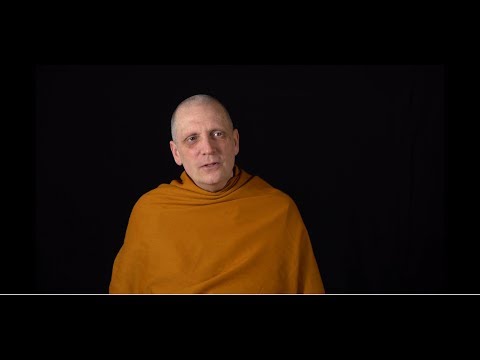
I have to say I came to Psychology from Buddhism thanks to this video. Ajahn Sona, while not a student of Ajahn Chah, belongs to the lineage of the Thai Forest Tradition.
I will definitively pick it up for my reading!
Kotishka
Re: The energy of a holy place
There was a time I scoffed at the idea that a structured setting could be more holy than say, a forest. Then I took into account the action that goes into such a place. The artwork, the concentration, the heart that makes the effort. There is a lot to be said about grace but knowing those before us set their minds to create works intended to bring us closer to the divine spark within us all is unsurprisingly moving.

Re: Your favourite cakes!
Oh, gee whiz - I used to like cakes, but diabetes has altered my perception remarkably. Now I am kind of disgusted and repelled by them. Wife keeps making them anyway, so I have plenty of opportunity to work on mitigating this reflex.
 Fosdick


Re: The practice of 'no-esteem'
@nakazcid said:
I've been thinking about some of the suggestions and practices here, but I'm not sure they address another angle of the problem: the so-called inner critic. Suppose you make a mistake, and the voice in your head screams at you "You f**king idiot, how could you do something so utterly clueless and stupid!! You're a complete waste of space!"This doesn't seem to be a problem of comparing oneself to others, but something else entirely - at least on the face of it. Any tips for countering that tendency?
Self compassion practice is aimed at this sort of internal dialogue. The "critic" is intended to help motivate us into improving but often it serves to demoralize. My understanding of self compassion is that rather than demotivating us by thinking we're already fine, the basis of motivation shifts to doing good for oneself because one wants good things for yourself rather than wanting to avoid bad things. This is a longer term practice.
In the shorter term, a quite effective short hand thought to keep in mind is to imagine your self talk as if you were talking to a loved one. Like if you went around talking to other people like you talk to yourself people would consider you a monster. That simple shift can often be a good practice by itself.

 person