
Best Of
Re: Destination Addiction
@Kotishka said:
I'm currently studying to get a better/more fullfilling job and sometimes (most of the time) -especially for the first two years- I kept just dreaming of finishing, seeing it as a toil... instead of enjoying, learning, exercising, living the moment, growing....
I'm changing this and this video has been a refresher of what not to recede into again.
Great video @Kotishka.....However, be careful not to make the content/essence of this video into a destination addiction ....if you get my drift....
 Shoshin1
Destination Addiction

I'm currently studying to get a better/more fullfilling job and sometimes (most of the time) -especially for the first two years- I kept just dreaming of finishing, seeing it as a toil... instead of enjoying, learning, exercising, living the moment, growing....
I'm changing this and this video has been a refresher of what not to recede into again.
 Kotishka
Re: Thoughts on traumatised people
I'd just add to the discussion not to get too hung up on eliminating or avoiding trauma altogether.
First, for clarity, that word has had a fair bit of concept creep. (article )Which partly diminishes "actual" trauma and psychologically tends to make people more sensitive to harms. Which might not be a bad thing... might.
Second, the notion of antifragility and post traumatic growth
“Some things benefit from shocks; they thrive and grow when exposed to volatility, randomness, disorder, and stressors and love adventure, risk, and uncertainty. Yet, in spite of the ubiquity of the phenomenon, there is no word for the exact opposite of fragile. Let us call it antifragile. Antifragility is beyond resilience or robustness. The resilient resists shocks and stays the same; the antifragile gets better.”
Without the stress of gravity our bones become brittle. Without the trauma of bacteria and viruses our immune system becomes weak.
That isn't to say that we should just amp up the harm and suck it up buttercup. Averse Childhood Experiences are different than child trauma.
For example danger playgrounds have gained in popularity because the standard playground these days has become so "safetyized" that they don't challenge a child and give important opportunities for growth and creativity.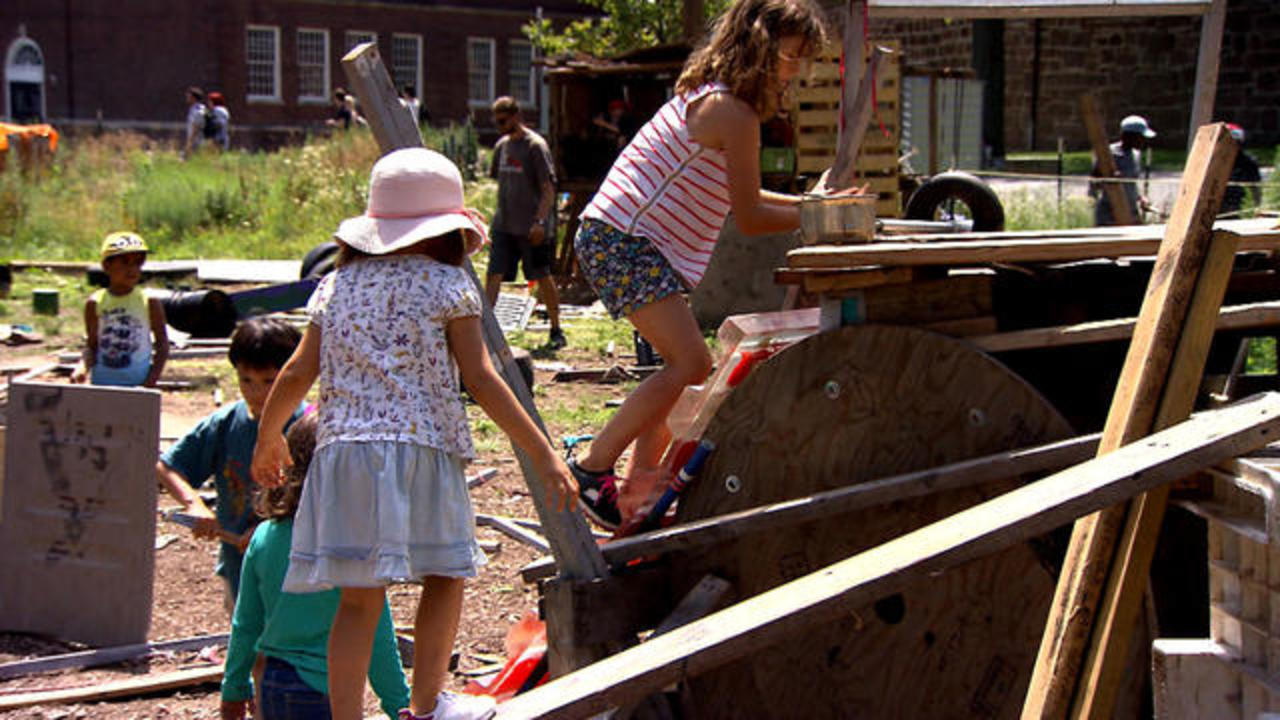
 person
Re: Death Cafe
Green burial for me. Don't want one of my last contributions to be the adding of poisonous embalming fluids to the soil or CO, Co2 or toxic heavy particulate to the atmosphere. While I have formally held inclinations towards cremation over burial, I now think a finishing of this existence with as much harmlessness as possible is simply a better representation of the ideals of a Buddhist practice.
 how
how
Re: Thoughts surrounding receding hair, wrinkles, and a deceased cat.
It is not, "Do we have the time?". We have the time.
Rather, the issue is, "HOW DO WE USE THE TIME WE HAVE?".
Small example: When you pass your neighbor on the street, do you extend a greeting or do you pass by as two ships in the fog? I takes the same time, but one is opportunity taken as the other is opportunity lost. Or action positive or action null.
Another: When a person needs encouragement, do we give it, discourage or do nothing?
One is positive, two are negative. Of the two, one is actively negative while the other is negative in the inaction. By not encouraging with words or simple even wordless actions, we serve to discourage, thus our inaction is negative action.
Again, we all have the time. Do we use the time or lose the time?
Peace to all
 Lionduck
Re: The practice of 'no-esteem'
Each Buddhist lineage or school can be delineated by how they each address this question.
This is just as much an issue for beginners as it is for senior practitioners.
For me, self-esteem is neither good nor bad but is just a mind's habituated attempt at establishing dominance over any the other incoming data of all that we see, hear, smell, taste and feel.
This dominance requires some or all of these sense gate data streams to either be actively excluded or enhanced at any moment to allow the space for our mind's fiefdom to establish itself.
Suffering results to the degree that we allow this dominance to occur. A path towards a cessation of this suffering occurs when a more equaling balancing of the data flows of all the sense gates is fostered so that our mind's own habituated empire building has little choice other than to become a more collegial expression of a wider equanimity.
One sutra of this can be the meditative understanding of the 4NT & the 8FP.
Here, self-esteem can simply be worked with as a warning signpost in our practice that some imbalance in our sense gate data flows is now being detected and where to look to address it.
how
Re: The practice of 'no-esteem'
Comparison can be a force for good… how the pursuit of excellence and a competitive spirit led a man to become a monk, and lead his 500 followers to do likewise, see the Gavesin Sutra:
https://www.accesstoinsight.org/tipitaka/an/an05/an05.180.than.html
 Jeroen
Re: The practice of 'no-esteem'
I learnt this lesson when I started running. When you are running, such as around a track, you very frequently either get overtaken by someone faster or overtake someone slower. And at first I would either feel elated or sad each time. 'Look at me go''. 'Woe is me'. But then I 'caught' these ideas and saw that I should compare myself only with myself yesterday. The race is only against myself. These days whenever I overtake someone or get overtaken by someone, I quietly root for them, I compare myself with myself yesterday, but see that we are all running our races together.
 marcitko
Re: The practice of 'no-esteem'
I believe the Buddhist term is conceit. And unlike the western notion it does also concern itself with comparisons of equivalence.
My sort of thought on this as I was reading was pretty much identical to @Vastmind. Shift the focus of comparison to your past self. We're all dealt a certain hand in life and all we can really do is keep trying to do better today than we did yesterday. Someone else will always be better than you at some things and you'll always be better than someone else.
Something that just came to me is the shift is a sort of psychological shift from an externally focused social mindset to an inward focused spiritual one.
person
Re: The practice of 'no-esteem'
You shouldn't say to yourself, oh I'm so much better than so and so at making doilies, or negatively either, as in so-and-so is so much smarter than I am.
You cannot practice non-comparison. So long as you identify yourself as a person or Mr Xyz the comparison is automatic.
Once this identification stops, the comparison also stops for there is nothing to compare with anymore. It is not a practice but a realization that you are not a human being.
"'A being,' lord. 'A being,' it's said. To what extent is one said to be 'a being'?"
https://www.accesstoinsight.org/tipitaka/sn/sn23/sn23.002.than.html
However, there are things that you can still practice to come to that realization. To realise your true nature.
https://www.accesstoinsight.org/tipitaka/mn/mn.002.than.html