
Best Of
Re: Rules to becoming a Bodhisattva?
@JohnCobb said:
@ShanJieshi2 said:
We take to ourselves the First Major Precept of the Bodhisattva Canon:
A Bodhisattva shall not kill, encourage others to kill, kill by expedient means, praise killing, or rejoice at witnessing killing. He or she must not create the causes, conditions, methods, or karma of killing"May I ask where this list is from? I didn't want to requote the whole text lol.
I don't want to step on ShanJieshi2's digital toes, but this AFAIK is a standard elaboration of the bodhisattvaśīla precepts. You can find a version of them in the Brahmajāla vaipulya and also in the Ākāśagarbhasūtra.
I would recommend you check out "The Nectar of Mañjuśrī's Speech." It is a relatively simple not-too-verbose translation of a commentary on Venerable Śāntideva's exegesis of the bodhisattva precepts. The commentary is from the late 1800s, so the worldview of the author isn't incredibly ancient and foreign to us, which also helps with readability for non-specialists in many ways. The language is also simple enough for someone to read and absorb who isn't already some sort of Dharma-specialist. It's a non-technical guide. It is what I consider to be "my first Dharma book."
Re: Addicted?
@how said:
Best not to conflate harmony & addiction.
Hmm good advice. Harmony is found in a relaxed state, addiction is a compulsive grasping.
 Jeroen
Re: How would you approach this? Course content and lgbt narrative
I believe in truth so I think there should always be room to question things. But I also believe in kindness so think about the impact of what you say and the way you say it has on others. Especially those who are more regularly shunned and mistreated than others.
Basically even if you think someone is wrong, you don't have to be a dick about it.
Also, I find it rare that anyone is ever 100% right or wrong about something. Most points of view have at least something useful to contribute.
 person
What spirituality has brought
Today I am taking a breather from learning. Instead I am reflecting on what spirituality has changed in my life.
The practice has quietened my mind, I am not usually filled with thoughts when external stimulus is absent anymore. Some things cause thought to erupt in me, a good documentary or an article. So perhaps I am less lively, less full of impulses. But this seems like a good thing, one doesn’t need to be so full of turmoil. Be at peace, seems to be the advice.
The dharma has given me important pointers to modify my behaviour. The guidance to the Kalama’s and the advice to Prince Abhaya on right speech will live long in the memory, and have proved to be core to how I approach people and knowledge in general. Taking opportunities to deepen my understanding of the Four Noble Truths has helped, as has looking for ways to increase letting go when there is clinging.
The teachers I am still learning to appreciate. When looking at Thich Nhat Hanh on video, or Ajahn Chah, I don’t really get a sense of them. I know them through their words, not in a personal way. Whether that means that I have learnt from them without becoming their follower, I am not sure.
Jeroen
Re: Rules to becoming a Bodhisattva?
@JohnCobb said:
@ShanJieshi2 said:
Hi John! we should then start a thread just to be able to advance on the Bodhisattvayana / Paramitayana path.Howdy!
I like that idea. Should I start the thread or would you like to? Lol I don't even know where to start. I'd just like to learn about where what you originally commented here came from.
ok, then we start a thread on this topic.
I would like to know something about your daily practice and other details you think are relevant.
If you belong to a Sangha surely your Master will want to know about this new activity which is fully in tune with the Dharma beyond the differences between schools.
Of course everyone is free to join in, but for the benefit of all, we will avoid debates and focus on sincere questions from practitioners beyond the merely intellectual.
In these cases it is also very good to make weekly reports to correct what is needed.
All agreed? we will start shortly.
Re: From Buddhism to belief in God?
Not all Buddhism is "the Dharma." It's better someone be Christian than be a Buddhist bereft of the Dharma. Buddhism bereft of the Dharma is a lonely hopeless system. I agree with the OP there. That being said, a lot of the problems identified by the OP, such as "I feel alone and everything is kind of meaningless and unreal," will not be helped by conversion to Christianity. "I feel alone and everything is kind of meaningless and unreal" is ultimately IMO depression, a hopeless depressive mind-state, that will return eventually to you even if you are a Christian and not a Buddhist. Buddhism, IMO, is misrepresented when it is framed as "the science of the mind," a science that can scientifically crush depression and loneliness and sadness no matter what. There are some who market Christianity as such. They say things like "Christianity can cure your poverty!" and "Christianity cured my depression!" To these, one need but only point out the words of Jesus, when he said "Beloved, do not believe every spirit, but test the spirits to see whether they are from God, for many false prophets have gone out into the world."
Your depression will return, even if converting to Christianity proves to be something that works in the short-term.
When God spoke to Saint Silouan, he said "Keep your mind in hell and despair not." "Keep your mind in hell" is a difficult and advanced teaching, and when it says "hell," it means a hell of the emotions, of the passions, a hell of "normality" even. IMO, this is one of the moments where Christianity comes very close to Bodhisattvayāna, and I appreciate it.
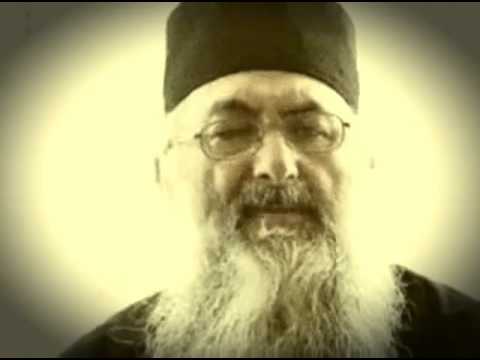
Around the 9-10 minute mark, Archimandrite Zacharias will recount the story of the deep depression related to vainglory that Saint Silouan, the very saint another member of NewBuddhist has as his avatar, struggled with while trying to live the holy life. The quote "keep your mind in hell" comes from here.
Re: How would you approach this? Course content and lgbt narrative
There is certainly a weird leftist bias in the far-left, and this bias is such that it considers anyone who is part of a group of people who are even vaguely disadvantaged socially as "saints." All gays are not "saints" anymore than all straight are "saints." I know this from experience moving in circles of radical "queer" leftism during university.
Question what you learn certainly, and don't fall for the "every person of colour and sexual minority is a saint" rhetoric, but also don't think that all gays fall for the nonsense rhetoric of "there is an evil cisheteropatriarchy out to get you!" The very people you are learning about, gay people and trans people etc., critique these very models that you are finding suspect. When you next consider, for instance, the "trans agenda" along with the gay agenda, just know that there are many conservative gays and trans people who have just as uneasy a relationship with these new paradigms. No one needs to drink the Kool-Aid just to learn about the Heaven's Gate. Now, being involved with gay and trans issues is nothing like being part of a deadly harmful cult like Heaven's Gate was, but the metaphor still holds. You don't need to drink the Kool-Aid. You just need to maintain a level head and think "What is the human experience informing these extreme politics?" Oftentimes, the answer is "This is coming from a trauma mindset."
When Bloody Mary became the Queen of England, she began a brutal persecution of English Protestants, and this resulted in her being named posthumously "Blood Mary" instead of "Queen Mary" in the popular imagination. She could have taken the higher road. She was a more popular ruler with a stronger legitimate claim to the throne than Elizabeth I. But she started an ideologically-driven persecution of religion. Why?
She was coming from a "trauma mindset." She was coming from an area of "These wicked people (i.e. "Protestants) killed many of my friends." She wanted revenge, not dialogue. She wanted destruction, not construction. Had she not been "Bloody Mary," England could well be a Catholic country today.
The point of my random politcal tangent is that many people of sex and gender minorities come to society with the same traumatized mindset of Queen Mary. They are more interested in smashing systems that they feel have wronged them than engaging in corrective rehabilitation of those same systems (i.e. "Smash the family!" "Smash capitalism!" "Smash the state!" "Smash Christianity!"). So next time you encounter extreme ideological content (from the left OR right!), if you consider the likely context, it will help you to be more understanding of these extreme viewpoints even if you ultimately do not agree with them.
Re: How would you approach this? Course content and lgbt narrative
Healthy and natural sexuality can be straight with no agenda or homo with no agenda. It can be people of all kinds finding their way without the need for imposed agendas. Obviously this imposition is not something innocent and casual, but has a great impact through media and education.
If you are studying and this dilemma presents itself to you, it is also a lesson that in due time you can propose your point of view to whoever wants to listen to you.Our purpose in the Dharma is not to preach and it extends to other areas as well.
I send you a masculine embrace
Re: From Buddhism to belief in God?
@Jeffrey thanks for this, I actually follow Lama Shenpen teachings too.
What I would say is, how to get there and what is the cause of suffering? Now I question the whole thing, you see. Because to me it seems like vast emptiness might be freedom, but again, it's a "negative" kind of view. No matter how I look at it and how many "corrective" views I read (about emptiness), it all seems to come down to the fact that Buddhism is about a kind of escape. It's a whole worldview based on undesirability of suffering and presumption that removing the cause (ignorance of no-self) will bring about happiness. I don't know.
As for the aspiration to liberate all sentient beings, it seems to me just a "tool" to get there, and the "there" is actually the realisation that sentient beings don't exist (as "selves") at all.

Re: How would you approach this? Course content and lgbt narrative
It should be possible to discuss views, as long as all involved are sensitive about it, even if those views are conservative or do not conform to the dominant liberal view.
I have been a great fan of the Buddha’s advice to Prince Abhaya ever since I came across it:
“[1] In the case of words that the Tathagata knows to be unfactual, untrue, unbeneficial (or: not connected with the goal), unendearing & disagreeable to others, he does not say them.
[2] In the case of words that the Tathagata knows to be factual, true, unbeneficial, unendearing & disagreeable to others, he does not say them.
[3] In the case of words that the Tathagata knows to be factual, true, beneficial, but unendearing & disagreeable to others, he has a sense of the proper time for saying them.
[4] In the case of words that the Tathagata knows to be unfactual, untrue, unbeneficial, but endearing & agreeable to others, he does not say them.
[5] In the case of words that the Tathagata knows to be factual, true, unbeneficial, but endearing & agreeable to others, he does not say them.
[6] In the case of words that the Tathagata knows to be factual, true, beneficial, and endearing & agreeable to others, he has a sense of the proper time for saying them. Why is that? Because the Tathagata has sympathy for living beings."
https://www.accesstoinsight.org/tipitaka/mn/mn.058.than.html
Jeroen