
Best Of
Re: Change is Inevitable ...(Levels of) Suffering Optional
It is our desire for happiness and permanency that IS the major cause or our discontent.
Buddhism is not about becoming "happy" but about learning to relax and accept life AS it IS. And the more you drop your agendas, the more you start to become aware of the richness and vibrancy of each moment of Life. You begin to smile more, and start to become curious and observant.
You also begin to be aware that just like you, all beings wish to be happy and not have any unhappiness. And this awareness gives rise to a sense of kinship with all, generating both ease and compassion .. and eradicating our sense of isolation from others and from Life.
And when bad things happen, you relax anyway, since tensing up only makes pain feel stronger. You remind yourself of the First Noble Truth and the humor of thinking we are the ONLY person alive who is exempt from any suffering. And then we relax, knowing that even THIS ... too ... will pass. Nothing is permanent, and what is bothering us will not last.
In one of the beginning classes the local Lama gave (back in the year 2000) told us he was going to give us a Very Important Mantra ... one that would work for ALL situations. The entire class held their breath and learned forward in rapt anticipation. The Lama then shrugged his shoulders, raised his palms up, smiled and said, "What's the Big Deal?) and laughed.
Since 95% of how we feel arises automatically from whatever kinds of subconscious emotional patterns we have previously fed INTO our brain, happiness really IS a state of mind, and as such it will come only from within.
When we make a "big deal" out of something we will feel a "big deal".
“It isn't the things that happen to us in our lives that cause us to suffer, it's how we relate to the things that happen to us that causes us to suffer.” Pema Chödrön
Buddhism ends up being a way to change all reaction patterns, gaining freedom from both desires and aversions, even as they continue to stream out of our alive living brain in endless flows. There may yet be MORE to this slow progression, but even after 25 years I am not yet enlightened enough to know if there IS more.
That's the wonderful thing about Buddhism .. it is a lasting journey into discovery and increasing improvement .. and who KNOWS where it will end up .. until you end up there?


Re: An online approach
You could try this Cundi practice/sadhana. The only known mantra the Shakyamuni used and advocated before buddhism became a religious fracture and factionalism... 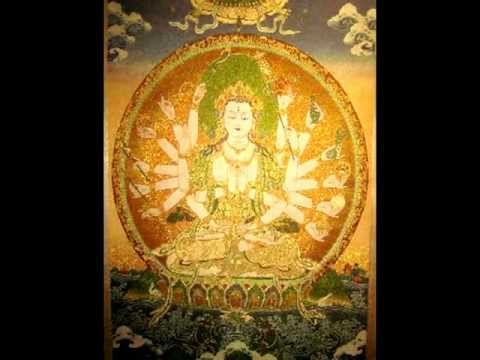
If you want some homework...
https://newbuddhist.com/discussion/22760/zen-enlightenment-in-this-lifetime/p1
And/Or you you could be 'a leaf on the wind'
https://www.treeleaf.org/
 lobster
Re: An online approach
Thank you for the replies so far. I feel like the general idea is that one should indeed seek out offline connection with a Sangha and a primarily online experience would not be very sufficient. That might be the case. Well, the one I'm talking about is unfortunately 3,5 hours by train so it wouldn't be faster by car and I often barely have the time and energy to just go to the other side of the city. Car sharing would still cost me dearly this way, especially if I'd eventually want to support the Sangha as well. So I think the best way to go about it will be to attend online meditations, try to reach out to a member or two in between sessions and ask about their own offline communities, hopefully the'll be one nearby I can visit that the main group organizing these events wouldn't disapprove of. I certainly would want to avoid Sanghas where they are strict about what reading material and practices you're allowed to follow (from their own founder, no one else, etc) or where some current politics or xenophobia interfere with teachings and the general mood, but I could not decide for myself until I'm exposed to it, so all I have is what a few individuals write online about their own experiences and mostly not even that.
 RobinH
Re: An online approach
There are also small private meditation circles, not associated with a temple or organisation. When I was looking into group meditations I found a few larger organisations who would charge about 10 euros for a one hour session in a large shared space… this was too much for my budget… but I also found smaller circles who would operate from someone’s home, and these were usually free of charge. Local newspapers, ad boards in supermarkets, local magazines and websites were the places you could find them.
 Jeroen
Re: Space - the final frontier
Interesting that that big rock circling our rock played and continues to play a part in the development/evolution of life on this rock. So, yes, Luna is so much more than just a big rock.
Also, the probes that have cleared the planets are still not out of our solar system. They have a ways to go just to get to the Ort Cloud...a long way to go.
 Lionduck
Re: An online approach
Hey Robin,
I applaud your wish to be part of a real life sangha.
The Chan group in my city also has a meditation center in the countryside, around 1.5 hours from the city. However, they make efforts for people to car-share whenever possible.
So, one practical solution might be:
- look into whether the group has some kind of system for car sharing (by calling or e-mailing). If not, describe your situation and ask for advice. I'm sure you would not be the first one with this type of issue.
- if yes, go physically by car sharing whenever possible, and participate online when not.
Where there's a will, there's a way! Usually 😂
 marcitko
Re: Does reading about spirituality make any sense?
Does reading about spirituality make any sense?
Yes, it makes sense, but only if the text is not overly intellectualised. (thinking too much about concepts instead of engaging with them directly.)
When the intellect ventures into where it does not belong, it becomes lost in its own confusion
Thus have I heard, and to a degree, experienced.
The foundations of the Buddhist path are the Four Noble Truths and the Eightfold Path.
It important not to over-intellectualise these teachings. When beginning to practise, it helps to approach them in a way that suits your personal understanding.
Over time, rough patches tend to smooth out, and a deeper experiential understanding naturally emerges.
Reading Dharma texts can help kick-start the practice, but eventually they are needed only occasionally, to help refine and clarify, while the heart of the practice is lived experience.

 Shoshin1
Insight on the Eightfold Path
2. Right Intention
3. Right Speech Ethical Conduct
4. Right Action
5. Right Livelihood
6. Right Effort Mental Development
7. Right Mindfulness
8. Right Concentration
The Noble Eightfold Path describes the way to the end of suffering, as it was laid out by Siddhartha Gautama. It is a practical guideline to ethical and mental development with the goal of freeing the individual from attachments and delusions; and it finally leads to understanding the truth about all things. Together with the Four Noble Truths it constitutes the gist of Buddhism. Great emphasis is put on the practical aspect, because it is only through practice that one can attain a higher level of existence and finally reach Nirvana. The eight aspects of the path are not to be understood as a sequence of single steps, instead they are highly interdependent principles that have to be seen in relationship with each other.
http://www.thebigview.com/buddhism/eightfoldpath.html