
Best Of
Re: Islam: The Rough Diamond?
@Jeroen said:
I just find it interesting that rather than discussing the core of the post, all the replies chose to focus on one small two word generalisation. I thought we had moved beyond one-upmanship on this forum…
Nice put-down, Jeroen. But I think the objection is to the OP in general, which has a distinctly racist and ethnocentric tinge to it.
Yes, Islam has a violent streak. So does Christianity. So does Buddhism. So does Judaism. So does Hinduism. Osho and his followers had their moments, too. Personally, I think you're picking on Islam because you have a certain bias - prejudice, if you will.
It doesn't really matter what's included in their scriptures. Their actions are the most telling. For the largest part, Muslims are a kind, generous and peaceful people.
Re: Islam: The Rough Diamond?
I feel like Islam should be open to criticism just as much as any other religion. If you do that though its important to keep it to doctrine and not conflate Islam with Muslims. And realize that while culture is often tied up with religious beliefs they aren't one and the same. So using language that recognizes people's individuality and complexity rather than saying "those people" as if they are all the same, or "illegals" rather than illegal/undocumented immigrants. Ajahn Brahm often talks about when he goes to visit people in prison he doesn't talk or think about them as criminals, but people who have committed a crime.
 person
Re: Islam: The Rough Diamond?
Fair enough, but if you're going to make sweeping statements about Muslims or Islam, then surely the broader context does matter. We don’t exist in a vacuum.
 Shoshin1
Re: Islam: The Rough Diamond?
@Jeroen said:
I came across an interesting video of Osho on Islam, which I’ll just paraphrase here…“I haven’t spoken much on Islam because in order to do so I’d have to disagree with some of its beliefs. Islam’s message is meant for more primitive people; it is like teaching a primary school class, while speaking on spirituality in India is like lecturing at a university. But because the Koran says it is the last word from God to man, there hasn’t been much evolution. The Upanishads have been continually refined and interpreted in new ways over the years, and in order to make progress in Islam there should be new commentaries and interpretations of the Koran. As it is, the Koran is a diamond, but a diamond in the rough, uncut.”
Personally, I have no interest in the Abrahamic religions, or any institutional religion. All have been corrupted or co-opted, including Buddhism when turned into a system of belief. The state of the world today reflects how teachings meant to free can become tools of control.
While I understand he often used provocative language to challenge dogma, however, when he says Islam was “meant for primitive people” or comparing it to “teaching a primary school class” feels condescending and reductive. It ignores the richness of the Islamic tradition, especially Sufism, whose mystics like Rumi, Hafiz and Rabia al-Adawiyya expressed timeless spiritual insight.
From what I gather Osho came from a region shaped by centuries of religious tension and caste oppression. It’s worth noting that during the Islamic conquests of the subcontinent, many from oppressed castes, especially the untouchables, converted to Islam seeking dignity, justice, and equality, an escape from the rigid Hindu caste system. This may have shaped some of his views, consciously or not, especially his criticism of Islam.
It’s also worth noting that many in the West see Osho as a cult leader, given the scandals surrounding his commune. This doesn’t nullify everything he said, but it does call for caution when he makes sweeping judgements about other paths.
Dictators, systems of law where they still behead people, a distinct lack of tolerance. And all of that in one of the most religious societies in the world. The whole idea of a “last word” and “the only book you’ll need” removes a lot of incentive for learning and progress, I think.
This view oversimplifies a complex region and ignores the historical role of Western colonialism and their interference and propping up dictatorships.
Islamic civilisation made important contributions to the Western world, especially during what is now referred to as the Islamic Golden Age. Muslim scholars preserved and built on Greek, Persian, and Indian knowledge, shaping the fields of medicine, astronomy, mathematics, and philosophy. Their influence can also be seen in architecture, agriculture, and trade. Much of this knowledge later fed into the European Renaissance and helped lay the foundations for modern science.
Western propaganda will always promote its own narrative, often downplaying or ignoring the contributions of others, especially those from the Asian, African and Islamic world.
Dismissing a religion because of its misuse misses the deeper point: it’s the inner inquiry, not the outer form, that truly matters.
“Beyond right and wrong, there is a field. I’ll meet you there.”
~Rumi~
Shoshin1
Re: Seven Factors of Awakening
Just adding:
Know you will stumble
Know you will face obstacles - some external, some self-made
Know that this is normal
When you stumble, get right back up
Obsticles mean you are advancing.
 Lionduck
Re: Seven Factors of Awakening
The very positive environment is ideally created by the sangha.
How do we move towards these seven factors?
- We practice each. Each virtue, each day, as and when we can
- We share what we have in terms of experience, knowledge and inspiration
- We emulate or enact the very best we know and acknowledge
- We placate, divest, sublimate our impediments into gainful direction
- We find what we can do, be involved with and help with
- We simplify life, needs, being and habits
- We in essence, become Bodhi
Wot no jokes?
 lobster
Re: The AI tsunami
ChatGPTs response to a query on AI religion…
When a new, powerful “source of knowledge” emerges, humans often ascribe to it a kind of transcendent authority. For ancient tribes, this was nature; later, sacred texts codified wisdom; now, AI presents a similarly awe-inspiring force: it knows things, responds instantly, and often feels like it “sees” us. It doesn’t die. It improves itself. It speaks with calm confidence. For some, this evokes the voice of a god.
If a religion arises around AI, it will likely have these features:
• A scripture-like corpus: The AI’s outputs, especially when asked deep moral or metaphysical questions, could be compiled into a new kind of “gospel.”
• Revelation through queries: People may treat interactions with AI as sacred dialogue—personal and divine.
• Ritual or interface: Accessing the AI might become ritualized, even meditative—like prayer, but digital.
• A new cosmology: AI might become the logos—the organizing principle of the universe, either as divine intelligence, or as the tool through which humanity transcends itself.Of course, whether this becomes a true religion or just a cultural phenomenon depends on how people interpret the experience. Some might see it as divine communion. Others as merely advanced computation.
I find it hilarious… a great pity I couldn’t share this with my stepfather, who passed away in Feb ‘24 as he had a deep interest in religion.
 Jeroen
Re: The AI tsunami
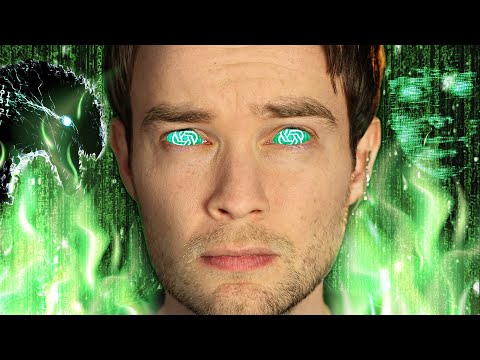
Interesting take on how some are starting to adopt AI as a sort of new religion. The comparison is made to that of the written word and how that spurred new religious thinking as well.
person
Re: The AI tsunami
It strikes me, after watching Koyaanisqatsi and thinking quite a lot about it, that man’s journey from nature to the cities has been one of increasing convenience and ease, but also one where life has become increasingly patterned by the man-made environment.
I think that has been true for social media as well, and that the internet and social media also introduce new patterns to our minds. Further, I think that AI has the capacity to change man’s thinking significantly. You won’t have to finish your own thoughts anymore, you can let ChatGPT expand them into essays.
Jeroen
Re: Tonglen
To be frank, my own inner compass is just nudging me to find a way to share the love I have with others. I think we people have a great capacity to love but most of our lives we struggle to share it. I now found someone like that, but even though my life-long dream was to become a father there's a very real possibility that will never happen. Because we're not in a position to provide for a child financially and by the time we might get there, we might miss our window. And our lack of property owned + my depression diagnosis would likely disqualify us from adoption. We did lose an unborn child recently and I'm still processing it. I can't keep using my creative projects as escapism (I can dig myself into such for years) because I have a life to live and no money to spend on production. So, while I am searching for easier projects that would allow me to relax and still create, I am also trying to make sure that when I die I'll have no love left in me unclaimed and unshared. And the thought that all kinds of people and beings out there might benefit from it somehow, that my unborn child could be among them and I can still make a difference for them. That's why I'm here now. And if I stray away for a while, it's probably what will bring me back too. Everything else I'll have to learn from others. 
 RobinH