
Best Of
Re: A Buddhist teacher admits ... BUDDHISM HAS FAILED!
@person said:
I think this just reconfirms my sense that he is too online. Its not just the headlines that's clickbait its kind of his whole tone.Buddhism hasn't been the entirety of the social sphere and it won't be going forward, there's no need to get so hyperbolic. I think pretty much every non monastic (and probably the majority of monastic) Buddhist I've heard from takes an integrated approach to Buddhism, melding it with modernity. Maybe his view is informed by his living in Japan with a more traditional mindset? IDK what their attitude is, I'm just speculating.
I think just reiterating a point I made earlier. Jumping heart first into these powerful new technologies makes it more likely that you'll create bad outcomes. You're so eager to do good and think the purity of your motivation will see it through that you become incautious and do harm. "Helping" all the butterflies out of their cocoons.
I watched the video, at first it was a little in-your-face, but I feel it’s a clever tactic to get the listener’s attention. I agree about the ‘click bait’ slogan, Buddhism has failed Person made a great point with this. Personally, I don’t think it’s failed, it’s just that people awaken in their own time, maybe not in this lifetime, but there is hope they will awaken someday. Although it’s the journey, not the end goal to forge a path with Buddhism.I feel it’s the most peaceful of all lifestyles and ‘religions’ and the messages are so clear and most schools of Buddhism follow very similar ideologies without forced-indoctrination. Buddhism is a personal spiritual path where you apply techniques hat are useful, if you feel they are not whether, science has determined this for you, or another method just DON’T DO IT. Be kind, don’t harm others and showing compassion, or going that step further and practically helping others that are less fortunate, now that’s just 9be if many Buddhist paths. Okay, getting off my little soap box now… blessings to all 🌸

Re: Closure and burying the hatchet, or just let it go?
I think @federica, our missing in action moderator would be proud of our advisement. She would regularly keep dangerous lobsters and other confused individuals safe with excellent counselling skills.
Just another thought. Happy Easter! Death and renewal! I like it already, especially the lambs. 
 lobster
Re: Closure and burying the hatchet, or just let it go?
So I’ll just wait and see what happens realising nothing is permanent
Change is inevitable ...Suffering the change is optional...
Every 'moment' the great unknown is gradually opening up its secret to us...The unknown becomes known in each passing moment... and the past shapes the present and the present shapes the future...which is always found in the present moment...where change is happening...
In quiet breath, the world stills its sway,
Mindfulness blooms in the heart's soft ray.
Each moment a dance of light and shade,
In presence's embrace, worries fade.Listen, the whisper of the breeze's song,
Feel the earth's pulse, steady and strong.
Here, in the now, where time suspends,
Peace unfurls, and the mind amends.
 Shoshin1
Re: A Buddhist teacher admits ... BUDDHISM HAS FAILED!
Jundo’s fourth video, on how traditionalist Buddhist thinking may end up having a negative impact by ignoring the benefits of progress.
In a way what he says reminds me of the psychedelic renaissance that is going on at the moment. Some deep experiences are indeed more easily available through a psilocybin mushroom than through zazen meditation. But that is still limited to a Buddhist perspective.
If you look at the psychedelic revival through a wider lens, you can see that the work being done with Ayahuasca in Peru and Brazil has a more far-reaching effect on the psyche, through working on trauma, blockage, the ego, and other elements.
I still think it is better to bring the best of Buddhism’s ideas to the rest of the world, rather than to try to bring the rest of the world into Buddhism.
 Jeroen
A Buddhist teacher admits ... BUDDHISM HAS FAILED!
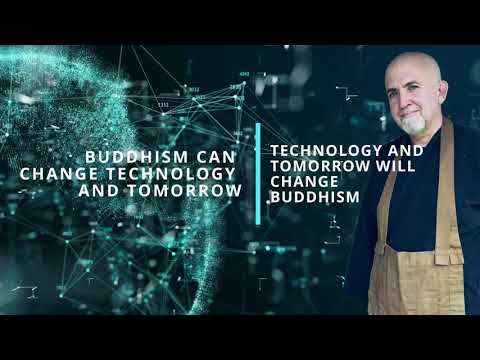
My name is Jundo Cohen. I am a Buddhist teacher, a Zen teacher, who says that it is time for us to admit that Buddhism has FAILED MISERABLY in its key mission. Over two thousand years of sutras and twirling beads, meditation and mantras have yet to realize all that we vowed to do.
Look around: How's that working out for the world?
But now, perhaps there is a chance. Zen and all Buddhism must not be frozen, limited only to means and methods available 50 or 500 years ago. Our way is not a museum of long ago.
Let us learn from our traditions and the past, act in the present, as we open to possibilities for tomorrow. This is the future of Buddhism and Zen.
Please allow me a few minutes to explain ...
 Jundo
Jundo
Re: A Buddhist teacher admits ... BUDDHISM HAS FAILED!
I think this just reconfirms my sense that he is too online. Its not just the headlines that's clickbait its kind of his whole tone.
Buddhism hasn't been the entirety of the social sphere and it won't be going forward, there's no need to get so hyperbolic. I think pretty much every non monastic (and probably the majority of monastic) Buddhist I've heard from takes an integrated approach to Buddhism, melding it with modernity. Maybe his view is informed by his living in Japan with a more traditional mindset? IDK what their attitude is, I'm just speculating.
I think just reiterating a point I made earlier. Jumping heart first into these powerful new technologies makes it more likely that you'll create bad outcomes. You're so eager to do good and think the purity of your motivation will see it through that you become incautious and do harm. "Helping" all the butterflies out of their cocoons.
 person
A dialogue on Thich Nhat Hanh
I’ve recently been exploring what Google’s Gemini Chat AI has to say about various spiritual teachers. So I thought I would post a few pieces of my chat with it about the late Thich Nhat Hanh…
Q: What did Thich Nhat Hanh teach?
A: Thich Nhat Hanh, a Vietnamese Buddhist monk and peace activist, is renowned for his teachings on mindfulness and engaged Buddhism. Here are some core aspects of his teachings:
Mindfulness: This is the foundation of Thich Nhat Hanh's practice. He emphasized cultivating present-moment awareness through everyday activities like breathing, eating, and walking. Mindfulness allows us to appreciate the beauty and wonder of life, even in simple moments.
Breathing Meditation: He developed simple breathing meditation techniques to help people anchor themselves in the present moment and reduce stress and anxiety.
Interbeing: This concept emphasizes the interconnectedness of all things. Everything arises from dependent co-origination – nothing exists in isolation. We are all part of a vast web of life, and our actions have consequences for ourselves and others.
Compassion and Engaged Buddhism: Thich Nhat Hanh believed that mindfulness and meditation should lead to action. He promoted engaged Buddhism, encouraging individuals to apply Buddhist teachings to alleviate suffering in the world and work for social justice and peace.
Non-violent Communication: Thich Nhat Hanh developed methods for mindful communication that emphasize deep listening, empathy, and expressing needs constructively. This approach aims to resolve conflicts peacefully and build stronger relationships.
Here are some additional aspects of Thich Nhat Hanh's teachings:
Everyday Practice: He believed that mindfulness could be practiced anywhere, anytime. Washing dishes, gardening, or even having a cup of tea could become opportunities for mindful presence.
The Healing Power of Nature: Thich Nhat Hanh encouraged spending time in nature as a way to cultivate mindfulness and connect with the interconnectedness of life.
The Sangha (Community): He emphasized the importance of practicing mindfulness and engaged Buddhism in a supportive community, the Sangha.
Peacebuilding: Thich Nhat Hanh was a vocal advocate for peace. His teachings and activism inspired peace movements around the world.
Thich Nhat Hanh's teachings aimed to help individuals cultivate inner peace and well-being, while also encouraging them to work for a more peaceful and compassionate world. His simple and practical approach to mindfulness resonated with people from all walks of life.
Q: In what ways did Thich Nhat Hanh’s teachings differ from orthodox Buddhism?
A: Thich Nhat Hanh's teachings differed from some interpretations of orthodox Buddhism in a few key ways:
Emphasis on Engaged Buddhism: Traditional Buddhism often focuses on monastic life or individual liberation from suffering. Thich Nhat Hanh's concept of Engaged Buddhism emphasizes applying Buddhist principles to social issues and working to alleviate suffering in the world. This includes promoting peacebuilding, social justice, and environmental awareness.
Accessibility of Practice: Thich Nhat Hanh made Buddhist practices like mindfulness meditation more accessible to laypeople. He presented them in a way that could be integrated into daily life, even for those not living a monastic lifestyle.
Focus on Joy and Transformation: While acknowledging suffering, Thich Nhat Hanh also emphasized the joy and beauty inherent in life. His teachings aimed not just for liberation from suffering, but for a more positive transformation and experiencing the fullness of life.
Language and Terminology: Thich Nhat Hanh sometimes used less technical language and terminology than found in traditional Buddhist texts. He aimed to make his teachings understandable and relatable to a wider audience.
It's important to note that:
There's a spectrum within Buddhism, and Thich Nhat Hanh's teachings wouldn't be entirely outside the realm of some Buddhist traditions.
Many Buddhist schools emphasize compassion and helping others, though Engaged Buddhism takes a more active approach.
Mindfulness practices are becoming increasingly popular in secular contexts as well.
Thich Nhat Hanh's approach resonated with many seeking a way to integrate Buddhist principles into their daily lives and contribute to a better world.
Jeroen
Today
Well it has been a long day and that was yesterday ... 
https://en.wikipedia.org/wiki/Tushita
Today in Heaven, Hell and the Present Middle Way I hope to:
- Improve
- Improvise
- Muddle through the Middle Way
- Believe Nothing is worth opposing but supporting
- To be decided (on advisement)
What is your ungiven advice? 
lobster
Re: Closure and burying the hatchet, or just let it go?
Another thing is, I wonder how these incidents have affected your overall love life? Have you been able to be romantically involved since the incident? You say you knew one brother, the accessory, very well for 15 years, perhaps some remnant of that closeness is what you are really looking for in thinking to renew contact. Perhaps it is a sign that you are ready to move on romantically with your life.
Just a thought…
Jeroen
Re: The traces we leave
@lobster said:
With the fishies?
Hmm, there's something fishy going on here..
“A pious man explained to his followers: 'It is evil to take lives and noble to save them. Each day I pledge to save a hundred lives. I drop my net in the lake and scoop out a hundred fishes. I place the fishes on the bank, where they flop and twirl. "Don't be scared," I tell those fishes. "I am saving you from drowning." Soon enough, the fishes grow calm and lie still. Yet, sad to say, I am always too late. The fishes expire. And because it is evil to waste anything, I take those dead fishes to market and I sell them for a good price. With the money I receive, I buy more nets so I can save more fishes.”
Shoshin1