Best Of
Group meditation: discipline, friendship, and path walking
Group meditation, online or in persona, is probably one of the best ways to sharpen my practice. I have currently started sitting with a friend and taught him as much as I've managed to learn regardings to Zen and Buddhism. In reality, all this dense theory must be tasted or risk cerebral indigestion. He has some experience, having been in Nepal for quite a few months.
Method of choice for now: just sitting / some metta or dedications ("May all beings attain wisdom, may all beings be free of suffering, may all beings find the path towards the cessation of suffering")
Now...we have been studying the Brahmaviharas lately. He was taught mainly anapanasati, following the breath, transitioning to shikantaza was not easy nor extremely hard. In fact, we talked about how in just sitting the four dwellings are important to allow certain tranquility to allow being just there, at 100% if you permit the cuantification...
Now to finish off. Crude humour from the US but with a very good message:
"But you can forgive the world and its flaws and follow me there because you've still got a hell of a lot to see."

How are your group practices? Or are you a solo rider like I was?
Peace
 Kotishka
Re: WTF ...and she calls herself a Buddhist too...Wow
Assholery knows no bounds. Imperial Japan, Tamil Tigers. And I believe Triratna has a bit of a reputation for producing less than stellar followers? I may be wrong about that, so correct me if I'm wrong, I don't want to badmouth a group if its unwarranted.
I don't really know this person, but I imagine if she's been fired for some extreme views or behavior that she qualifies as an extremist member of her tribe. I like the YouTube channel Jubilee, they do bridge building work and try to have constructive dialogues across divides. A recent one, sat former lefties with former righties. One prompt was about compassion, the jist their POV was that they each show differing aspects of compassion. On the left, they're more focused on protecting people from harms, on the right they're more focused on preparing the people to face and overcome harms.
That prompt starts at 12:29

 person
Re: WTF ...and she calls herself a Buddhist too...Wow
Yes sadly this seems to be the case... I'm reminded of Dependant Origination "ignorance" and how one might voice an opinion /a belief even if the evidence says otherwise, they continue to spout their verbal diarrhea ...
 Shoshin1
Re: WTF ...and she calls herself a Buddhist too...Wow
A world full of delusion has been propagated by folks who identify as Buddhist.
Even identifying as Buddhist, when attached to that, will result in suffering.
 how
how
Re: Feeling like you are a “good person”
@Jeroen said:
What has being good meant to you?
Trying not to buy into the political BS spouted by people with an ultimate agenda, to the detriment of many others.
Also trying to see the suffering of all people, regardless of what's being said about them. It's a confronting path to take and often involves challenging and discarding one's notions, sometimes once a day.

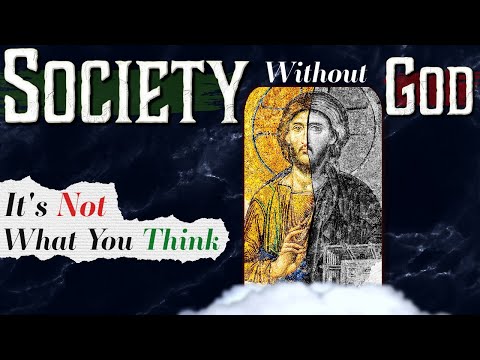
Re: What Happens When Societies Stop Worshipping God?
The data is interesting……my experience has been even more interesting, to me.
Growing up in a broke community fosters more community thought. We have to stick together to survive and to make it. You never know when you’ll need someone or something and you depend on the same thought process. Most folks come through and return favors and embrace tolerance and or acceptance of others. The common saying is “If I got it…..then you got it”. Some of that is the ‘blessing’ gospel, but that also is rooted in deep poverty and oppression.
The experience I have with people who make 3, 4 times the amount of average money I’m accustomed to , has been appalling in my adult years. They are the least likely to share, will argue over a few dollars and seem very self motivated. Group thought doesn’t come first to their mind. And why not? Bec you don’t need someone for basic resources. Until/if/when they do…..
 Vastmind
Re: What Happens When Societies Stop Worshipping God?
@marcitko said:
@person said:
The question that occurred to me was which comes first? Do less organically religious people create better societies or do better societies create less religious people? Or is it some sort of self reinforcing spiral?You might find interesting and illuminating the findings of the World Values Survey: https://www.worldvaluessurvey.org/wvs.jsp
To the best of my knowledge, this is some of the best stuff coming out of social science.
From what I remember, their findings are that while culture retains some significance, economic development is the predominant factor influencing values, including religious values.
When I studied political science, the main debate was as you framed it. Max Weber said that culture determines economics. Karl Marx said that economics determines culture. From my understanding of the World Values Survey, it turns out that Marx was much more right.
I'm hardly a Marx scholar, but my general impression is that he (or maybe its down to those implementing his ideas) misses the organic vs forced distinction in the video. The former being positive the latter a disaster. At any rate its a helpful place for me to try to sort the question out, thanks for the pointer.
person
Re: What Happens When Societies Stop Worshipping God?
@person said:
The question that occurred to me was which comes first? Do less organically religious people create better societies or do better societies create less religious people? Or is it some sort of self reinforcing spiral?
You might find interesting and illuminating the findings of the World Values Survey: https://www.worldvaluessurvey.org/wvs.jsp
To the best of my knowledge, this is some of the best stuff coming out of social science.
From what I remember, their findings are that while culture retains some significance, economic development is the predominant factor influencing values, including religious values.
When I studied political science, the main debate was as you framed it. Max Weber said that culture determines economics. Karl Marx said that economics determines culture. From my understanding of the World Values Survey, it turns out that Marx was much more right.
 marcitko
Re: What Happens When Societies Stop Worshipping God?
The question that occurred to me was which comes first? Do less organically religious people create better societies or do better societies create less religious people? Or is it some sort of self reinforcing spiral?
person