
Best Of

Re: Which sects of Buddhism suggest it is possible to attain enlightenment within this life?
Westerners who want less "blind faith" (not that Buddhist faith is actually blind, but they see it as this way), turn to a form of "de-mystified" "Buddhism" that emphasizes effort which, honestly, you would have to be a comfortably middle/upper-class person with plenty of leisure time to achieve the aspirations set forth by the masters.In the UK I'd say that Buddhism is still predominantly a middle class thing.

Re: Which sects of Buddhism suggest it is possible to attain enlightenment within this life?
It occurred to me while reading it that the die hard, hard line Buddhists actually are trying to achieve something that is highly unlikely for them -- a total cessation of suffering. In reality, we can all reduce our suffering by following Buddhist principles.
 vinlyn
Re: Which sects of Buddhism suggest it is possible to attain enlightenment within this life?
No ,there isn't. But there are people who are alive and who show the fruits of awakening.It's all very subjective though, isn't it? That phrase "Beauty being in the eye of the beholder" springs to mind.
Re: Which sects of Buddhism suggest it is possible to attain enlightenment within this life?
What's the "evidence" though? I mean it's not like there's a scientific test to prove that somebody is enlightened.
There is plenty of evidence of both Mahamudra and Dzogchen practtioners who have Awakened in modern times. If you PM me I will give you some links.
_/\_
Re: what are the difference between mahayana and theravada?
what are the difference between mahayana and theravada?One is a Yana and the other is not.
Theraveda is a tradition/lineage much like Kagyu, and Zen are. Kagyu and Zen are a part of the Mahayana
and who were the bodhisattvas such as manjushri, avalokitesvara, vajrapani, and etc. where were they come from?"What" might be a more appropriate question. These Bodhisattvas may or may not be real beings, but in practical terms it may be better to view them as representative of qualities of "enlightened being".
yes, they are mentioned in various suttras as if they were real. And Lamas such as the Dalai Lama and Karmapa are said to be manifestations of Avalokiteshvara. But you have to consider what "real" means in the context of Mahayana teaching. And this:
were they unseeable by normal people?They'll say yes. Bodhisattvas, such as Avalokiteshvara, are said to be emanations in the Sambogakaya, which is unseen but beings such as ourselves.
If you're just getting started, I wouldn't worry about this stuff. There are more important things for you to study and practice right now.
 Chaz
Chaz
Re: what are the difference between mahayana and theravada?
Mahayana practitioners aren't all vegetarians. I am not.
I don't agree that you need to study theravada first. I started with mahayana and I did just fine.
 Jeffrey
Re: My Dharma practice today
Due to circumstances/karma I am being given 27 seconds to edit my last post. Normally it is 4 hours (our beloved Moderators incl. @Linc trust me to be reasonably goodly in that allotted time)
However it is a trick bot (that thanks to @Linc I am aware of)
Just remember our postings here are paid for and moderated freely. This is Sangha. You lucky people...
"You need the Vanilla.Comments.Edit permission to do that" - Thank the Buddha I do not have that responsibility. Dharma could take a very strange turn in its grave... 
...and now back to today as Practice
 lobster
Re: Meditation and mental health
If you are close to a forest or countryside it good to wander around there. Connecting with nature does wonders for one's mental health.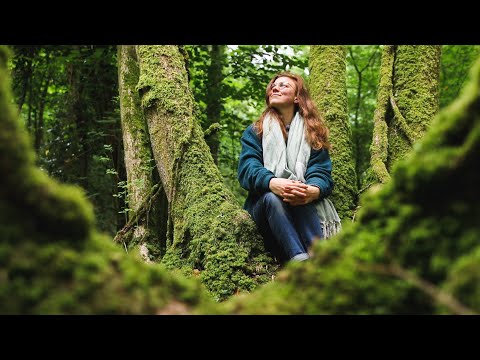
 Shoshin1
Re: Meditation and mental health
@Tavs said:
And thanks Jeroen and Jeffrey for the advice about meditation. It never occurred to me that I might need to do less.
No problem. Too much meditation can cause a variety of issues that look like mental health problems, in those who are sensitive. You’ll find that at meditation retreats they often ask about a background of mental health problems in the family, and may refuse entry to the retreat if there are enough “red flags” in someone’s application. The reason for this is that some people can suffer a breakthrough with accompanying mental health issues, sometimes even psychosis, during a retreat.
As far as I’m concerned, meditation doesn’t have to be done in long sessions to get the benefits. Something like 10 or 20 minutes a day can be enough.
 Jeroen