
Best Of
Re: Tilopa’s song of mahamudra
Tantra says: remember, whenever you choose something, whenever you decide for this or against this, it is your mind playing tricks. Don’t say the thing is beautiful; just simply say, ”I am affected in a nice way” – but the base remains ”I.”
 Jeroen
Re: Experiences
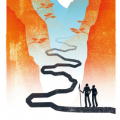
Can one actually walk upon the Buddha's path toward suffering's cessation,
without that action also illuminating the very transmission of its own truth?
Here, the possibility of selflessness transcends the limitations of self & other.
 how
how
About no-religion
In a way religion is a spiritual framework of thought which we use to give meaning to our place in the world. But that is just the way it appears to the mind. When you become more advanced and start examining no-mind, witnessing, and being just loose & natural, you start to move beyond the mental definition into a kind of no-religion.
In a way, what is at the core of the Tao, that sense of being in harmony with the natural world, is also what is in the Song of Mahamudra where Osho talks about being loose and natural as the ultimate goal of Tilopa’s teaching. You could say that that is what underpins all actual religion, that religion is a behavioural pattern on top of a primeval, unaware natural being but that eventually when you let it all go, those concepts of God and creation and enlightenment, that you then come back to a more aware natural state.
It is a kind of movement of return, where you let go of many of the things you have accepted about the world. It is a clearing-out, which can happen gradually or quickly. You know in the Tao Te Ching, where it says, the man of knowledge learns something new every day, but the man of Tao lets something go every day? Becoming knowledgeable about a religion, even Buddhism, brings new patterns to your life and mind, it is an accumulation.
Untangling these things and letting them go reduces the mind to a kind of pure state, where there is love and goodwill and a kind of basic pleasure. Beyond that there is a kind of indifference, or even upeksha, equanimity, which allows you to be in the world without being in the mind. You look through the mind, and the mind kind of vanishes. Things become simpler, the past and the future largely disappear.
Jeroen
Re: Buddhism, women and the goddess
This goes into consideration: I have received an email from my first teacher, a template but still.. He is announcing a series of Zoom talks to learn from the Sakyong directly.
I think, in line of what Fede has said, requieres action. I have deleted the e-mail. Incredible they listen to an ordinary being pretending to be Enlightened. And yes, if you mistreat others, particularly weaker individuals, you are FAR from the other shore you chant about.
Anyway.. Rant ends
 Kotishka
Re: Dementia and Buddism
The thing with dementia is it’s a slow decline, over the course of years, during which you become less and less capable mentally. Living alone won’t be possible beyond a certain point, and it puts increasingly greater demands on your carers as the illness progresses. Your ability to take decisions will also be affected, and legally you will be declared unfit at some stage. It is not a kind illness, depending on your carers’ effort and approach.
My mother spends about 30,000 euros a year on care to help her wash, clothe and clean her husband, which wouldn’t be possible without the social care budget we have here in the Netherlands. We buy in daily care, 2 hours in the morning and 1 hour in the evening, seven days a week because my stepfather needs assistance with clothing himself, getting up, washing and going to bed in the evening, as well as being doubly incontinent. And he is a large man, and she is a small woman, so handling his body requires two people. So that level of care is very necessary.
So there is a financial planning aspect that you can’t ignore. I hear the progression of Lewy Body Dementia is quite different though, you’ll have to let the medical staff advise you on that.
Jeroen
Re: Buddhism, women and the goddess
Today, we continue the ongoing movement to the understanding and reality that everyone, regardless of "social standing", sex, age, ethnicity or belief, is worthy of respect. From the Buddhist standpoint, we say that everyone possesses the Ninth conscience aka Buddha. Hence all, in that regard, are equal.
Of course, we also possess all the other conditions (worlds). What our process of awakening to our Buddha nature, emerging from our fog of ignorance is the practice of the Way. This emergence is what is referred to as achieving Nirvana or Enlightenment or "becoming" a Buddha. This is so simple yet so difficult and so necessary.
When a Buddhist condemns the selfishness, deceit, and bigotry of a person, it is the condemnation of his or her words, deeds and/or actions which devalue and harm others.
A 19th century Japanese buddhist and political activist stated thus: "Hate the action, not the person."
Today, we see the ancients called goddesses and gods as the those functions, (thoughts, actions, words, things) which enable and support us in our efforts and endeavors to better ourselves, to seeking to awaken as persons and in out lives. Devils and demons are the functions that block, obstruct, hinder, and weaken our endeavors and lead us to the darkness and push us toward the worlds of anger, animality, hunger, hell.
Peace to all
 Lionduck
Re: What movies are you watching?
You are being realistic. Augmented reality will come shortly after virtual, simulated AI realities ...
 lobster
Re: Wim Hof - Feel the Cold and do it Anyway
IMO, no need to push it too far @person. We want to be in uncomfortable/growth zone, not panic/dangerous zone. The uncomfortable/growth zone expands with time. As you note, there is probably not much benefit from going too long in very cold temps.
My friends in Norway have discovered cold plunges. They have opportunities I don't have: cold baths in public pools and the sea/lakes. They report that VERY short plunges in temperatures around 0C are lots of fun and have many benefits. The way they do it in Norway is to first go into the sauna, then take a cold plunge, then rinse and repeat. From my one experience with this method, it makes a lot of sense, since the subjective experience of cold is then much less.
 marcitko
Re: Experiences
I seldom share Buddhist teachings, except here. I share the fruits of the practice I have developed within myself. A greater degree of patience and compassion.

 person
Re: Playing with structures
@Jeroen said:
@person said:
Many highly realized people are quite smart and knowledgeable.True. Osho for example was wel known as a voracious reader, with a library of 150,000 volumes when he passed away. He had also been a university professor and All-India debating champion. But he was rather poor on physics and science in general. He spoke many times on the effect of scientific thought on the mind, though, and what he said was quite insightful.
My personal experience was that science encourages you to take things apart, simplify them, and model them in your mind as a way of understanding them. I studied engineering at university, and that was very much done in that way. It’s very logical, a world of parts where things have well-known properties and are replaceable.
In the world of mythology, things are very different. It is a world of relationships, of gods and heroes who often have blood ties. It is a world allied to the world of dreams, where one might see a heroic journey to retrieve a lost soul from the underworld.
I think my general approach to things like this is one of integration and synthesis. Rather than moving from one to the other, see how they each have their own domain while at the same time can help strengthen and learn from each other.
I always seem to come back to the idea of yin and yang. For example, we all have a masculine and a feminine side, social norms are often such that we will attempt to elevate one and repress the other. I've found it healthier to embrace both and seek to find a balance that makes sense for my own disposition.
person